

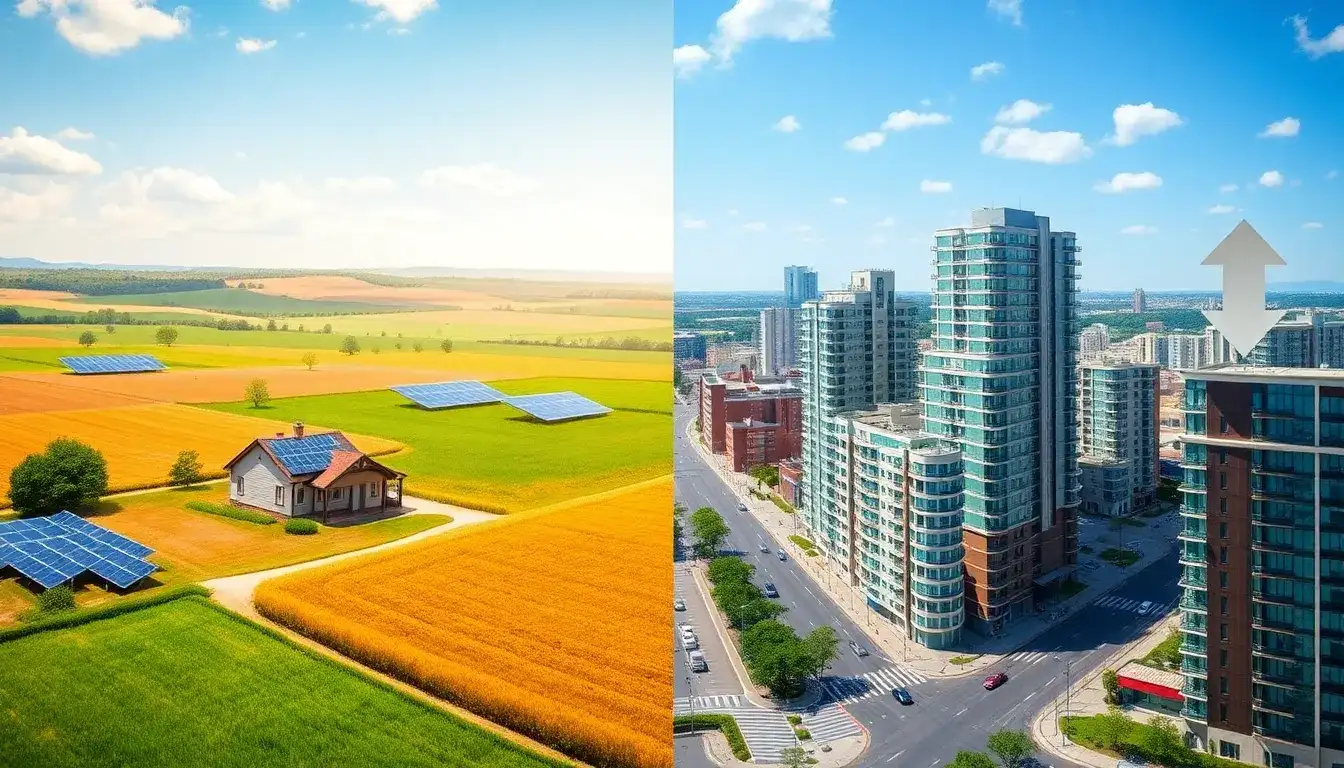
The impact of solar arrays on property values varies between rural and urban areas, reflecting differences in landscape aesthetics, land use, and community perceptions.
Rural Areas
- Negative Impact: In rural areas, utility-scale solar arrays often result in a more significant negative impact on property values. Studies have shown that homes within 0.6 miles of a solar array experience a depreciation of 2.5% to 5.8% in value, largely due to the loss of open space and rural character that these installations cause. This effect is pronounced when solar farms are built on agricultural land or in areas valued for their natural beauty.
- Reasons for Impact: The perceived industrialization of rural landscapes due to large-scale solar installations can reduce their desirability, thus impacting property values.
Urban Areas
- Variable Impact: In urban or suburban areas, the impact of solar arrays on property values is less consistent and often less significant. In some cases, solar installations may be viewed as more congruent with existing development, reducing the negative impact on property values. However, space constraints in these areas could theoretically increase the perceived impact if not properly managed.
- Positive Economic Factors: Utility-scale solar can positively affect local economies by contributing to tax bases and potentially improving the quality of schools, which are critical factors in property value determination.
Comparison and Conclusion
- Rural vs. Urban: Generally, rural areas experience greater negative impacts due to aesthetic and land-use concerns, while urban areas tend to have less pronounced or variable effects.
- Need for Strategic Siting: To minimize negative impacts, strategic siting of solar facilities, away from residential areas and sensitive landscapes, is recommended.
In summary, while solar arrays can negatively affect property values in rural settings due to aesthetic and land-use impacts, their effect in urban areas is more nuanced and influenced by various local factors.
Original article by NenPower, If reposted, please credit the source: https://nenpower.com/blog/how-do-solar-arrays-impact-property-values-differently-in-rural-versus-urban-areas/

