

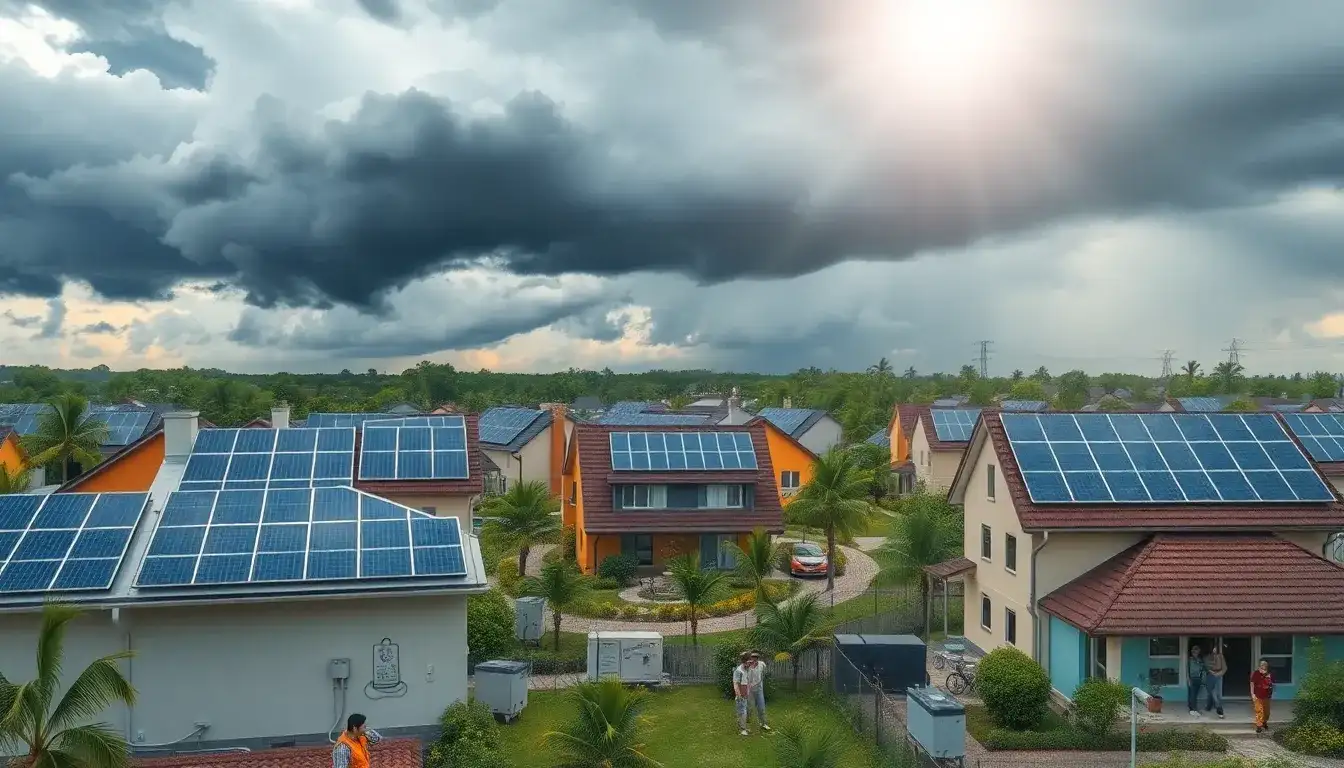
Benefits of Solar and Storage Systems
- Continuous Power Supply: Solar panels generate electricity even when the grid is down, and integrated energy storage systems allow for stored power to be used during non-daylight hours or when sunlight is limited. This ensures continuous access to electricity for critical infrastructure and appliances during disasters.
- Reduced Dependence on Traditional Power Sources: By utilizing solar energy, communities reduce their reliance on fossil fuels and the electrical grid, which may be compromised during disasters. This independence enhances resilience and supports emergency services.
- Cost Savings and Environmental Benefits: Solar energy provides long-term cost savings and reduces carbon emissions, offering a sustainable solution for disaster-prone areas. The initial investment in solar technology can pay off over time, especially in regions frequently affected by disasters.
- Enhanced Energy Reliability: Solar energy systems integrated with high-efficiency solar panels and advanced energy storage technologies ensure a constant power supply during disasters. This combination supports emergency management by powering essential services such as communication networks and medical facilities.
- Rapid Deployment and Flexibility: Solar systems can be quickly set up in disaster zones, providing immediate relief and supporting recovery efforts. Portable solar generators can be rapidly deployed to power essential devices and communication systems.
- Improved Community Preparedness: Integrating solar energy into disaster management plans enhances community resilience and readiness. It enables communities to maintain power supply even when the main grid fails, using localized energy sources like microgrids that can operate independently.
Technological Advancements
- High-Efficiency Solar Panels: Recent advancements in solar panel technology have increased their efficiency, allowing more electricity to be generated from limited sunlight. When combined with energy storage systems, this ensures a continuous power supply during prolonged disasters.
- Energy Storage Technologies: Innovations like advanced batteries and hydrogen fuel cells are evolving to provide prolonged power supply during disasters. These developments address the intermittency of solar power, enabling continuous operation of critical infrastructure.
- Microgrids and Smart Grid Technologies: Integrating solar energy with microgrid systems and smart grid technologies enhances the efficiency and reliability of solar systems. This allows for real-time monitoring and control, supporting optimal energy distribution and resilience.
Overall, solar and storage systems offer a reliable, sustainable, and cost-effective solution to enhance resilience during natural disasters by ensuring a continuous power supply and reducing dependence on traditional energy sources.
Original article by NenPower, If reposted, please credit the source: https://nenpower.com/blog/how-do-solar-and-storage-systems-improve-resilience-during-natural-disasters/

