

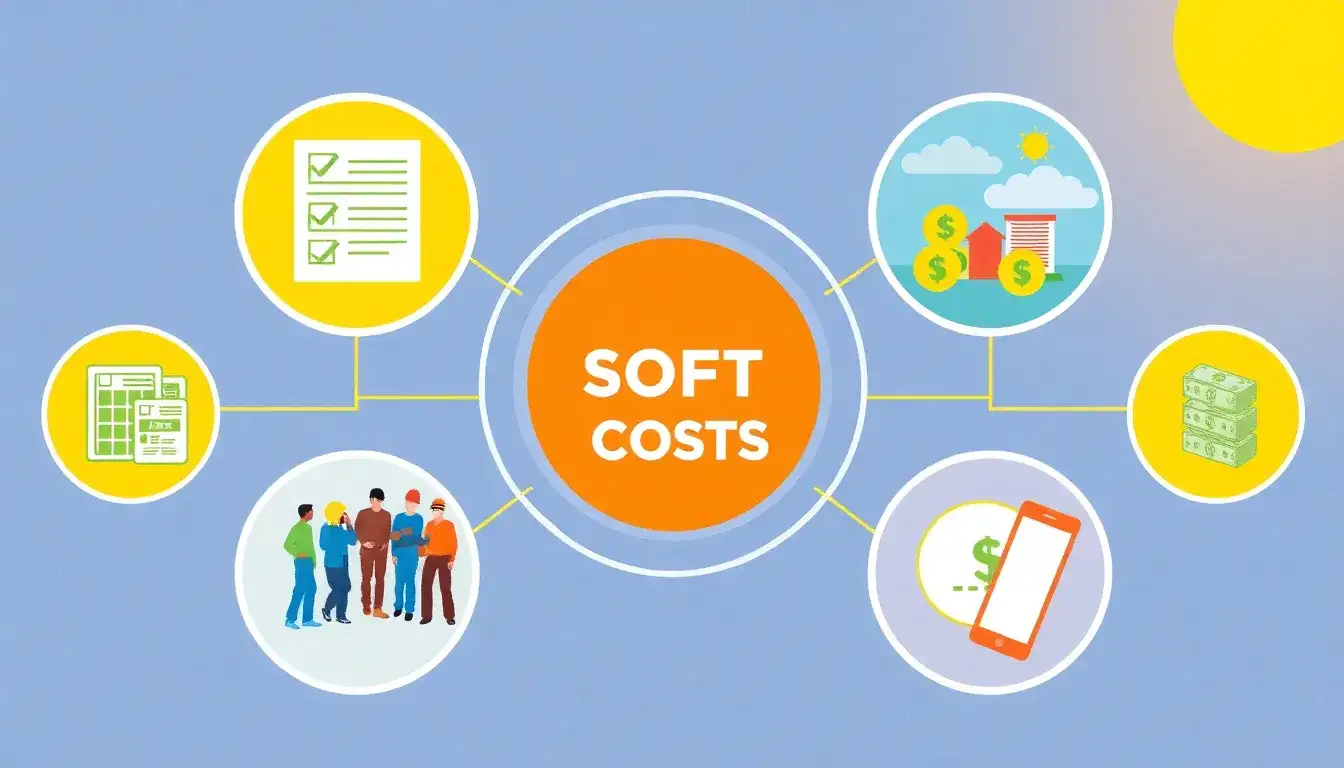
Soft costs significantly impact the overall cost of solar installations by constituting a large and growing portion of the total system price. Unlike hardware costs, which include tangible components such as solar panels, inverters, and mounting equipment, soft costs encompass all non-hardware expenses related to going solar. These include permitting, financing, design, labor for installation, customer acquisition, supply chain management, inspections, administrative overhead, and other operational costs solar companies incur to run their business.
How Soft Costs Affect Overall Solar Installation Costs
- Major Share of Total Costs: While hardware costs have dramatically decreased over the years—by more than 40% in the last decade and even 99% since 1980—the relative share of soft costs has increased. Today, soft costs can represent up to 65% of the total cost of a residential solar photovoltaic (PV) system in the U.S., making them the largest single category of expenses for solar installations.
- Barrier to Solar Adoption: High soft costs contribute to the overall high upfront investment for solar, limiting affordability for many customers. This restricts the number of installations and slows solar market growth. Additionally, delays caused by inefficient permitting and inspection processes frustrate customers and can lead to canceled projects or switching providers, further increasing costs and slowing adoption.
- Complexity and Variability: Soft costs are influenced by a variety of factors such as local and state regulations, permitting and interconnection processes, lack of standardized procedures across jurisdictions, and the need to navigate red tape. This complexity creates inefficiencies that drive up costs and cause delays, particularly in regions new to solar policy or with fragmented permitting systems.
- Labor and Skill Constraints: Soft costs include labor costs for installation and the challenge of finding sufficiently trained installers. Workforce training gaps can add to labor expenses, and the onboarding and management of skilled workers are included under these costs.
- Customer Acquisition and Administrative Overhead: Marketing, sales efforts to acquire new customers, administrative expenses, and supply chain logistics also factor into soft costs. Companies must invest in software tools, lead management, and customer relationship management to reduce these costs and improve efficiency.
Efforts to Reduce Impact of Soft Costs
- The U.S. Department of Energy and industry groups are actively researching and implementing strategies to reduce soft costs, recognizing that further soft cost reductions (an additional 60-70% decrease targeted from 2020 levels) are essential to make residential solar affordable without subsidies.
- Strategies include streamlining permitting, inspection, and interconnection processes; improving workforce training and certification; using software to improve system design and customer acquisition remotely; and facilitating access to innovative financing models and community solar programs to expand adoption.
- For example, remote solar system design software that uses satellite imagery and 3D data has been shown to reduce installation design costs substantially, saving up to $0.17/W, or about $850 for a typical 5 kW system, by eliminating costly manual site visits.
Summary Table
| Aspect | Description and Impact |
|---|---|
| Share of Total Cost | Soft costs up to 65% of total residential solar costs |
| Components | Permitting, financing, labor, customer acquisition, admin overhead, supply chain, inspections |
| Impact on Affordability | Higher soft costs increase upfront price and limit market size |
| Sources of Inefficiency | Fragmented regulations, lengthy permitting, training gaps, market complexities |
| Reduction Strategies | Process streamlining, software tools, workforce training, innovative financing and community solar |
| Result of Reductions | Lower total solar costs, faster installations, increased adoption |
In essence, soft costs are a critical factor driving the overall cost of solar installations, especially in the U.S., and addressing them is pivotal for making solar energy more accessible and affordable nationwide.
Original article by NenPower, If reposted, please credit the source: https://nenpower.com/blog/how-do-soft-costs-impact-the-overall-cost-of-solar-installations/

