

Sodium-Ion Batteries
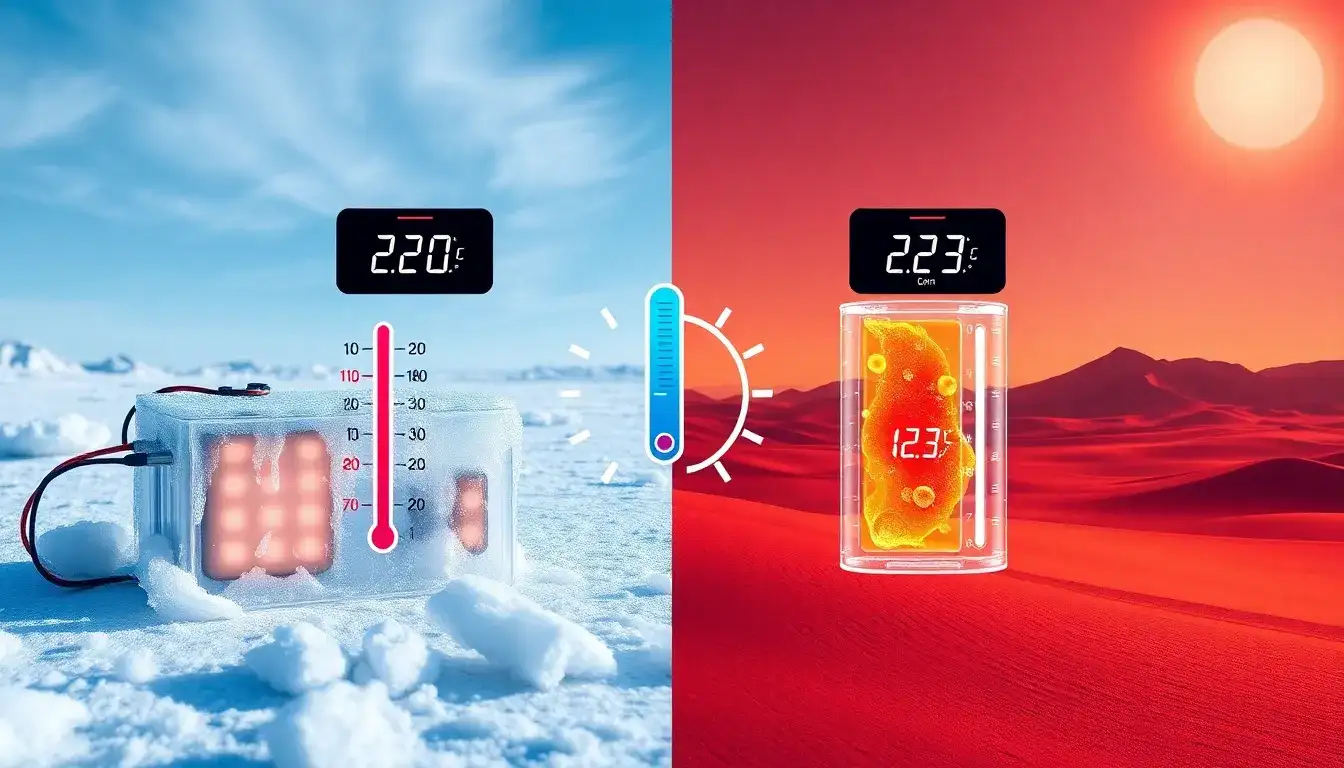
- Temperature Performance: Sodium-ion batteries can perform well in both low and high temperatures. They are capable of operating at temperatures as low as -70°C and as high as 100°C, making them suitable for extreme weather conditions.
- Safety: Sodium-ion batteries are generally considered safer than lithium-ion batteries, with a lower risk of thermal runaway and non-flammability.
- Cost and Availability: Sodium is more abundant and cheaper than lithium, which could make sodium-ion batteries more economically viable in certain applications.
Lithium-Ion Batteries
- Temperature Performance: Lithium-ion batteries have optimal performance between 15°C and 35°C. Their performance degrades significantly in extreme temperatures, making them less suitable for such conditions.
- Energy Density: Lithium-ion batteries have a higher energy density compared to sodium-ion batteries, which means they store more energy per unit of mass.
- Cycle Life and Charging Speed: Lithium-ion batteries generally have a longer cycle life and faster charging speeds due to the higher diffusion coefficient of lithium ions.
Comparison Summary
| Criterion | Sodium-Ion Batteries | Lithium-Ion Batteries |
|---|---|---|
| Temperature Performance | Performs well in extreme temperatures | Best performance between 15°C and 35°C |
| Energy Density | Lower energy density (about 150-160 Wh/kg) | Higher energy density (about 250-260 Wh/kg) |
| Safety and Cost | Safer, non-flammable, lower cost | Flammable, higher cost |
| Cycle Life and Charging | Shorter cycle life, slower charging | Longer cycle life, faster charging |
In summary, sodium-ion batteries have an advantage in extreme temperature conditions, safety, and cost. However, they currently lag behind lithium-ion batteries in terms of energy density, cycle life, and charging speed.
Original article by NenPower, If reposted, please credit the source: https://nenpower.com/blog/how-do-sodium-ion-batteries-perform-in-extreme-temperatures-compared-to-lithium-ion-batteries/

