

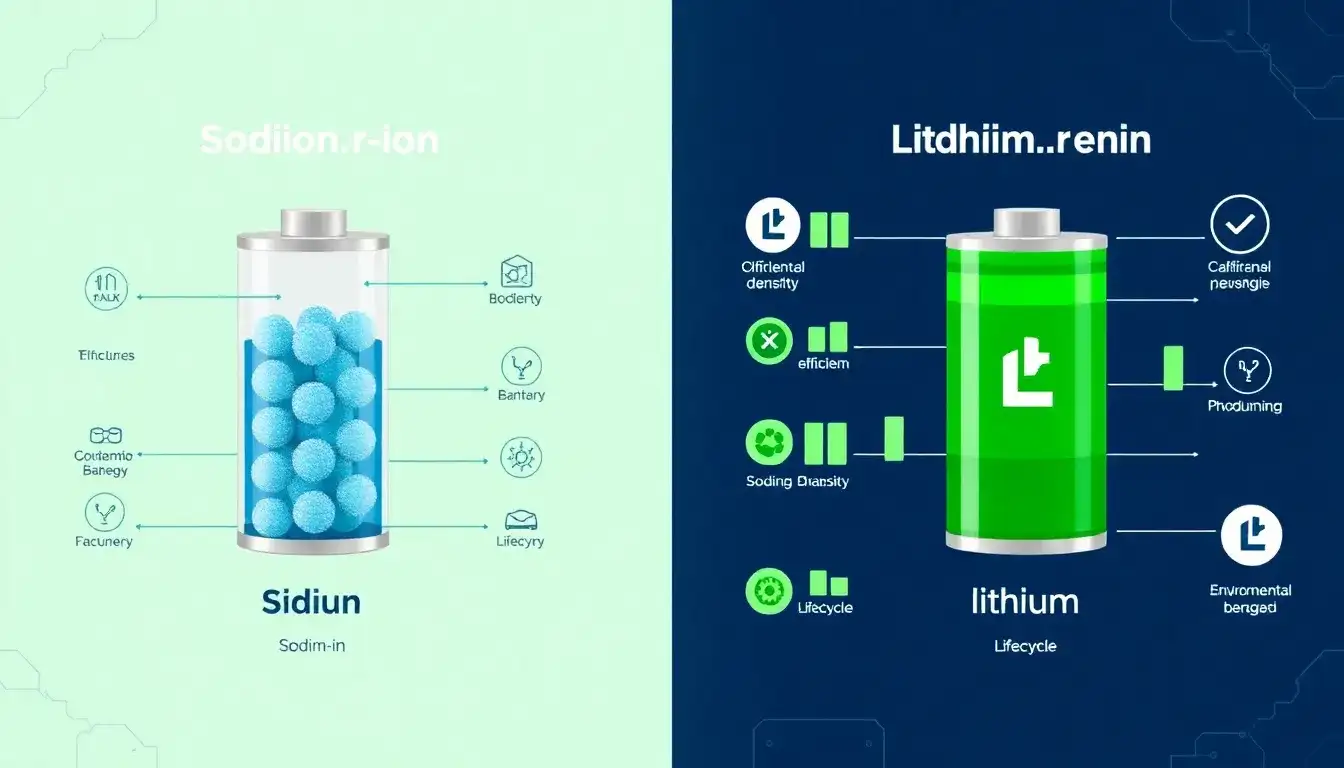
Sodium-ion batteries and lithium-ion batteries differ significantly in terms of energy storage capacity, among other factors. Here are the key points of comparison:
Energy Density
- Lithium-ion Batteries: These have a higher energy density, typically ranging from 100-300 Wh/kg, meaning they can store more energy per unit of weight. This makes them ideal for applications where space and weight are critical, such as electric vehicles and portable electronics.
- Sodium-ion Batteries: They have a lower energy density, currently around 100-160 Wh/kg, although it is expected to improve to possibly above 200 Wh/kg in the future. Their lower energy density makes them more suitable for applications like stationary energy storage where maximizing energy capacity isn’t the primary concern.
Cost and Availability
- Lithium-ion Batteries: Lithium is relatively rare (0.0017% of the Earth’s crust) and more expensive, impacting the cost of lithium-ion batteries. Battery-grade lithium carbonate costs between $10,000 and $11,000 per metric ton.
- Sodium-ion Batteries: Sodium is abundant (2.6% of the Earth’s crust) and less expensive, with battery-grade sodium carbonate costing around $600 to $650 per metric ton. This could potentially make sodium-ion batteries cheaper to produce on a large scale.
Charging Speed
- Lithium-ion Batteries: These batteries generally have slower charging times compared to sodium-ion batteries.
- Sodium-ion Batteries: They can charge faster and have a longer lifecycle than lithium-ion batteries, with some sources indicating a lifecycle that is three times longer.
Safety and Environmental Impact
Both types of batteries have different safety profiles and environmental impacts. However, sodium-ion batteries are generally considered to have a lower environmental impact due to the abundance and ease of sourcing sodium compared to lithium.
Conclusion
While lithium-ion batteries offer higher energy density, making them suitable for portable applications, sodium-ion batteries could be more economical and environmentally friendly. However, sodium-ion batteries need further development to match the energy density and cycle life of lithium-ion batteries in some applications, though they show promise for stationary energy storage and other less demanding uses.
Original article by NenPower, If reposted, please credit the source: https://nenpower.com/blog/how-do-sodium-ion-batteries-compare-to-lithium-ion-in-terms-of-energy-storage-capacity/

