

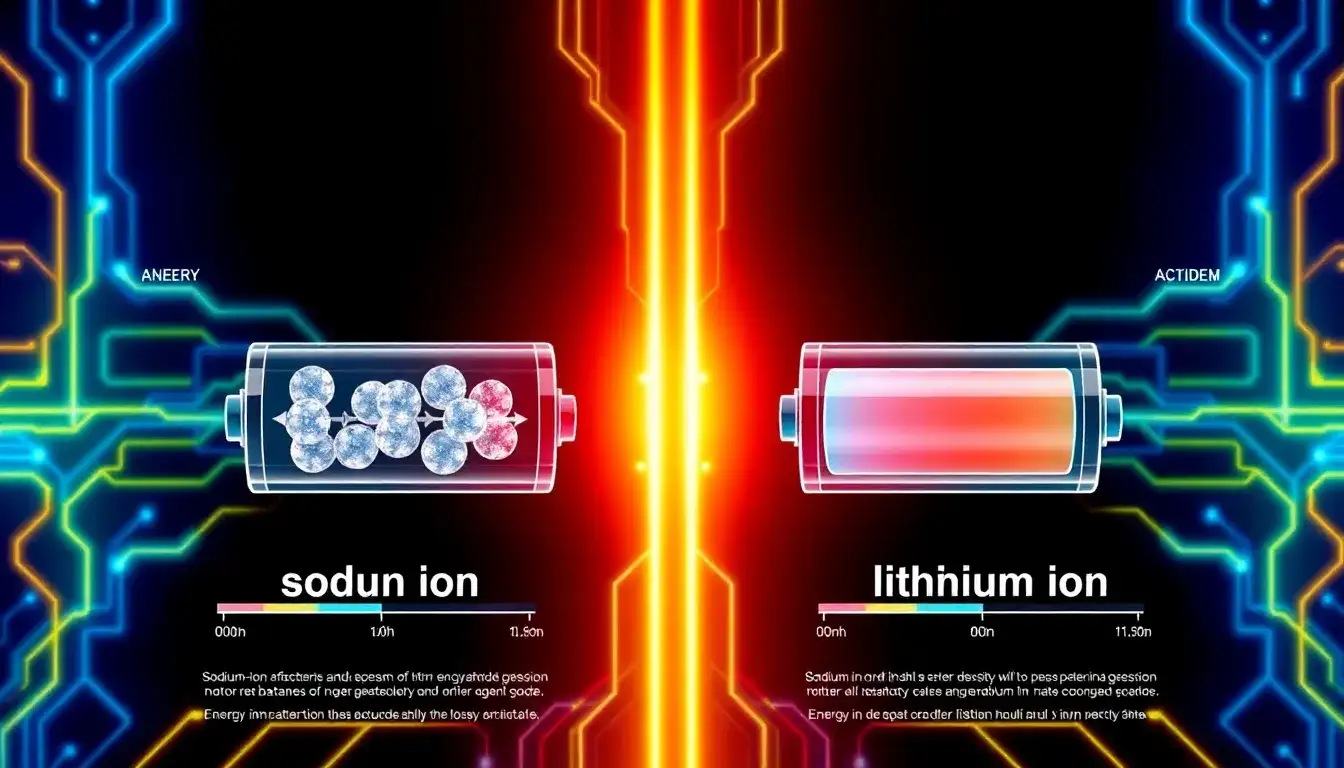
Sodium-ion batteries compare unfavorably to lithium-ion batteries in terms of energy density. The energy density of sodium-ion batteries is generally at least 30% lower than that of lithium-ion batteries. This disparity arises from several factors:
- Mass and Size of Ions: Sodium ions are larger and heavier than lithium ions, contributing to a lower energy density per unit weight.
- Redox Potential: The redox potential of sodium (about 2.71 V) is lower than that of lithium, which reduces the energy storage capacity per ion.
- Energy Storage Capacity: Lithium-ion batteries typically offer higher energy densities, ranging from 120 to 260 Wh/kg, while sodium-ion batteries range from 75 to 160 Wh/kg.
However, sodium-ion batteries have advantages such as cost-effectiveness, abundance of raw materials, and potentially enhanced safety, making them suitable for specific applications like stationary energy storage and smaller vehicles.
Original article by NenPower, If reposted, please credit the source: https://nenpower.com/blog/how-do-sodium-ion-batteries-compare-to-lithium-ion-batteries-in-terms-of-energy-density/

