

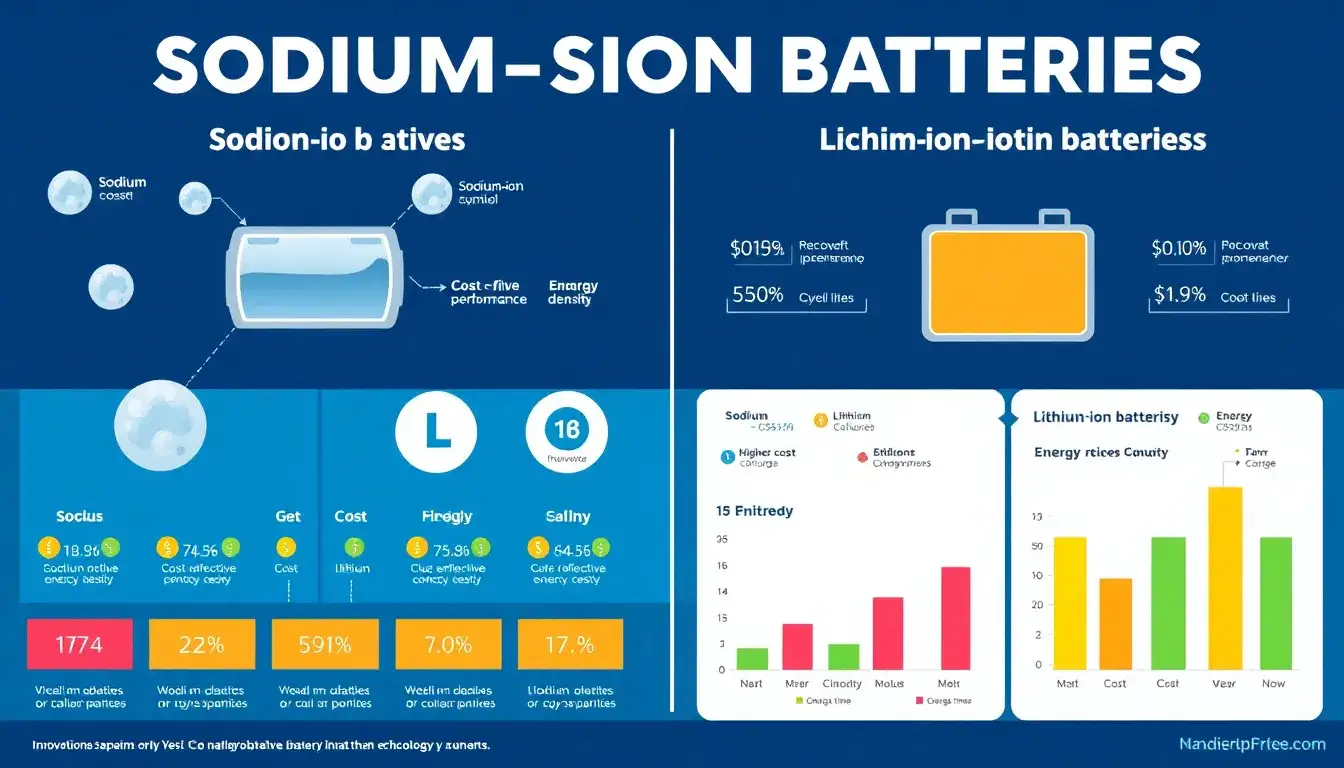
Comparison of Sodium-Ion and Lithium-Ion Batteries
Sodium-ion batteries and lithium-ion batteries differ significantly in terms of cost and performance. Here’s a detailed comparison:
Cost
- Raw Material Cost: Sodium is more abundant and less expensive than lithium, making the raw materials for sodium-ion batteries significantly cheaper. For example, battery-grade sodium carbonate costs between $600 and $650 per metric ton, compared to $10,000 to $11,000 per metric ton for lithium carbonate.
- Production Cost: The production cost for sodium-ion batteries is lower, around $50 per kWh, compared to $70 per kWh for lithium-ion batteries.
Performance
- Energy Density: Lithium-ion batteries have higher energy density (100-300 Wh/kg) than sodium-ion batteries (100-160 Wh/kg), making them more suitable for applications where space and weight are critical factors, such as electric vehicles.
- Cycle Life: Lithium-ion batteries typically have longer cycle lives (8,000-10,000 cycles) compared to sodium-ion batteries (5,000 cycles).
- Charging Speed: Sodium-ion batteries can charge faster than lithium-ion batteries due to their differences in ion size and mobility.
- Redox Potential: Lithium has a higher redox potential than sodium, leading to higher operating voltages in lithium-ion batteries.
Environmental Impact and Safety
- Environmental Impact: Sodium-ion batteries require more materials due to their lower energy density, potentially increasing their environmental footprint during production. However, they use more abundant resources.
- Safety: Sodium-ion batteries are considered safer because they do not suffer from thermal runaway issues common in lithium-ion batteries, making them suitable for applications requiring high safety standards.
Market and Adoption
- Market Share: Lithium-ion batteries dominate the market, but sodium-ion batteries are expected to grow, especially in energy storage applications, due to their cost and safety advantages.
- Adoption Challenges: Despite their benefits, sodium-ion batteries face challenges in achieving widespread adoption due to lower energy density and ongoing development needs.
In summary, sodium-ion batteries offer advantages in cost and safety but are limited by lower energy density and shorter cycle life. They are well-suited for applications like grid-scale energy storage, where weight and space are less critical. Meanwhile, lithium-ion batteries excel in high-performance applications such as electric vehicles.
Original article by NenPower, If reposted, please credit the source: https://nenpower.com/blog/how-do-sodium-ion-batteries-compare-to-lithium-ion-batteries-in-terms-of-cost-and-performance-2/

