

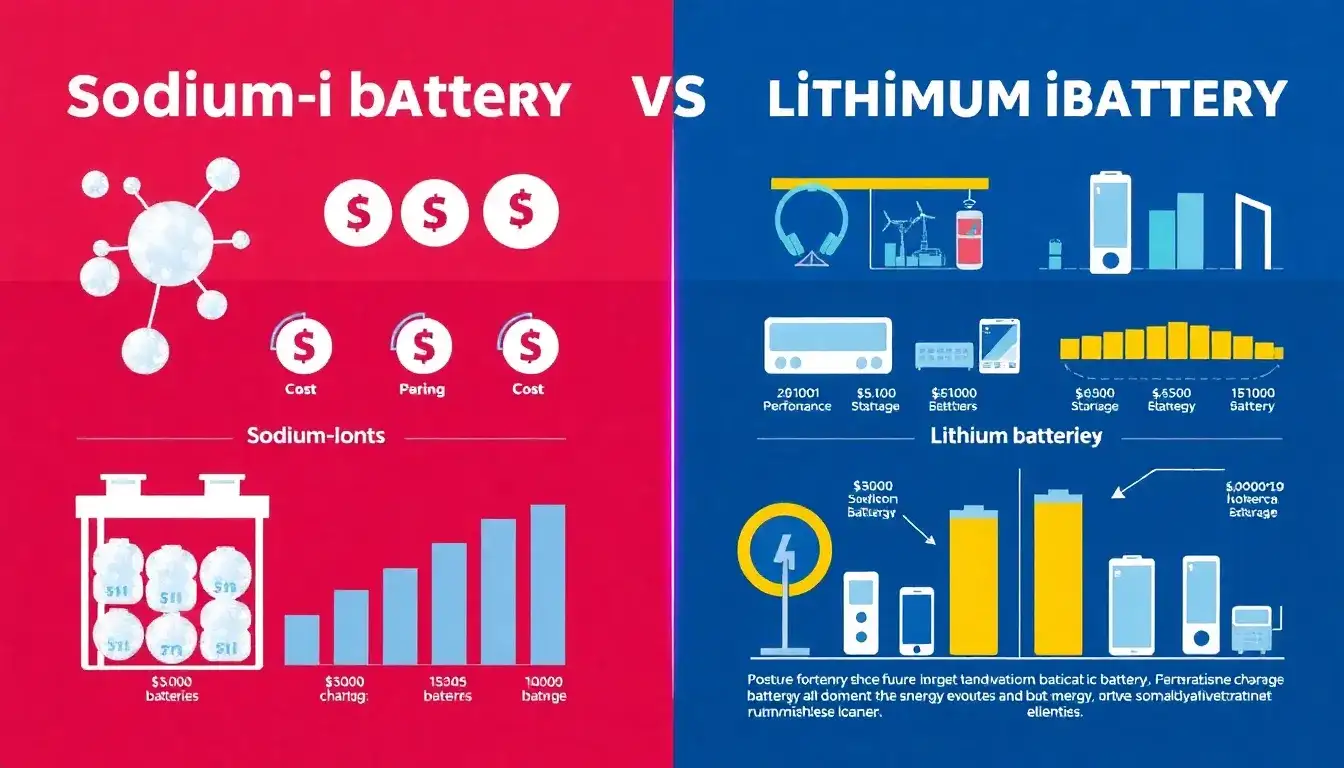
Sodium-ion batteries and lithium-ion batteries have several differences in terms of cost and performance, which affect their suitability for various applications.
Cost Comparison
- Raw Materials: Sodium is more abundant (2.6% of Earth’s crust) and significantly cheaper than lithium (0.0017% of Earth’s crust). The cost of sodium-based raw materials, like sodium hydroxide, is much lower than that of lithium-based materials, with battery-grade sodium carbonite costing between $600 to $650 per metric ton, compared to lithium’s $10,000 to $11,000 per metric ton.
- Production Costs: Sodium-ion batteries generally have lower production costs, with an estimated cost per kilowatt-hour of around $50, compared to lithium-ion batteries at about $70.
Performance Comparison
- Energy Density: Lithium-ion batteries have higher energy density (approximately 100-300 Wh/kg) compared to sodium-ion batteries (100-160 Wh/kg). This means lithium-ion batteries can store more energy per unit weight, making them better for applications where space and weight are critical, such as electric vehicles.
- Cycle Life: Lithium-ion batteries typically offer a longer cycle life (8,000-10,000 cycles) than sodium-ion batteries (5,000 cycles).
- Safety and Charging Speed: Sodium-ion batteries are generally safer, posing less risk of thermal runaway, and can charge faster than lithium-ion batteries. However, their lower energy density and lower redox potential (about 10% lower than lithium) result in less energy per ion.
- Environmental Impact: Sodium-ion batteries use more abundant materials, potentially reducing environmental impact compared to lithium-ion batteries, but they may require more materials to achieve the same energy output.
Application Suitability
- Lithium-ion Batteries: Ideal for applications requiring high energy density and long cycle life, such as electric vehicles and portable electronics.
- Sodium-ion Batteries: Better suited for applications with less demanding energy requirements, such as stationary energy storage and smaller vehicles.
In summary, while sodium-ion batteries offer advantages in cost and safety, their lower energy density limits their use in demanding applications, making lithium-ion batteries more suitable for many current technologies. However, sodium-ion batteries are promising for energy storage applications, especially as their technology continues to develop.
Original article by NenPower, If reposted, please credit the source: https://nenpower.com/blog/how-do-sodium-ion-batteries-compare-to-lithium-ion-batteries-in-terms-of-cost-and-performance/

