

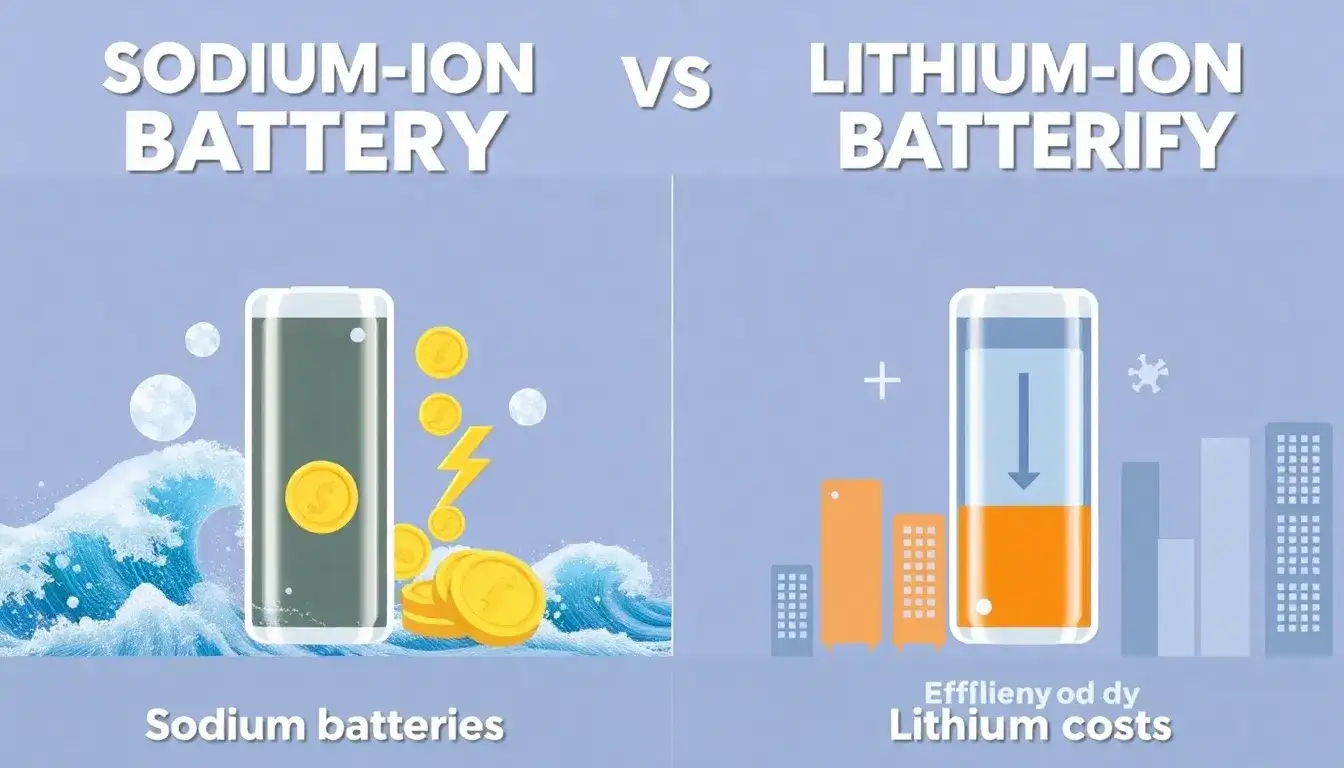
Cost and Efficiency Comparison: Sodium-Ion vs. Lithium-Ion Batteries
Cost
- Material Cost: Sodium-ion batteries have a significant cost advantage due to the abundance and lower cost of sodium compared to lithium. Sodium hydroxide and other sodium-based materials are considerably cheaper than their lithium counterparts, with costs for battery-grade materials being about $600 to $650 per metric ton compared to $10,000 to $11,000 per metric ton for lithium.
- Production Costs: Sodium-ion batteries currently have production costs of about $50 per kWh, which is lower than the $70 per kWh for lithium-ion batteries.
Efficiency
- Energy Density: Lithium-ion batteries offer higher energy density, typically ranging from 100-300 Wh/kg, while sodium-ion batteries have a lower energy density of 100-160 Wh/kg. This means lithium-ion batteries can store more energy per unit weight, making them preferable for applications where space and weight are critical, such as electric vehicles.
- Cycle Life: Lithium-ion batteries generally have a longer cycle life, with up to 10,000 cycles, compared to about 5,000 cycles for sodium-ion batteries.
- Charging Speed: Sodium-ion batteries can charge faster than lithium-ion batteries due to the easier movement of sodium ions through the electrolyte.
Conclusion
Sodium-ion batteries are more cost-effective and safer compared to lithium-ion batteries but are less efficient in terms of energy density and cycle life. They are better suited for applications like stationary energy storage and smaller vehicles where high energy density is not critical. Meanwhile, lithium-ion batteries remain superior for electric vehicles and portable electronics due to their higher energy density and longer cycle life.
Future Outlook
As sodium-ion battery technology improves, it could become a significant player in energy storage, particularly if the energy density and cycle life improve. However, for now, lithium-ion batteries remain the preferred choice for high-demand applications. Sodium-ion batteries are expected to complement lithium-ion batteries rather than replace them entirely, especially in the field of stationary energy storage.
Original article by NenPower, If reposted, please credit the source: https://nenpower.com/blog/how-do-sodium-ion-batteries-compare-to-lithium-ion-batteries-in-terms-of-cost-and-efficiency/

