

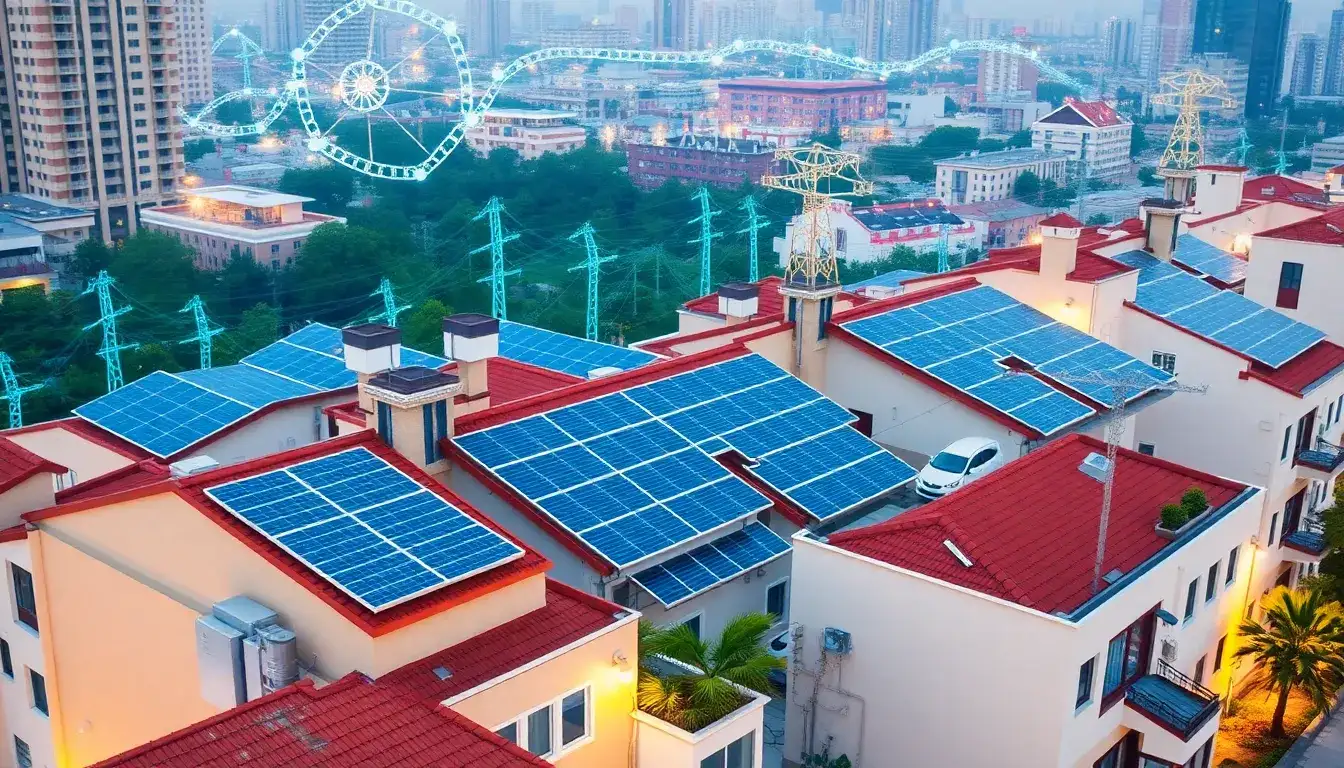
Smart solar technologies enhance grid stability through several integrated functions that address the intermittent nature of solar power and provide dynamic management of electricity supply and demand:
Integration of Solar with Battery Storage
- Batteries store excess energy generated during sunny periods and release it when solar production decreases, such as at night or on cloudy days. This smoothing of solar power supply prevents sudden shortages and contributes to a steady energy flow to the grid.
- Combining solar panels with battery storage systems helps maintain a consistent balance between electricity supply and demand, mitigating the volatility typical of renewable sources.
Smart Inverters and Grid Interaction
- Smart inverters convert the direct current (DC) from solar panels into alternating current (AC) suitable for the grid, while actively managing voltage and frequency fluctuations. This ability to regulate power quality helps stabilize the grid, especially when large amounts of solar energy are fed into it.
Microgrids and Localized Energy Management
- Microgrids, often incorporating solar power and energy storage, can operate independently or in coordination with the main grid. They provide resilience by maintaining localized power during outages and balancing supply and demand in their region, reducing strain on the broader grid.
Smart Substations and Advanced Grid Control
- Smart substations enhance grid stability by dynamically managing voltage and power flow. They can calculate optimal voltage levels, handle two-way energy flows, and direct excess energy to storage or high-demand areas. This reduces bottlenecks and improves distribution efficiency.
- They facilitate integration of multiple distributed energy resources, including rooftop solar, electric vehicles, and microgrids, helping to maintain stable operations despite the variability in renewable generation.
Real-Time Monitoring and Automated Response
- Smart grids equipped with sensors and control systems continuously monitor grid conditions such as current and voltage. They predict and detect faults early, isolate problems, and adjust operations in real time to prevent widespread outages.
- Rapid fault detection and load redistribution minimize disruptions, ensuring a reliable power supply even when fluctuations or faults occur.
In summary, smart solar technologies improve grid stability by coupling solar energy generation with energy storage, advanced inverters, localized microgrids, and intelligent substations. These components work together with smart grid control systems that monitor and manage the grid dynamically, enabling smooth integration of intermittent solar power and maintaining reliable electricity supply for consumers.
Original article by NenPower, If reposted, please credit the source: https://nenpower.com/blog/how-do-smart-solar-technologies-enhance-grid-stability/

