

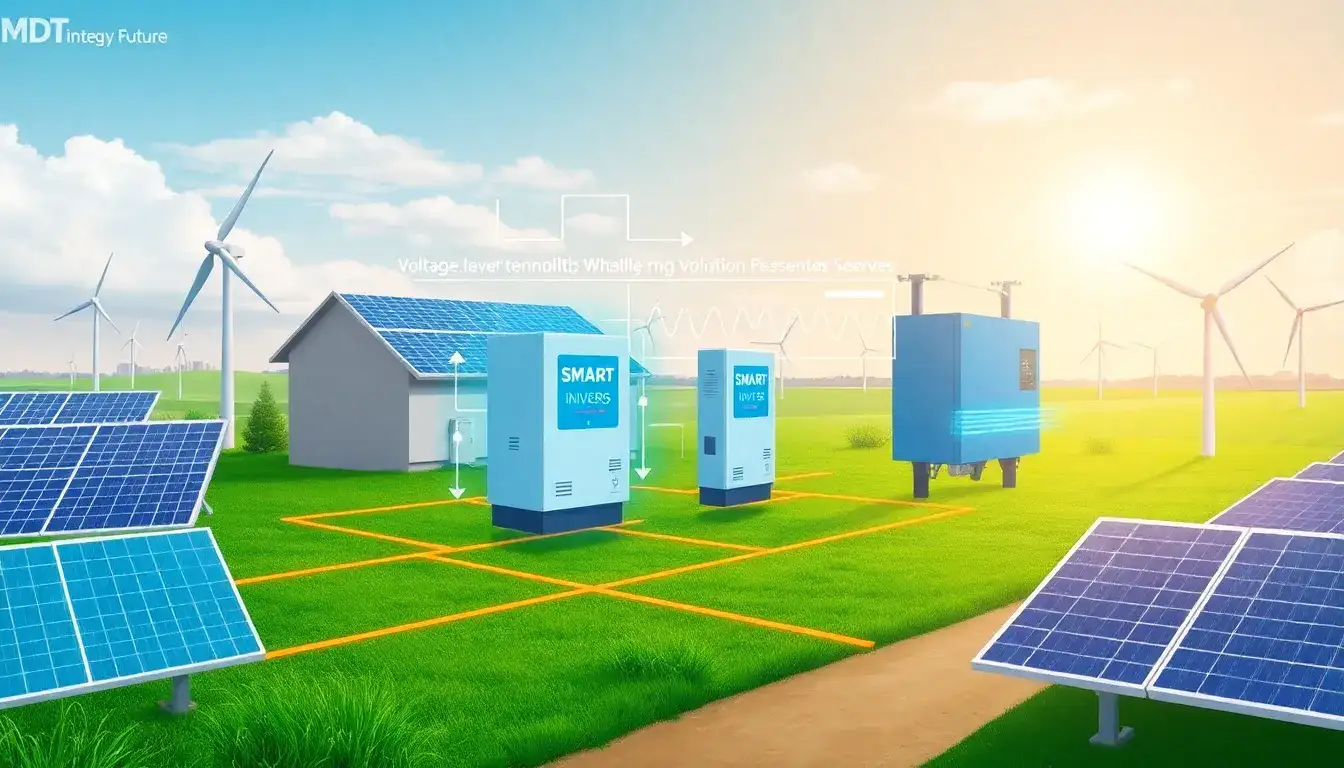
Smart inverters play a crucial role in maintaining voltage stability in renewable energy systems, particularly in grids with high penetration of solar or wind power. Their contributions can be summarized as follows:
Key Contributions of Smart Inverters
- Voltage Regulation: Smart inverters dynamically adjust their output to maintain stable voltage levels across the distribution network. This feature prevents voltage fluctuations from affecting the broader grid, which is especially important in solar installations where generation can vary with weather conditions.
- Frequency Support: These inverters can modify their power output to help maintain the grid’s nominal frequency, providing critical support during periods of grid stress, such as peak demand times or when renewable energy generation varies significantly.
- Real-Time Monitoring and Grid Support: Smart inverters enable real-time monitoring of system performance and power quality. This allows for quick adjustments based on current grid conditions, ensuring a stable voltage supply and optimizing grid performance.
- Dynamic Response to Grid Disturbances: Advanced smart inverters can provide synthetic inertia, mimicking traditional generators by injecting or absorbing power to stabilize grid frequency and voltage during disturbances.
- Integration with Energy Storage: Smart inverters can effectively control battery energy storage systems, ensuring an uninterrupted power supply by managing the flow of energy between solar panels, batteries, and the grid.
Overall, smart inverters enhance grid resilience and maintain voltage stability in renewable energy systems, making them essential for a reliable integration of solar and wind power into the grid.
Original article by NenPower, If reposted, please credit the source: https://nenpower.com/blog/how-do-smart-inverters-contribute-to-voltage-stability-in-renewable-energy-systems/

