

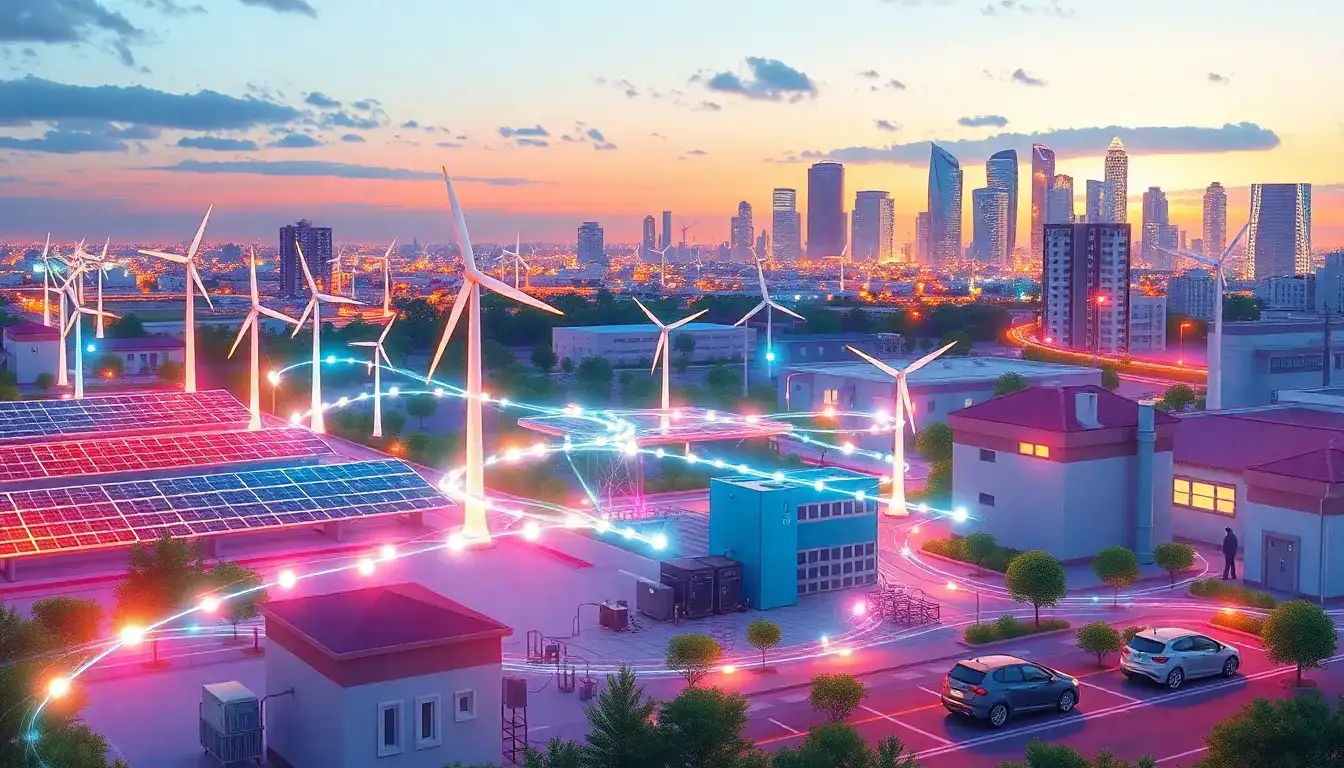
Smart grids manage the variability of renewable energy sources such as solar and wind through a combination of advanced technologies, real-time data analytics, and automated control systems that optimize the balance between electricity supply and demand. Here’s how they handle this variability:
Real-Time Monitoring and Data Analytics
Smart grids employ sensors, smart meters, and IoT devices to continuously collect detailed data on grid conditions, energy production from renewable sources, and consumer demand. This data allows utilities to anticipate fluctuations in energy generation caused by changes in weather or environmental conditions and respond proactively. For example, sensors on wind turbines monitor climate variables and send updates to the grid management system, enabling timely adjustments.
Two-Way Communication and Dynamic Control
Unlike traditional grids, smart grids enable two-way communication between utilities and consumers, and between grid control centers and distributed energy resources. This allows smart grids to dynamically modulate energy flows. Smart inverters and distributed energy resource management systems (DERMS) manage two-way power flows, modulating output from solar panels or wind farms to prevent overloads and maintain grid stability.
Predictive Analytics and Weather Forecast Integration
Smart grids integrate weather forecasting data into their analytics to predict renewable energy availability. This predictive capability helps operators prepare for variability, smoothing out supply-demand mismatches by adjusting grid operations or activating alternative resources in advance.
Energy Storage Systems
To buffer fluctuations in renewable generation, smart grids incorporate energy storage technologies like battery energy storage systems (BESS). These systems store excess energy generated during periods of high renewable output and release it when generation declines, helping to stabilize the grid.
Demand Response and Load Management
Smart grids facilitate demand response programs using IoT-enabled devices that can automatically adjust energy consumption. For example, electric vehicle charging, lighting, and heating can be scheduled or modulated during times of low renewable generation to reduce load pressure on the grid. This “smart” use of energy helps align demand with variable supply.
Self-Healing and Automated Issue Resolution
Smart grids have self-healing capabilities whereby they can detect faults or instabilities caused by renewable energy variability and automatically reroute power or isolate problem areas to minimize disruptions. These automated responses maintain grid reliability despite fluctuations.
Enabling Prosumers and Distributed Generation
Smart grids allow consumers who generate their own renewable energy (prosumers) to feed excess power back into the grid. This decentralizes energy production, diversifies the energy mix, and enhances grid flexibility in managing variable renewable sources.
In summary, smart grids manage the variability of renewable energy by leveraging real-time data, smart devices, predictive analytics, energy storage, demand response, and automation to maintain a stable, efficient, and resilient electricity supply despite the intermittent nature of solar and wind power.
Original article by NenPower, If reposted, please credit the source: https://nenpower.com/blog/how-do-smart-grids-manage-the-variability-of-renewable-energy-sources/

