

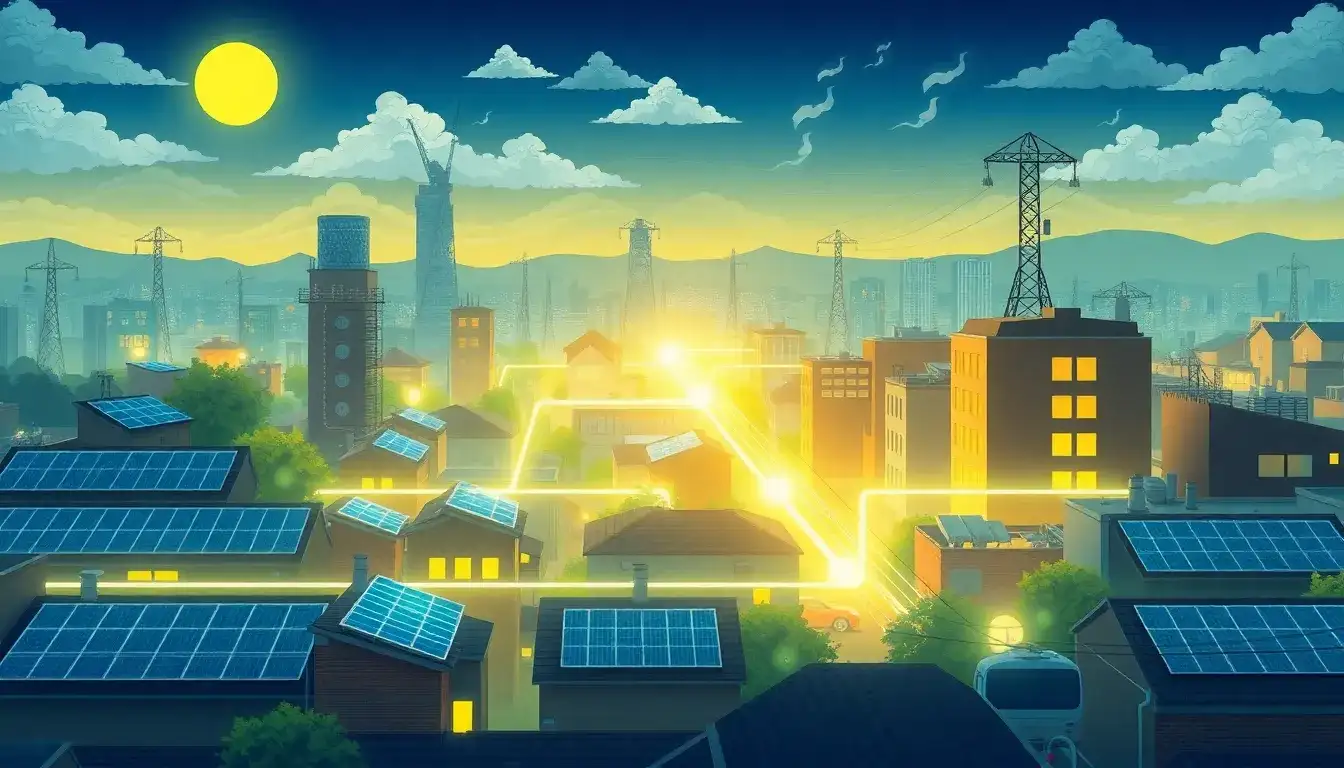
Smart grids address the intermittency of solar power
The variability and unpredictability of solar energy generation due to factors like weather and time of day—through a combination of advanced technologies and strategies:
Key Approaches Used by Smart Grids
- Integration of Advanced Energy Storage
Smart grids incorporate energy storage solutions, particularly batteries, to store excess solar power generated during sunny periods and release it when solar generation drops (e.g., at night or during cloudy weather). This storage smooths out fluctuations in power supply, ensuring a steady and reliable flow of electricity to meet demand. - Use of Smart Inverters and Reactive Power Management
Smart inverters dynamically control the output of solar panels based on real-time grid conditions. They help regulate grid frequency and voltage and prevent issues like islanding (when a part of the grid remains energized during an outage). Additionally, managing reactive power supports voltage stability, which is crucial when solar output suddenly changes. - Voltage Control Techniques
Solar power intermittency can cause voltage fluctuations that affect electricity quality. Smart grids employ sophisticated algorithms embedded in solar technologies to adjust power production in response to voltage changes quickly. This real-time adaptation reduces voltage swings and enhances overall grid stability. - Advanced Sensors, Smart Meters, and Automation
Smart grids use sensors and smart meters to continuously monitor grid conditions and solar energy output. This live data allows grid operators to adapt energy supply dynamically, anticipate potential issues, and isolate problems before they escalate, thereby improving reliability and resilience.
Summary Table of Smart Grid Solutions to Solar Intermittency
| Solution | Function | Impact on Solar Intermittency |
|---|---|---|
| Energy Storage (Batteries) | Stores excess solar energy for use when generation is low | Smooths supply fluctuations, balances demand & supply |
| Smart Inverters | Dynamically regulate power output and reactive power | Maintains frequency and voltage stability |
| Voltage Control Algorithms | Adjust output in real-time to stabilize voltage | Reduces voltage fluctuations due to solar variability |
| Sensors and Automation | Monitor grid and detect problems early | Improves grid responsiveness and reliability |
By combining these technologies, smart grids transform variable solar energy into a more dependable and manageable power source, enhancing grid resilience, reducing outages, and enabling greater integration of renewables.
Original article by NenPower, If reposted, please credit the source: https://nenpower.com/blog/how-do-smart-grids-address-the-intermittency-of-solar-power/

