

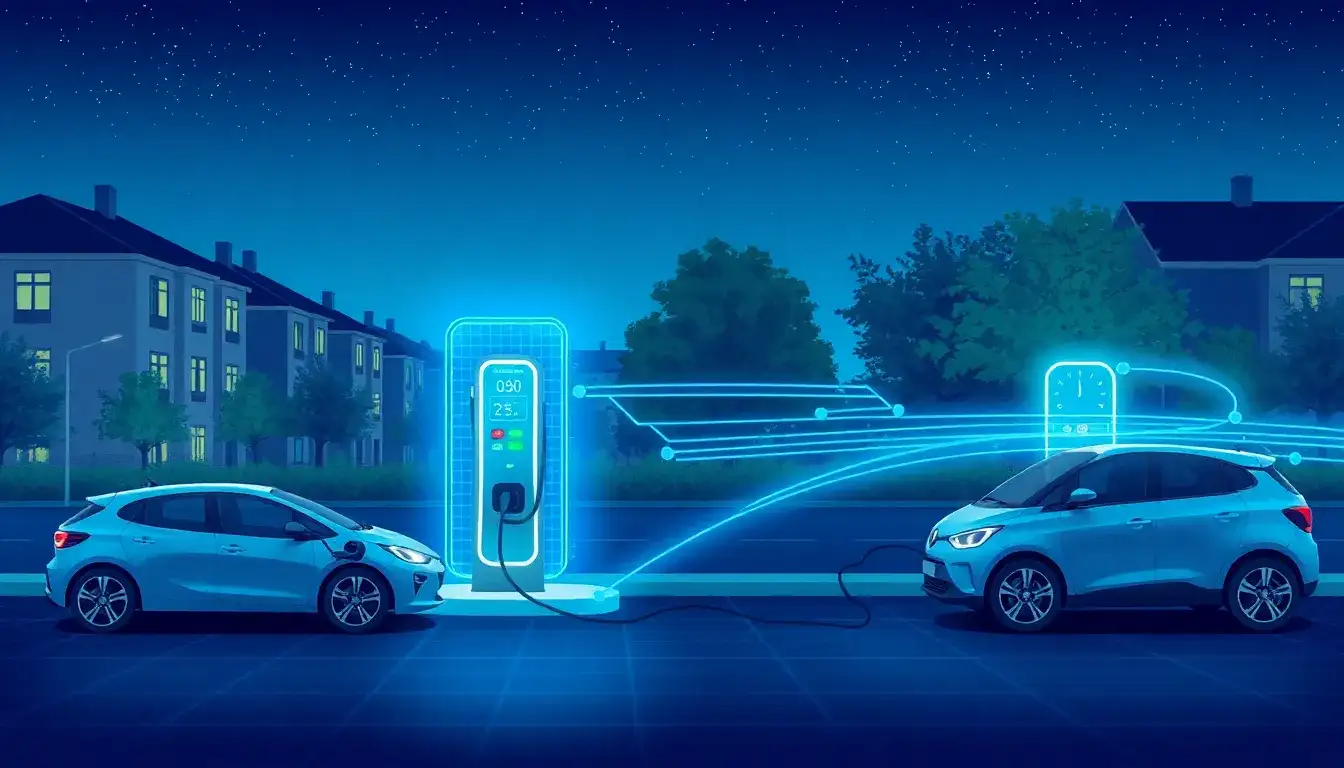
Smart chargers optimize charging during off-peak hours primarily through scheduling and dynamic control that align EV charging with times of lower electricity demand and cost. These chargers use various strategies and technologies to maximize cost savings, grid efficiency, and operational effectiveness:
Key Methods of Off-Peak Charging Optimization by Smart Chargers
- Scheduling Charging Times: Smart chargers can be programmed to start and stop charging based on preset user schedules or utility-defined off-peak windows. This scheduling ensures charging only occurs during periods when electricity rates are lowest, such as nighttime or early morning hours, thereby reducing charging costs.
- Dynamic Communication and Coordination: Through smart charge management (SCM) systems, chargers communicate with EVs, building loads, fleet operations, and utilities. This interaction allows the charging to be dynamically adjusted in real time based on electricity rates, grid demand, and vehicle requirements. The system manages charging sessions to avoid peak demand periods, reducing costs and grid stress.
- Adjusting Charging Speed: Some smart chargers can modify the rate of charging to optimize power usage, slowing down or pausing charging when electricity prices or grid load is high and speeding up during off-peak times. This helps prevent demand spikes and balances power consumption efficiently.
- Load Management and Demand Response: Advanced solutions distribute power intelligently across multiple EV chargers to stay within demand limits and participate in demand response programs. These programs incentivize shifting charging to off-peak periods by offering lower rates or rebates for off-peak usage, further encouraging cost optimization.
- Integration with Energy Storage and Renewable Sources: While not solely a function of the charger, smart charging systems often integrate with battery energy storage or solar power. This integration allows storing energy during off-peak times or from renewable sources and using it for charging, minimizing reliance on grid power during peaks.
Benefits of Off-Peak Smart Charging
- Lower Electricity Costs: By charging exclusively during off-peak periods, users benefit from significantly reduced electricity rates and may also receive incentives or rebates from utilities.
- Reduced Peak Demand Charges: For businesses and fleet operators, shifting charging to off-peak helps avoid costly demand charges associated with peak grid usage, leading to significant operational savings.
- Grid Efficiency and Reliability: Off-peak charging supports grid stability by smoothing out consumption patterns and reducing strain during peak hours, which can delay or prevent costly infrastructure upgrades.
In summary, smart chargers optimize off-peak charging by scheduling and dynamically controlling EV charging sessions to align with lower-cost, lower-demand periods, supported by intelligent communication, adjustable charging rates, and integration with load management strategies. This approach reduces costs, enhances grid reliability, and maximizes the efficiency of electric vehicle charging.
Original article by NenPower, If reposted, please credit the source: https://nenpower.com/blog/how-do-smart-chargers-optimize-charging-during-off-peak-hours/

