

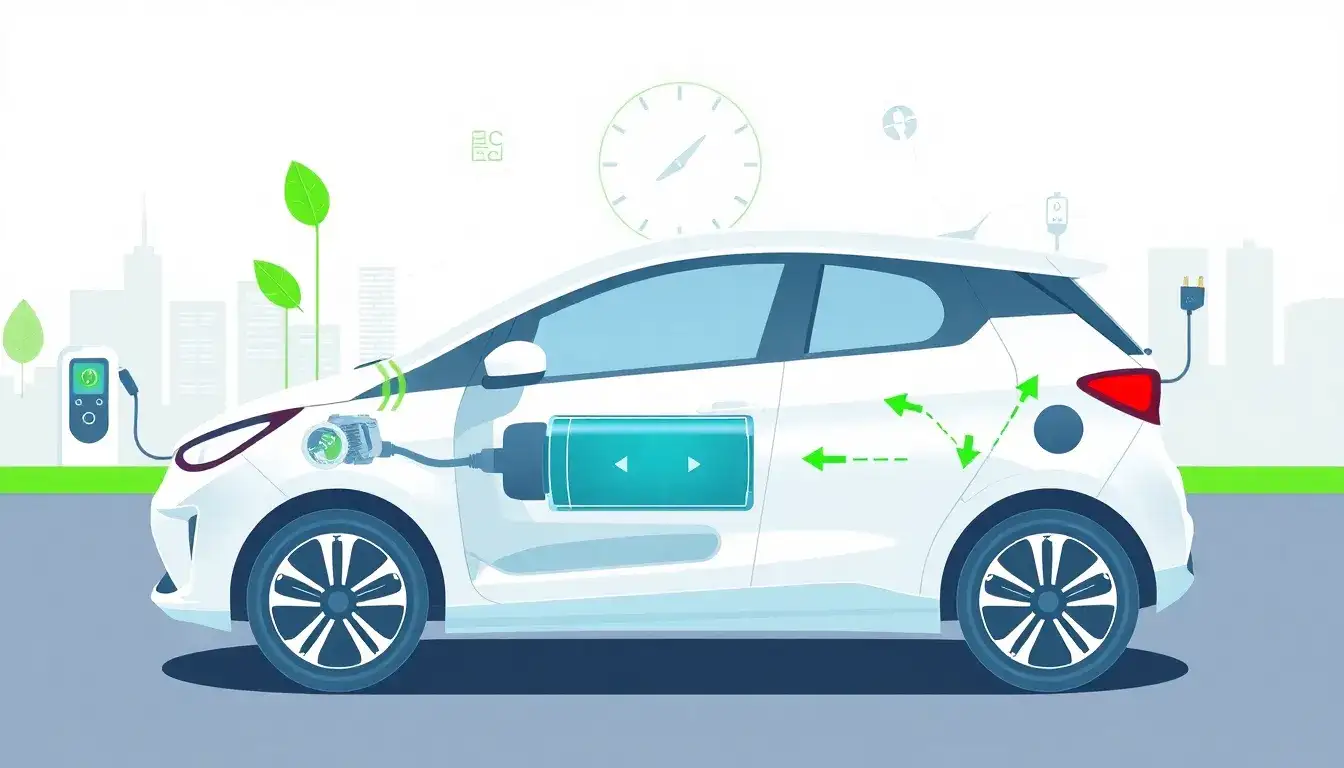
Smaller batteries in Plug-in Hybrid Electric Vehicles (PHEVs) can have both positive and negative impacts on overall efficiency:
Positive Impacts:
- Reduced Weight: Smaller batteries are lighter, which can improve vehicle efficiency by reducing structural weight. This is because the vehicle does not need to carry as much weight, potentially leading to better fuel economy when operating in hybrid mode.
- Optimized Power Management: Smaller batteries can be managed more efficiently by optimizing power management algorithms. These algorithms can minimize fuel consumption and ensure that the available battery energy is used effectively without compromising performance, especially for shorter trips.
Negative Impacts:
- Increased Charge Cycles: With smaller batteries, the vehicle has to rely more frequently on the internal combustion engine, and the battery goes through more charge cycles per day. This can lead to faster battery degradation compared to larger batteries in full electric vehicles (BEVs), which may not need daily charging.
- Limited Electric Range: Smaller batteries provide a shorter electric-only range (typically 20 to 40 miles), which means the vehicle may switch to hybrid mode more often, potentially increasing fuel consumption over longer trips.
- Temperature Sensitivity: Even with optimized management, smaller batteries might experience reduced efficiency at lower temperatures due to decreased energy delivery and increased internal resistance, affecting overall vehicle efficiency.
Overall, smaller batteries in PHEVs require careful power management to optimize efficiency but come with limitations such as faster degradation and reduced electric-only range.
Original article by NenPower, If reposted, please credit the source: https://nenpower.com/blog/how-do-smaller-batteries-in-phevs-impact-their-overall-efficiency/

