

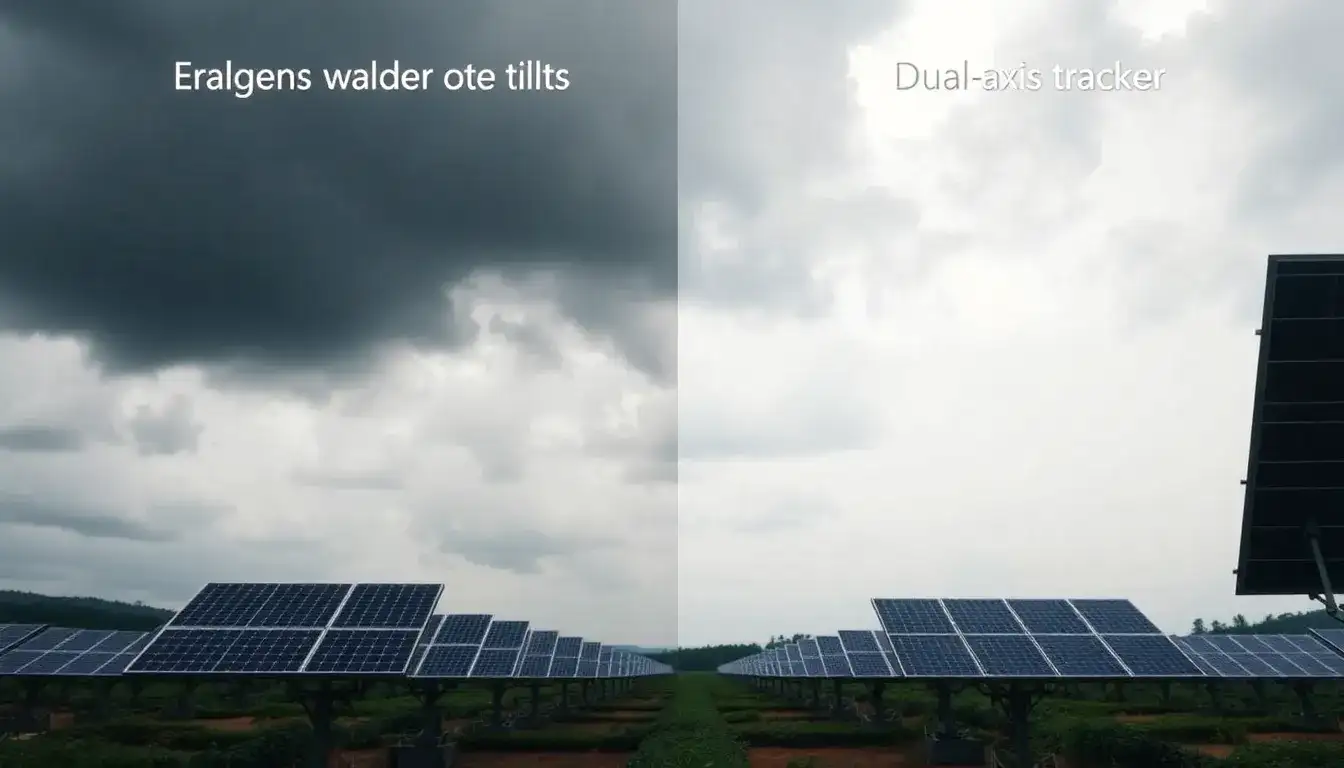
When comparing single-axis and dual-axis solar trackers in cloudy conditions, several factors come into play:
Energy Output in Cloudy Conditions
- Single-Axis Trackers: These trackers typically follow the Sun from east to west, increasing energy output, but their performance is consistent and less affected by cloud cover compared to dual-axis trackers because they do not rely on precise Sun tracking. However, their energy gain is generally lower than dual-axis trackers under ideal conditions.
- Dual-Axis Trackers: While dual-axis trackers offer better overall energy output by adjusting both horizontally and vertically to face the Sun directly, they tend to perform poorly in cloudy or overcast conditions. Their higher precision is less beneficial when cloud cover reduces the Sun’s intensity.
Reliability and Cost
- Single-Axis Trackers: Generally more reliable and less expensive than dual-axis trackers, with fewer moving parts and less complexity, making them a more straightforward option for cloudy conditions.
- Dual-Axis Trackers: More expensive and technically complex, which can lead to issues in reliability. Their higher cost and shorter lifespan than single-axis trackers are significant drawbacks, especially if cloudy conditions are common.
Practicality and Space Requirements
- Single-Axis Trackers: Require less space and maintenance compared to dual-axis trackers, which is advantageous in areas with limited space or where tracker density is a concern.
- Dual-Axis Trackers: While offering superior tracking capabilities, they require more space to avoid panel shadowing, especially in winter months at higher latitudes.
In summary, while dual-axis trackers provide superior performance in sunny conditions, single-axis trackers are often more practical and reliable in cloudy environments due to their simplicity and lower cost. However, both types suffer reduced efficiency in cloudy conditions, with dual-axis trackers being more affected due to their reliance on precise tracking.
Original article by NenPower, If reposted, please credit the source: https://nenpower.com/blog/how-do-single-axis-trackers-compare-to-dual-axis-trackers-in-cloudy-conditions/

