

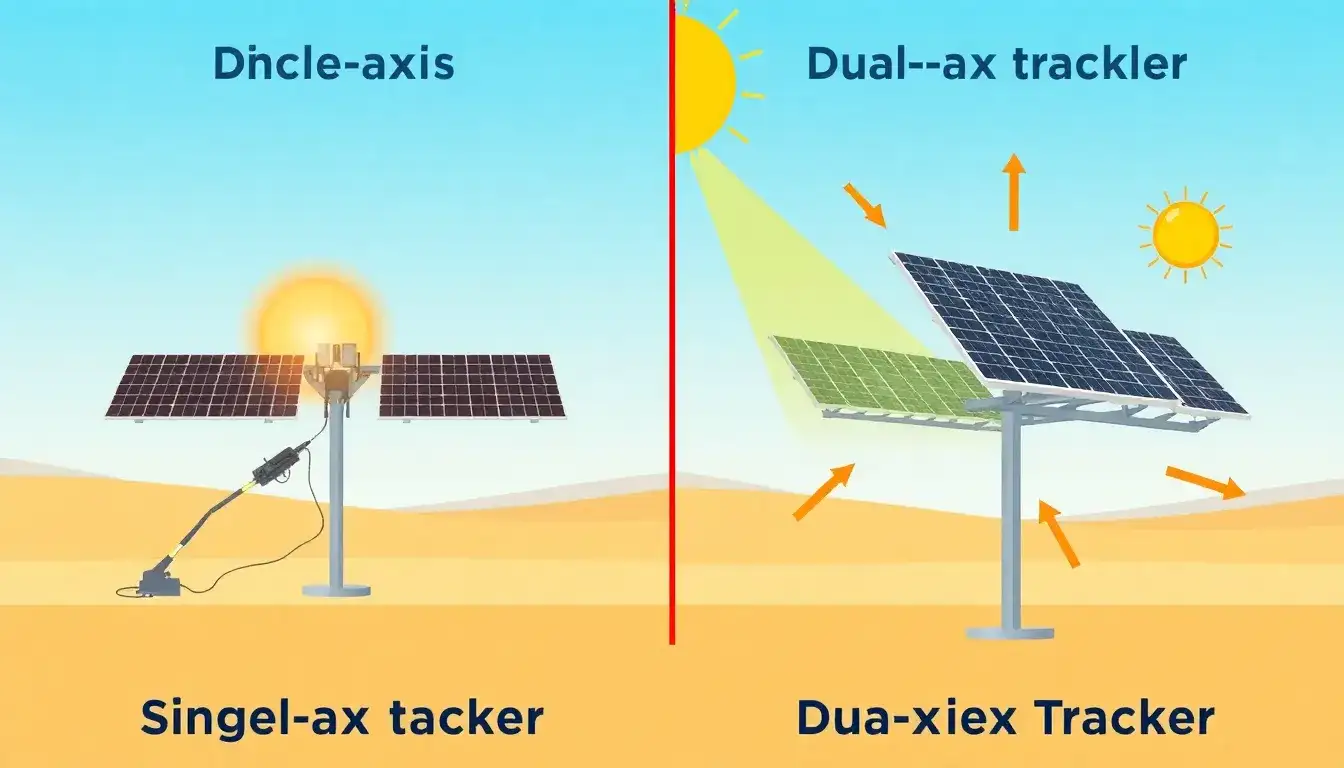
Efficiency Comparison
- Single-Axis Trackers: These systems increase energy production by approximately 20-32% compared to fixed mounts, depending on the type and installation conditions. Single-axis trackers generally track the sun from east to west, either on a horizontal or vertical axis, optimizing energy capture during the day.
- Dual-Axis Trackers: Dual-axis trackers can enhance energy output by about 39-54% over fixed mounts. They offer more precise tracking by adjusting both horizontally and vertically, which maximizes energy production throughout the year, especially at higher latitudes or during seasonal changes.
Additional Factors for Comparison
- Complexity and Cost:
- Single-Axis: Less complex, more reliable, and cheaper.
- Dual-Axis: More complex and expensive but provide superior energy yield.
- Reliability and Maintenance:
- Single-Axis: Generally more reliable with a longer lifespan and lower maintenance costs.
- Dual-Axis: More prone to technical glitches due to their complexity, requiring higher maintenance costs.
- Space Utilization: Dual-Axis trackers can utilize less land area for higher energy outputs, providing additional space for other uses.
Overall, while dual-axis trackers offer higher efficiency and energy output, they come with increased costs and complexity. Single-axis trackers provide a balance of efficiency and cost-effectiveness, making them suitable for a wider range of installations.
Original article by NenPower, If reposted, please credit the source: https://nenpower.com/blog/how-do-single-axis-and-dual-axis-trackers-compare-in-terms-of-efficiency/

