

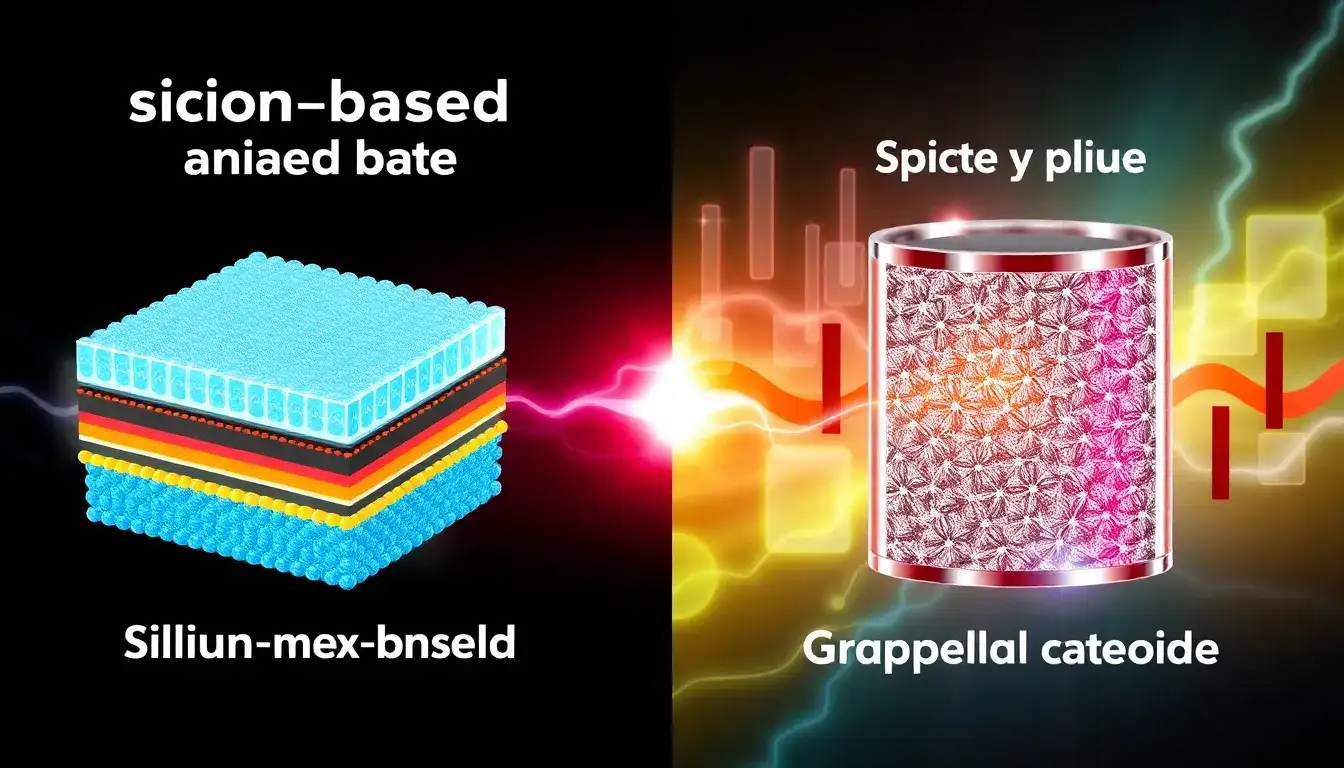
Energy Density Comparison
- Graphite Anodes: Traditional graphite anodes typically have an energy density much lower than what silicon offers. Graphite anodes usually operate at an energy density that falls short of the market demand, especially when considering the need for higher energy storage in applications like electric vehicles.
- Silicon-Based Anodes: Silicon anodes can achieve much higher energy densities. By utilizing pure silicon (Si) anodes, the volumetric energy density can be maximized up to about 1200 Wh/L, which significantly surpasses graphite. Gravimetric energy densities with silicon-based anodes can reach up to 520 Wh/kg when using pure Si, significantly higher than graphite. Most companies developing silicon composite anode materials report energy densities ranging from 800 Wh/L to 1350 Wh/L (290 Wh/kg to 450 Wh/kg).
Advantages of Silicon Anodes
- Higher Energy Density: Silicon offers a potential increase of at least 30% in energy density compared to current graphite anodes. This improvement is crucial for applications requiring higher energy storage per weight and volume unit, such as electric vehicles.
- Environmental and Cost Benefits: Silicon is abundant, environmentally friendly, and non-toxic, which are significant advantages over some other materials used in battery production, like cobalt.
- Future Potential: The use of silicon could also enhance lower energy cells, such as LFP cells, narrowing their energy density gap with NMC-based cells in EV applications.
However, silicon anodes face challenges like high volume expansion during charging and discharging, which can lead to structural issues and reduced lifespan. This necessitates ongoing research to stabilize silicon anodes and ensure their durability.
Original article by NenPower, If reposted, please credit the source: https://nenpower.com/blog/how-do-silicon-based-anodes-compare-to-traditional-graphite-anodes-in-terms-of-energy-density/

