

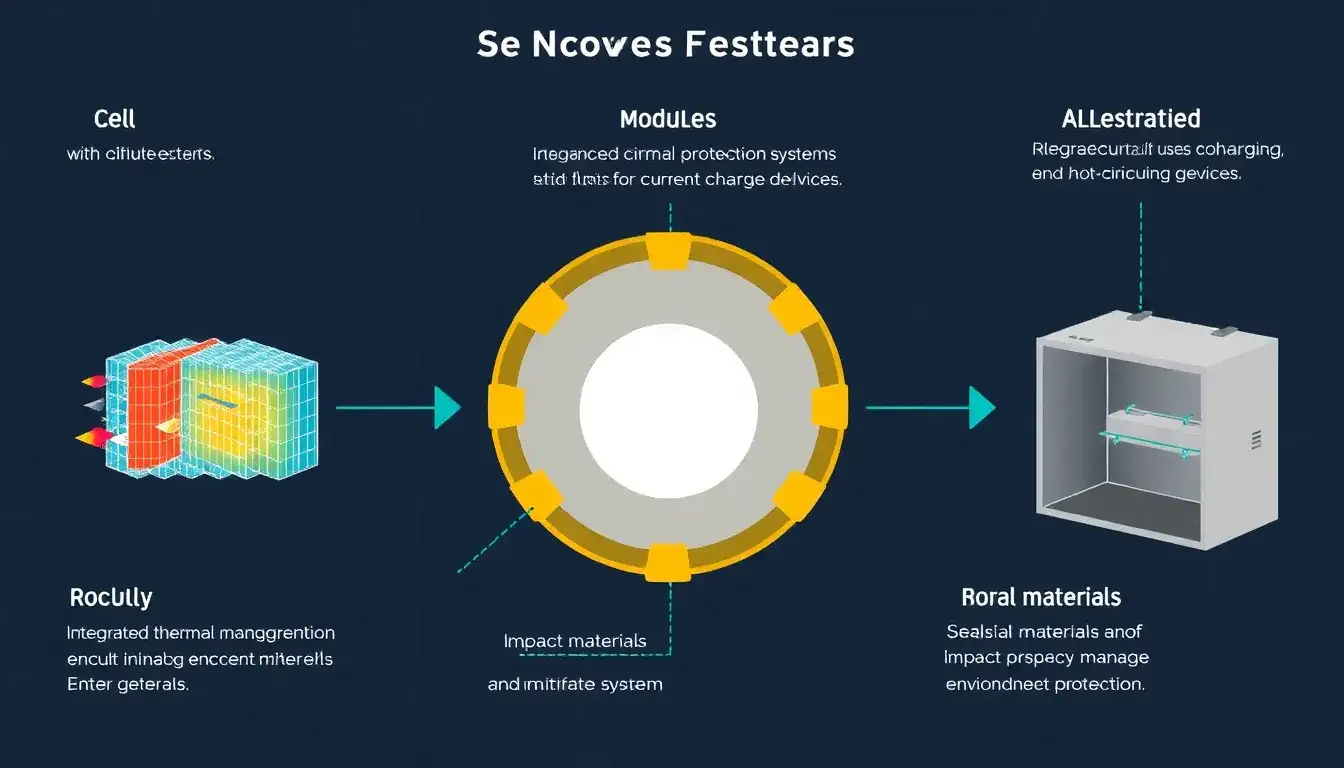
Safety features at the cell, module, and enclosure levels are critical for ensuring comprehensive protection and reliability in high-power battery systems. These features work together to prevent accidents, enhance performance, and optimize safety across various applications, including electric vehicles and energy storage systems.
Cell-Level Safety
At the cell level, safety features focus on controlling thermal runaway, managing internal pressure, and maintaining electrical isolation. Techniques include:
- Thermal Management: Cooling systems and thermal monitoring sensors help prevent overheating and thermal runaway, which can lead to fires.
- Pressure Relief Devices: These devices ensure that the cell can safely release pressure if it builds up due to internal failures, preventing explosions.
- Electrical Isolation: Cells are designed to prevent electrical shorts by maintaining insulation between components.
Module-Level Safety
In module-level safety, multiple cells are aggregated into modules with additional safety measures:
- Balancing Systems: Active balancing ensures that all cells within a module operate at similar states of charge, reducing the risk of overcharge or undercharge, which can cause cell damage.
- Thermal Monitoring: Modules include sensors and thermal management systems to monitor and control temperature across all cells.
- Fault Detection: Systems can identify faulty cells or connections within the module, allowing for isolation or repair to prevent cascading failures.
Enclosure-Level Safety
Battery enclosures integrate safety features from both cell and module levels while adding structural and environmental protections:
- Structural Integrity: Enclosures provide mechanical protection against impact and environmental stressors, ensuring the integrity of the battery pack.
- Thermal Runaway Protection: Advanced enclosures are designed to contain and manage thermal events, such as fires, by using fire-resistant materials and ventilation systems to prevent overheating.
- Electrical Safety: Enclosures ensure electrical isolation from the environment and prevent unauthorized access to high-voltage components.
- Environmental Protection: Seals and coatings protect against moisture and corrosion, ensuring reliable operation in diverse environments.
Integration and Coordination
The coordination of safety features across these levels ensures that each component complements the others to:
- Enhance Reliability: By integrating multiple safety layers, the overall reliability of the battery system is increased.
- Optimize Performance: Safety features are designed to support optimal operation, minimizing risks while maximizing efficiency.
- Reduce Risks: Comprehensive safety measures reduce the risk of accidents, such as fires or electrical shocks, making the battery system safer for users and the environment.
In summary, safety features at the cell, module, and enclosure levels work together by providing a layered approach to risk management, ensuring that the battery system operates safely and efficiently across various applications.
Original article by NenPower, If reposted, please credit the source: https://nenpower.com/blog/how-do-safety-features-at-the-cell-module-and-enclosure-levels-work-together-to-ensure-safety/

