

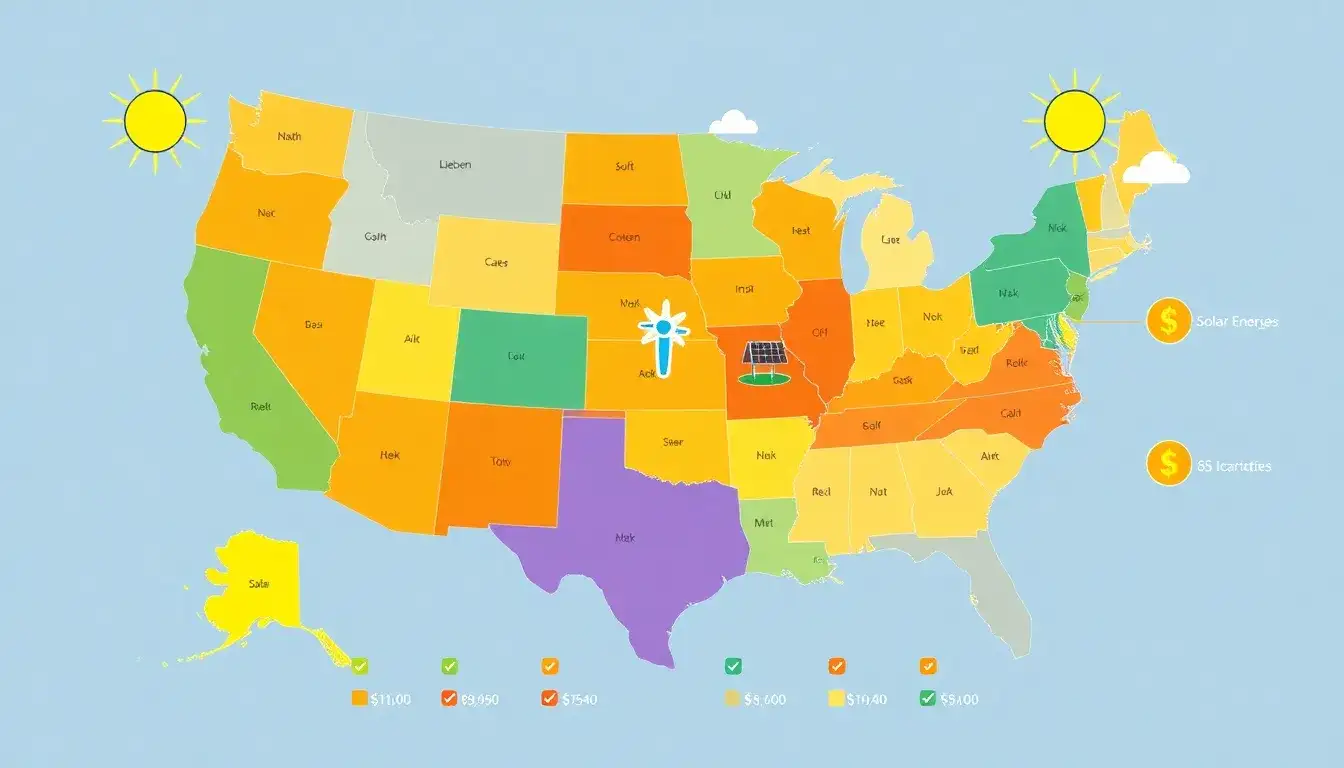
Renewable Portfolio Standards (RPS) and Solar Energy Adoption
Renewable Portfolio Standards (RPS) policies vary significantly across U.S. states, influencing solar energy adoption in different ways. Here’s a detailed comparison focusing on how RPS policies drive solar energy adoption:
Variations in RPS Policies Across States
- RPS Targets and Progress
Many states have set ambitious RPS targets, often including specific carve-outs or multipliers for solar energy. For example, 29 states plus Washington, D.C., have RPS policies, with 16 states targeting at least 50% renewable electricity by retail sales, and 4 states aiming for 100% renewable energy through their RPS programs. Vermont has the highest current RPS target, nearly 60%, making it a strong promoter of renewables including solar. Most states are meeting their RPS targets, indicating effective implementation. - Solar-Specific Goals
At least 21 states and D.C. have special provisions within their RPS policies that specifically promote certain technologies such as solar. These include credit multipliers or carve-outs that require or incentivize a minimum percentage of solar energy within the broader RPS targets. These solar carve-outs directly drive solar energy adoption by mandating utilities to procure a specified share of solar power. - Diversity of Renewable Energy Sources
While some states have broad RPS goals encompassing all renewable sources, others have clean energy standards that may also include nuclear or hydroelectric power. For example, through the 100% clean energy goals, states like D.C. (100% renewable by 2032) and Hawaii (100% renewable by 2045) set long-term targets that heavily favor solar due to their geographic advantages and policy frameworks. - Compliance Mechanisms and Challenges
States use various compliance mechanisms including renewable energy credits (RECs) and alternative compliance payments (ACPs). Some states with lower ACP costs, like Delaware, face challenges meeting RPS targets because utilities find it cheaper to pay penalties rather than invest in renewables including solar. Conversely, states with stricter enforcement and higher penalties tend to have better solar adoption outcomes.
Impact on Solar Energy Adoption
- Accelerated Solar Growth in States with Solar Carve-Outs
States that incorporate solar carve-outs in their RPS tend to have more significant solar capacity additions because utilities must source a minimum amount of solar generation or REC equivalents. This policy design directly incentivizes solar installations and development. - Meeting and Exceeding Targets
Most states with RPS policies are meeting their renewable targets, indicating steady progress. States with higher solar carve-outs or multipliers are often leaders in solar energy adoption. For example, New York and Illinois have experienced shortfalls but are expected to meet their targets as new solar projects come online. - Long-Term Clean Energy Commitments
States with clean electricity standards aiming for 100% renewables by mid-century or earlier (such as Hawaii and D.C.) create strong signals for solar investment and adoption, fostering market stability and growth.
Summary Table of State RPS Features vs Solar Adoption
| Feature | Impact on Solar Adoption | Examples |
|---|---|---|
| Solar-specific carve-outs | Drives dedicated solar procurement, boosting adoption | 21+ states including D.C. |
| High RPS targets (50+) | Encourages broad renewable growth, including solar | Vermont (~60% target) |
| 100% clean/renewable goals | Long-term certainty for solar expansion | D.C. (2032), Hawaii (2045) |
| Low alternative compliance payment costs | Can reduce incentive to invest in solar | Delaware, Puerto Rico |
| Use of REC systems | Facilitates tracking and trading of solar credits | Most RPS states |
In conclusion, RPS policies that include solar-specific carve-outs, high renewable targets, and effective compliance enforcement correlate strongly with higher solar energy adoption across states. States without such focused policies or with low penalties for non-compliance tend to lag in solar deployment. Overall, tailored RPS designs are key drivers behind the differing levels of solar adoption seen nationwide.
Original article by NenPower, If reposted, please credit the source: https://nenpower.com/blog/how-do-rps-policies-compare-across-different-states-in-terms-of-solar-energy-adoption/

