

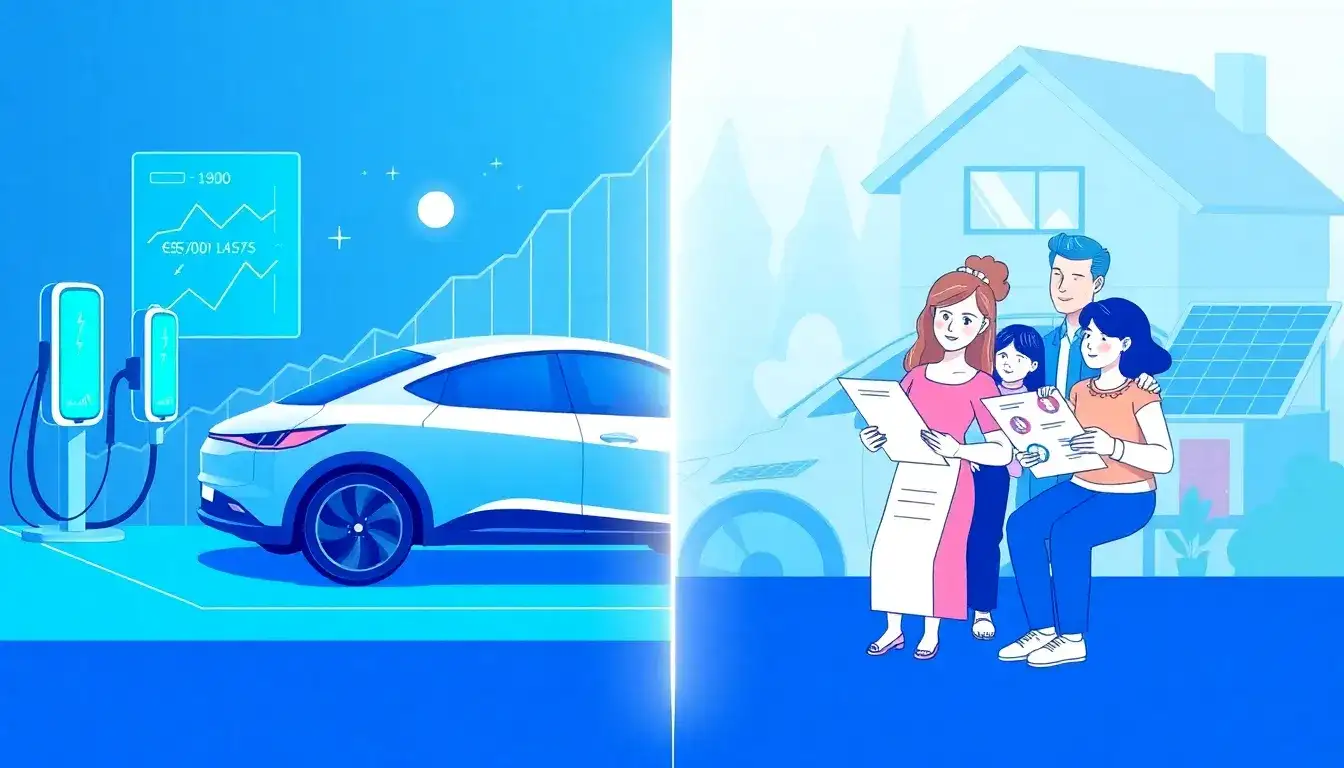
Rising electricity rates directly increase the overall cost of owning an electric vehicle (EV) because charging the car depends on the price paid per kilowatt-hour (kWh) of electricity. Since most EV owners charge at home, their electricity bills are a significant part of ongoing operational costs.
Impact of Rising Electricity Rates on EV Ownership Costs
-
Home Charging Costs Increase Proportionally:
The average residential electricity rate in the U.S. as of early 2025 is about $0.16 per kWh, but it varies widely—ranging from $0.11 in Washington up to $0.41 in Hawaii. For an average EV with a 40 kWh battery, a full home charge costs between about $6.00 and $6.40 at the national average rate. This means that a rise in electricity rates directly increases the per-charge cost and annual energy costs for EV owners. -
Annual Electricity Spending for EVs:
On average, EV owners who primarily charge at home spend approximately $500 to $800 annually on electricity. If electricity rates rise, this annual cost will increase correspondingly, reducing some of the operational savings that EVs typically offer over internal combustion engine (ICE) vehicles. -
EVs Still Often Cheaper to Operate than Gas Cars:
Despite rising electricity costs, EVs remain cheaper to maintain and operate compared to gas vehicles. For example, annual maintenance costs for EVs average $949, versus $1,279 for gas cars—a 31% reduction. Fuel savings are substantial since gasoline for driving 15,000 miles can cost more than the equivalent electricity, which currently averages about $546 per year for that mileage. -
Public Charging Costs are Higher and More Sensitive:
Public charging costs tend to be higher (around $0.30 per kWh or more), leading to $20-$40 per full charge, which can amplify the impact of rising electricity prices when owners rely on public stations more frequently.
Summary
Rising electricity rates increase the cost per kWh, making each EV charge more expensive and raising the annual cost of ownership. However, even with electricity price increases, EVs generally maintain a cost advantage over gasoline cars due to lower maintenance costs and historically lower per-mile fueling costs. The extent of the impact depends on how much electricity rates increase and whether owners charge mainly at home or rely on more expensive public charging options.
Thus, higher electricity rates reduce—but typically do not eliminate—the economic benefits of owning an EV.
Original article by NenPower, If reposted, please credit the source: https://nenpower.com/blog/how-do-rising-electricity-rates-impact-the-overall-cost-of-owning-an-ev/

