

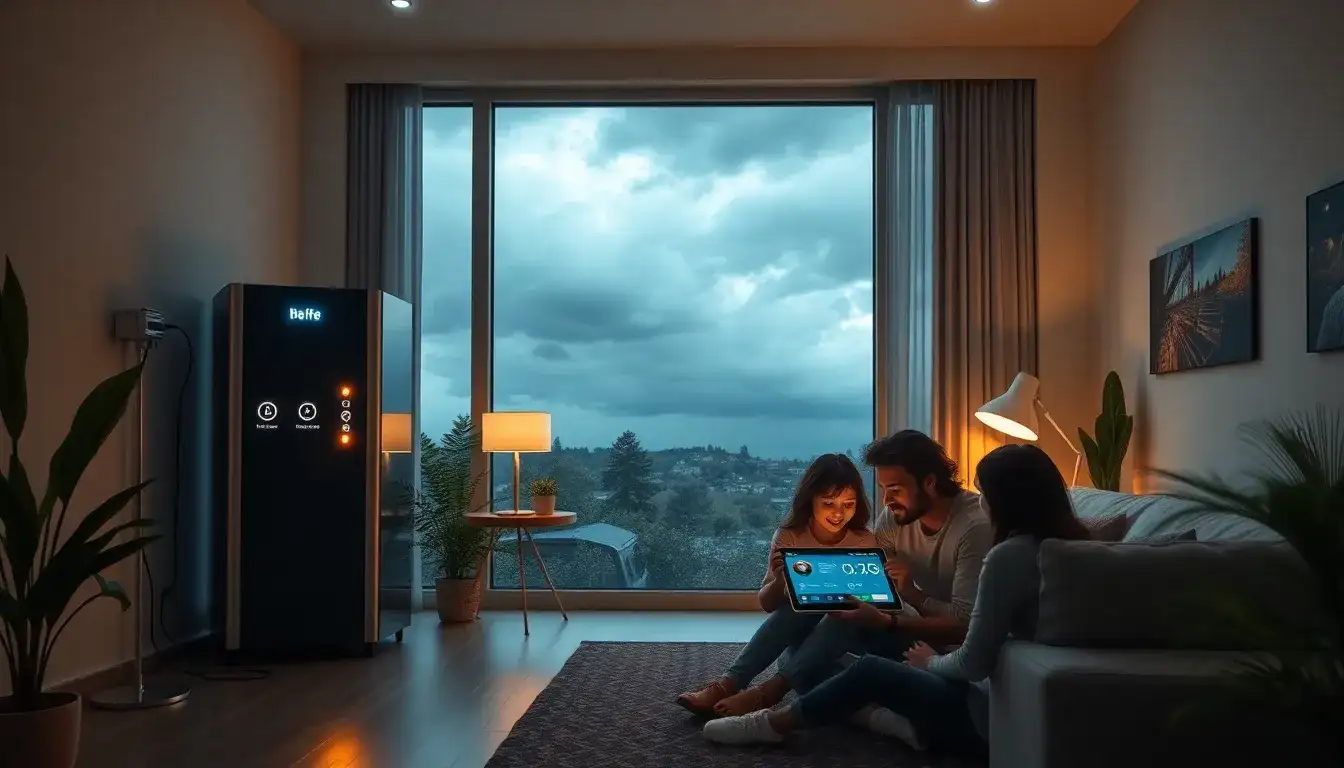
Residential energy storage systems provide backup power during outages by storing excess energy generated from solar panels or the grid during off-peak hours and using it to supply homes when the grid fails. Here’s how they work:
- Energy Generation and Storage: Solar panels generate electricity during the day, and any excess energy not immediately used is stored in a battery, typically a lithium-ion battery, by the energy storage system.
- Grid Disconnect: When the grid fails, the system automatically disconnects from the grid, preventing backfeeding into the grid and ensuring safety for utility workers.
- Backup Power Supply: The stored energy is then converted from DC to AC power by an inverter and supplied to essential appliances and devices in the home, ensuring that critical loads remain operational.
- Continuous Power Supply: During an outage, as long as there is sunlight, solar panels can continue to generate electricity and recharge the battery, providing a renewable source of power until grid power is restored.
- System Monitoring and Control: Many modern systems come with features for monitoring energy production, storage, and consumption, allowing homeowners to manage their energy use and optimize their power supply during outages.
Overall, residential energy storage systems offer a reliable, clean, and efficient way to maintain power during grid outages.
Original article by NenPower, If reposted, please credit the source: https://nenpower.com/blog/how-do-residential-energy-storage-systems-provide-backup-power-during-outages/

