

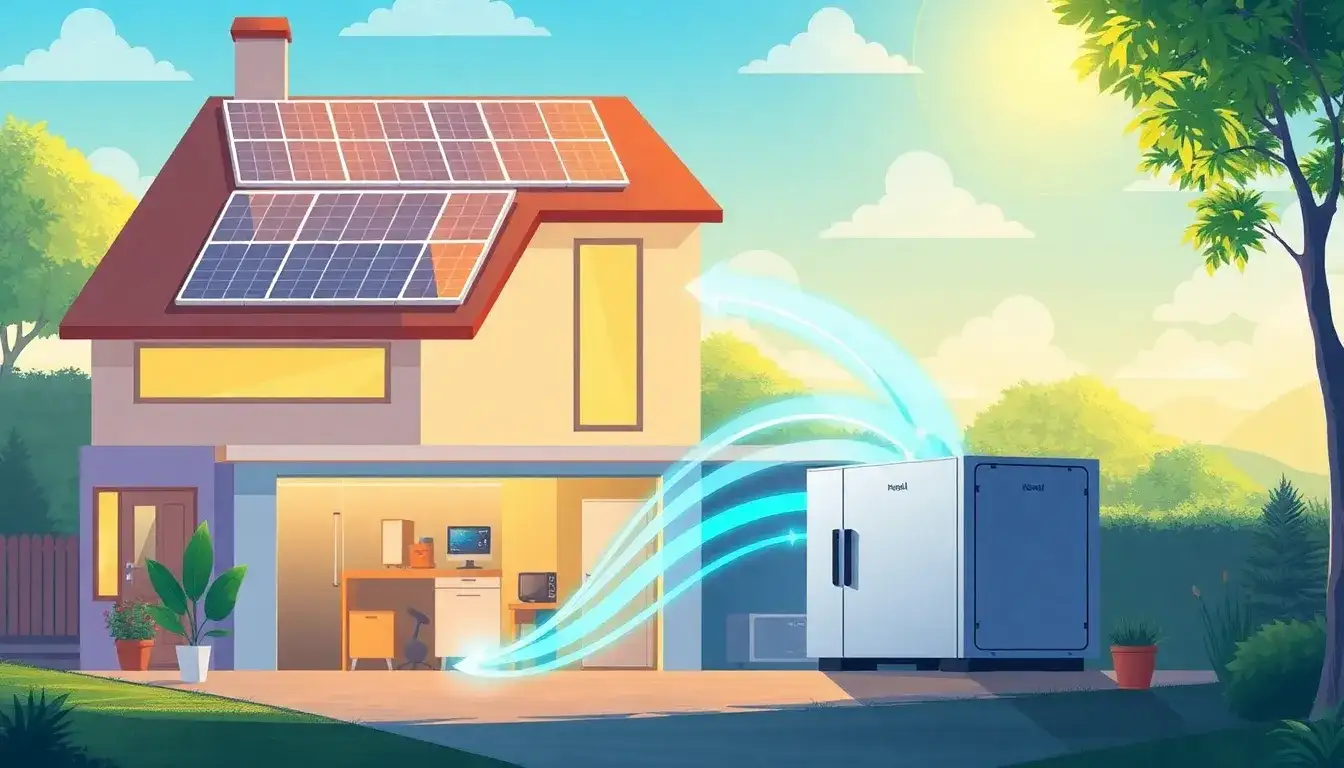
Components of a Residential Energy Storage System
A typical system consists of three key components:
- Solar Photovoltaic (PV) Panels: These capture sunlight and convert it into direct current (DC) electricity.
- Inverter: Converts DC electricity from the solar panels into alternating current (AC) that can be used by household appliances. Hybrid inverters manage both solar generation and battery storage.
- Energy Storage Batteries: Typically lithium-ion, these store excess energy generated by the solar panels for later use.
Energy Flow Process
The integration of solar panels with energy storage involves the following steps:
- Energy Generation: Solar panels capture sunlight and generate DC electricity.
- Inverter Conversion: This DC electricity is converted into AC electricity by the inverter.
- Energy Use & Storage: During peak sunlight hours, the AC electricity powers home appliances, while excess energy is stored in batteries.
- Energy Usage: At night, on cloudy days, or during power outages, stored energy from the batteries is used to power the home, reducing reliance on the grid.
Benefits of Integration
This integration offers several benefits:
- Energy Independence: Homes can rely less on the grid for electricity.
- Backup Power: Provides crucial backup during grid outages.
- Cost Savings: Reduces utility bills by optimizing energy usage during peak and off-peak hours.
- Environmental Benefits: Promotes the use of renewable energy, reducing carbon emissions.
Overall, the combination of solar panels with residential energy storage systems ensures a reliable and efficient power supply, enhancing the overall value and effectiveness of solar energy solutions.
Original article by NenPower, If reposted, please credit the source: https://nenpower.com/blog/how-do-residential-energy-storage-systems-integrate-with-solar-panels/

