

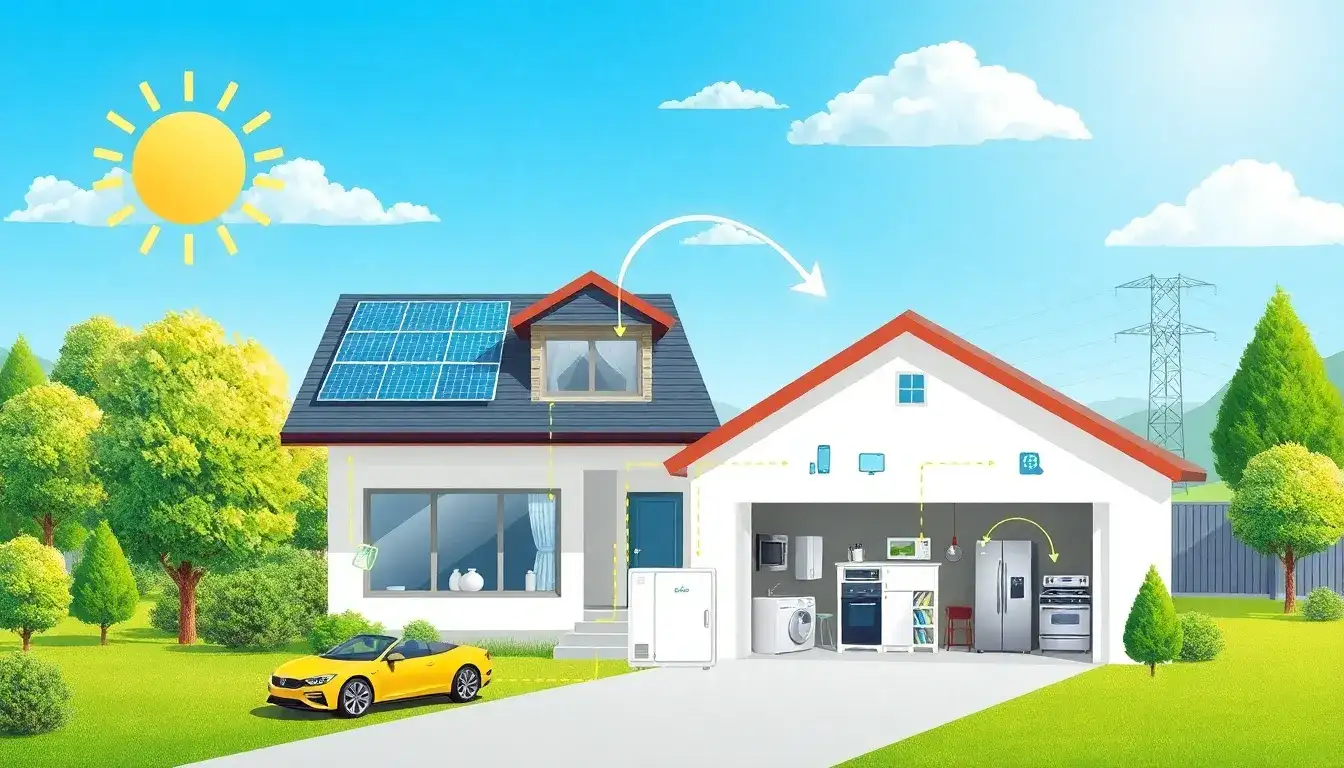
Residential energy storage systems (RESS) significantly contribute to household energy independence in several key ways:
Contribution to Energy Independence
- Reduced Grid Reliance: RESS allows homeowners to store energy generated from renewable sources like solar panels for use during peak hours or when the sun isn’t shining. This reduces their reliance on the grid, especially during power outages or emergencies, providing a continuous power supply.
- Backup Power: In the event of a grid outage, a residential energy storage system can provide backup power, ensuring essential appliances continue to run without interruption. This backup capability is crucial for maintaining household operations and safety during extended outages.
- Off-Grid Living: For households in remote areas where connecting to the grid is difficult or costly, RESS can facilitate off-grid living by storing and supplying energy independently.
- Self-Consumption of Solar Energy: Homeowners can store surplus solar energy for later use rather than selling it back to the grid immediately, maximizing the value from their solar panels and increasing energy independence.
Benefits of Increased Energy Independence
- Cost Savings: By using stored energy during peak demand times, households can avoid higher electricity rates, leading to significant savings.
- Environmental Sustainability: RESS supports the use of renewable energy sources, reducing reliance on fossil fuels and lowering carbon footprints.
- Grid Stability: These systems can contribute to grid stability by discharging stored energy back to the grid during peak demand periods.
Overall, residential energy storage systems enhance energy independence by providing households with a reliable, self-sufficient source of electricity, reducing their dependence on the grid and promoting a sustainable energy future.
Original article by NenPower, If reposted, please credit the source: https://nenpower.com/blog/how-do-residential-energy-storage-systems-contribute-to-energy-independence-for-households/

