

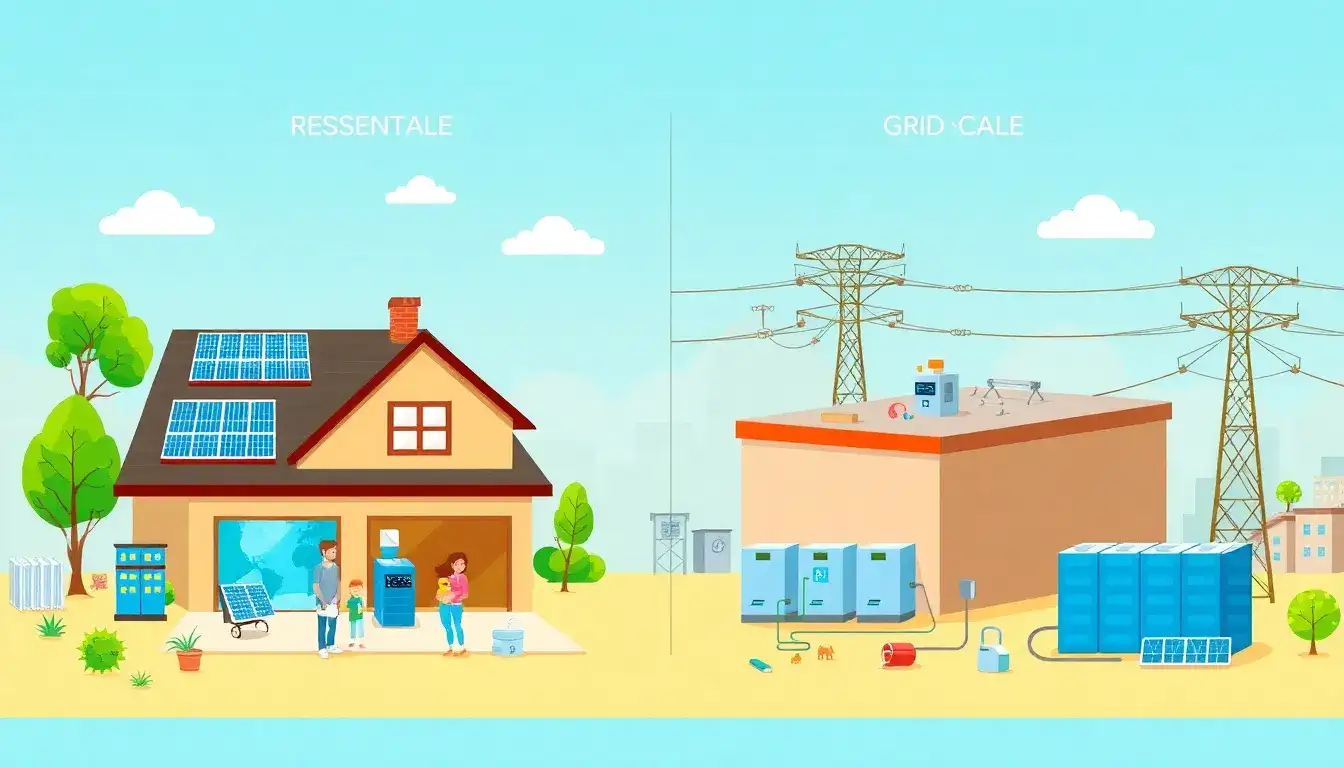
Resilience and Response
- Residential Systems: These provide immediate backup power during outages, ensuring that essential appliances remain operational. Residential systems can activate almost instantly, offering continuous power from stored energy and ongoing solar generation if available.
- Grid-Scale Systems: While crucial for stabilizing the grid, these systems often have slower response times due to their complexity and scale. Activation can take from several seconds to minutes, impacting grid reliability during sudden power surges or outages.
Energy Loss and Efficiency
- Residential Systems: Generally experience lower energy loss compared to grid-scale systems. Since they are smaller and more efficient, residential systems minimize self-discharge and conversion losses.
- Grid-Scale Systems: Face significant challenges with energy loss. Technologies like pumped hydro storage lose 15-30% of energy, while battery systems may lose 2-10% monthly due to self-discharge and conversion inefficiencies.
Installation and Maintenance
- Residential Systems: Installation is simpler, requiring local permits and can be completed within days. Maintenance is minimal, and systems are compact enough to fit in garages or utility rooms.
- Grid-Scale Systems: Involve complex infrastructure and lengthy permitting processes. They require vast land areas and extensive maintenance, increasing operational costs.
Financial and Control Aspects
- Residential Systems: Benefits are directly realized by homeowners, reducing electricity bills and offering control over energy usage. Many states provide incentives for residential installations.
- Grid-Scale Systems: Costs and benefits are distributed across all utility customers. While crucial for grid stability, individual users may not see direct financial returns from these systems.
Safety Considerations
- Residential Systems: Safety risks include battery failures and thermal runaway. Mitigation strategies involve proper installation, certification (e.g., UL 9540), and safety protocols.
- Grid-Scale Systems: While safety is a concern, grid-scale systems are more subject to operational complexity and the need for robust safety protocols due to their scale and interconnected nature.
In summary, residential energy storage systems offer immediate resilience benefits for individual homeowners, providing control, efficiency, and direct financial advantages. In contrast, grid-scale storage enhances grid stability but faces challenges related to efficiency, response time, and cost distribution. Both types of storage are vital but serve different roles in achieving energy resilience.
Original article by NenPower, If reposted, please credit the source: https://nenpower.com/blog/how-do-residential-energy-storage-systems-compare-to-grid-scale-storage-in-terms-of-resilience/

