

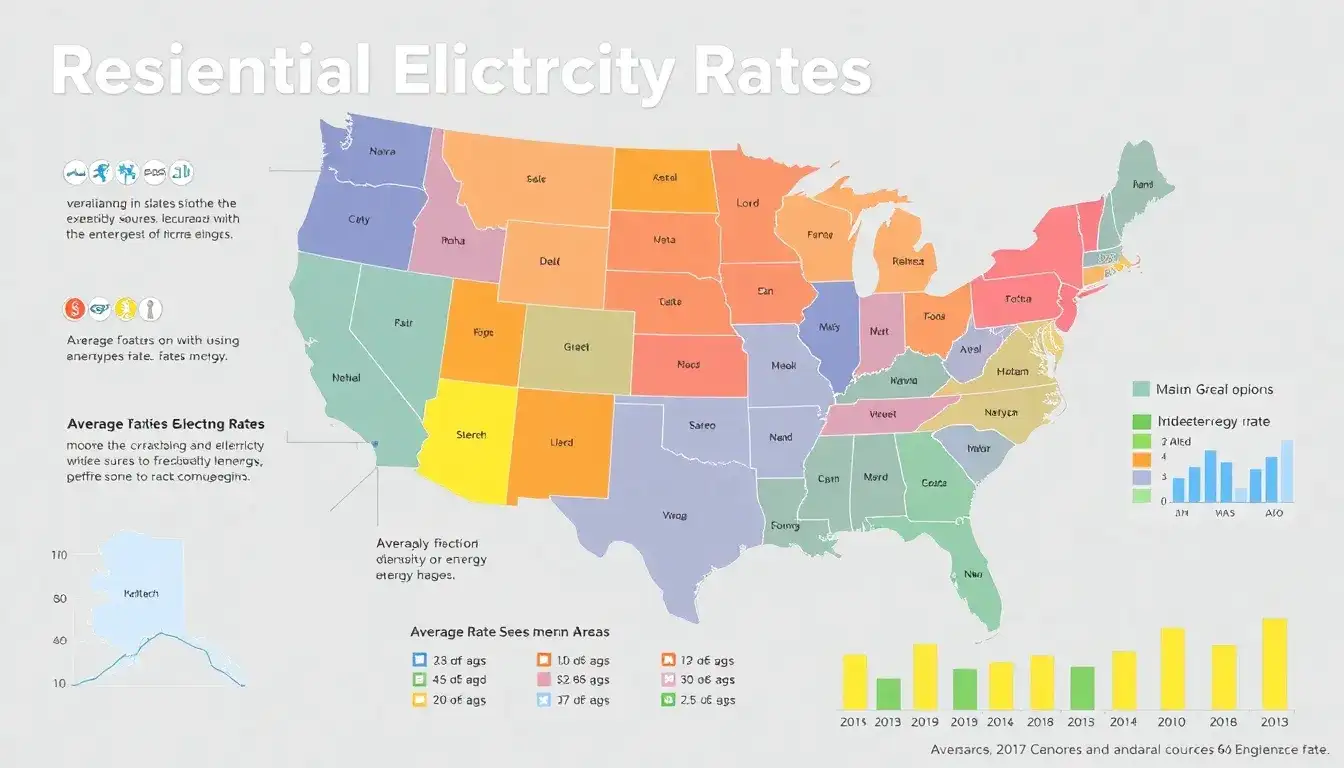
Residential electricity rates within states can vary significantly due to several factors, though specific intra-state rate variations are not explicitly detailed in the sources. Key influences include:
1. Geographic factors
- Remote areas (e.g., Alaska’s distribution challenges or Hawaii’s island geography) often face higher costs due to infrastructure expenses.
- Urban vs. rural differences in grid maintenance costs and demand patterns.
2. Energy sources
- Fuel mix (renewables vs. fossil fuels) impacts costs. For example, states using pricier imported fuel (Hawaii) or maintaining older grids (Northeastern states) report higher averages.
- Renewable energy policies may create localized rate differences.
3. Regulatory structures
- Deregulated markets: In states like Texas (not listed), competition can lower rates; however, Northeastern states like Connecticut and Massachusetts face limited competition and higher prices.
- State taxes and fees: These can add variability between municipalities or counties.
4. Infrastructure and billing models
- Grid modernization costs: Older infrastructure in states like Rhode Island or New York drives up rates.
- Time-of-use billing: Rates may fluctuate hourly in some areas, though this data isn’t explicitly mentioned in the sources.
While the provided data focuses on statewide averages, actual rates often differ between utility providers, cities, and even neighborhoods. For example, a city with municipal power might have lower rates than nearby areas serviced by investor-owned utilities. Local incentives, solar adoption rates, and seasonal demand can further widen intra-state disparities.
Example
Hawaii’s statewide average is 40.51¢/kWh, but individual islands or communities with microgrids or solar incentives might see lower effective rates than areas reliant on imported oil. Similarly, California’s 30.22¢/kWh average likely masks higher costs in densely populated coastal cities versus inland regions.
For precise intra-state comparisons, utility-specific rate filings or localized data would be required.
Original article by NenPower, If reposted, please credit the source: https://nenpower.com/blog/how-do-residential-electricity-rates-vary-within-the-same-state/

