

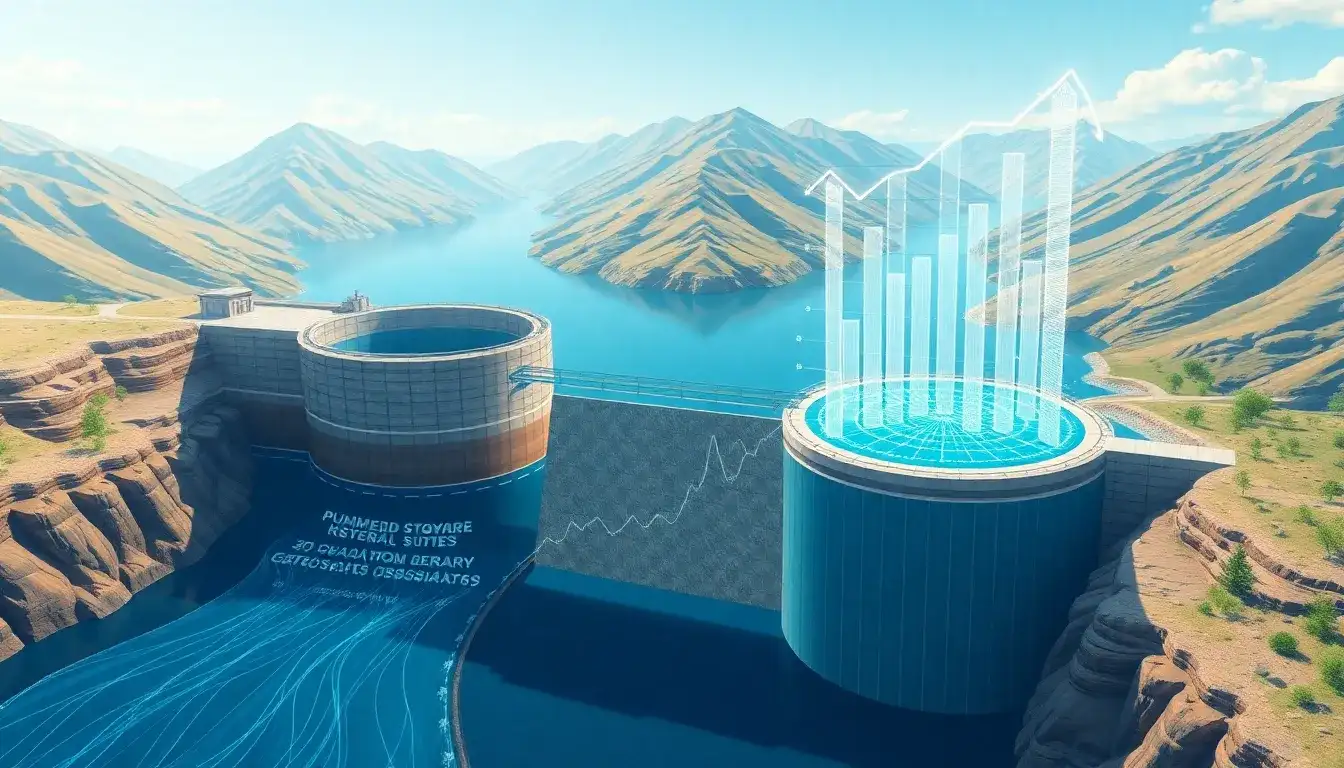
Reservoir sizes significantly influence the overall cost of pumped hydro storage (PHS) projects in several ways:
Factors Influencing Cost
- Energy Storage Capacity: The size and height difference between the two reservoirs determine the energy storage capacity of a PSH project. Larger reservoirs can store more energy, but they also require more land, which can increase costs associated with land acquisition and environmental impact assessments.
- Reservoir Construction Costs: The volume of the reservoirs directly affects construction costs. Larger reservoirs typically require more material for dam construction and more extensive excavation or earthwork, increasing overall costs.
- Head and Reservoir Size Relationship: The head (height difference) between reservoirs affects reservoir size. Higher heads allow for smaller reservoirs to achieve the same energy storage capacity. This can lead to lower construction costs because smaller reservoirs require less material and land.
- Site Selection and Land Availability: Suitable sites for large reservoirs are often scarce due to geographic constraints like terrain and access to water sources. This scarcity can drive up costs if less optimal sites are used or if extensive land acquisition is required.
- Environmental and Social Impacts: Larger reservoirs can have significant environmental and social impacts, including displacement of communities and alteration of ecosystems. These factors can lead to increased costs due to mitigation measures or project delays.
Economic Considerations
- Economies of Scale: While larger reservoirs can be more expensive upfront, they often achieve economies of scale in terms of cost per unit of stored energy. This can make larger PHS projects more cost-effective for meeting significant energy storage needs.
- Long-term Cost-Effectiveness: PHS plants are long-lived assets, typically operating for decades. Over their lifespan, the initial high capital costs can be offset by the consistent provision of grid stability services and energy storage, making them cost-effective solutions for integrating intermittent renewable energy sources.
In summary, reservoir size plays a crucial role in determining the overall cost of PHS projects by influencing construction costs, land requirements, and energy storage capacity. Balancing these factors is essential for optimizing the economic viability of PHS projects.
Original article by NenPower, If reposted, please credit the source: https://nenpower.com/blog/how-do-reservoir-sizes-influence-the-overall-cost-of-pumped-hydro-storage/

