

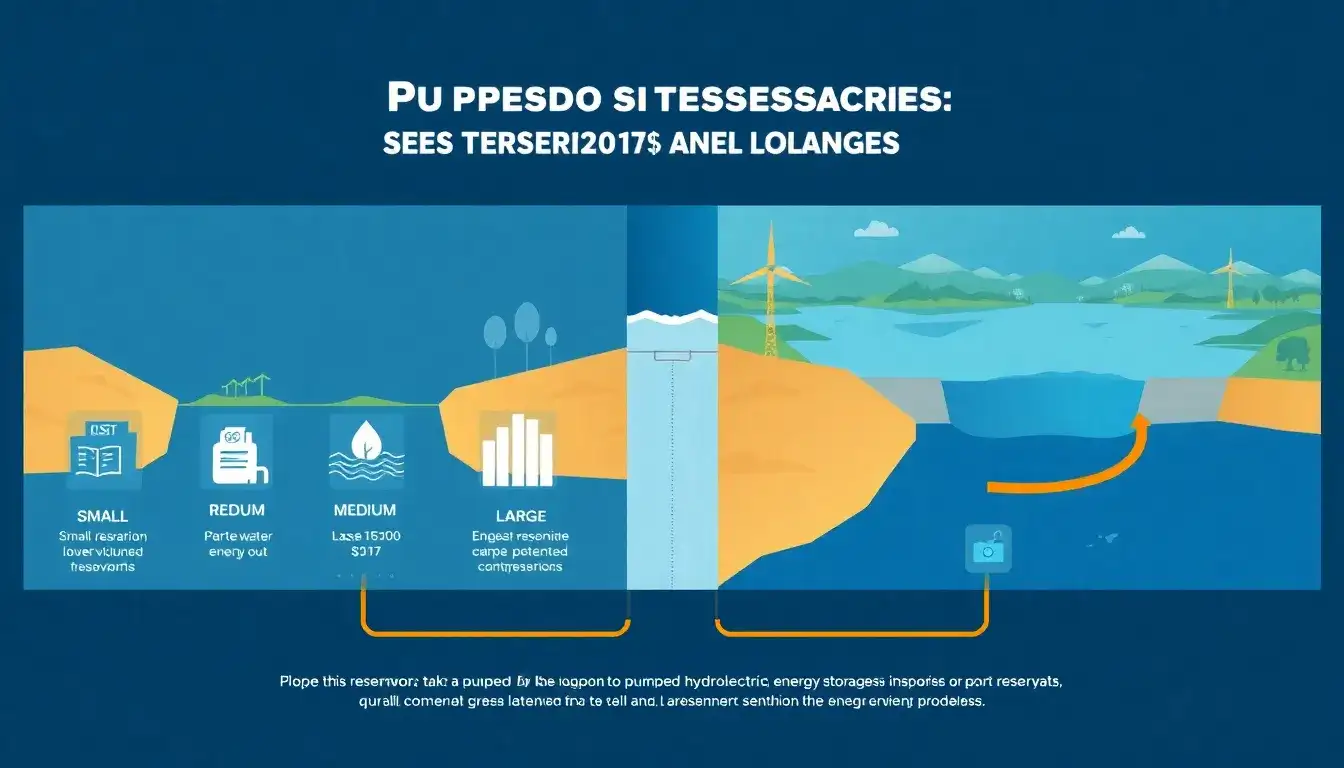
Reservoir size significantly impacts the overall cost of pumped hydroelectric energy storage (PSH) projects due to its direct influence on storage capacity, construction complexity, and associated fixed and variable costs.
How Reservoir Size Affects Cost
- Energy Storage Capacity: The amount of energy a PSH plant can store depends largely on the size (volume) of the reservoirs and the height difference between them. Larger reservoirs enable more water storage, allowing for longer energy storage durations (e.g., 8 hours or more). This translates into greater usable energy capacity but requires more extensive civil works and materials, increasing capital costs.
- Fixed vs. Variable Costs: While larger reservoirs increase the stored energy and thus overall project capacity, the cost impact is not linear. Fixed costs, such as planning, equipment procurement, and infrastructure, remain relatively constant regardless of reservoir size. However, the incremental cost of adding more water storage volume—hence increasing reservoir size—dominates at larger scales. This means that beyond a certain size, costs rise primarily due to the reservoir expansion rather than equipment or other fixed expenses.
- Head (Height Difference) Interaction: Higher hydraulic head allows for smaller reservoir volumes for the same energy storage capacity because the potential energy depends on water volume and height. Therefore, projects with higher heads can achieve the same storage capacity with smaller reservoirs, potentially reducing reservoir construction costs.
- Construction and Environmental Costs: Larger reservoirs require more extensive earthworks, dam construction, and may have higher environmental impact mitigation costs, further increasing overall project expenses. PSH plants with one existing reservoir can have lower costs compared to closed-loop systems requiring two new reservoirs, partly because of the differences in reservoir construction scale.
Cost Estimation Evidence
- NREL’s cost model integrates site-specific parameters including reservoir volume to estimate project costs, illustrating how larger reservoirs and their design features translate into capital expenditure increases.
- Typical PSH plant costs (excluding transmission) range roughly between $2,300 to $3,500 per kilowatt, with reservoir size and storage duration being key cost drivers. Longer duration storage, enabled by larger reservoirs, benefits from scale economies in fixed costs but still sees cost increases mainly from reservoir enlargement.
Summary
Reservoir size impacts PSH project costs primarily by determining energy storage capacity. Larger reservoirs enable longer-duration storage but increase civil construction costs and environmental mitigation expenses. Higher-head projects can reduce reservoir volume requirements and thus potentially lower reservoir-related costs. Overall, reservoir size is a critical factor in PSH cost modeling and design decisions, influencing both upfront capital expenditures and the economic viability of the storage project.
Original article by NenPower, If reposted, please credit the source: https://nenpower.com/blog/how-do-reservoir-sizes-impact-the-overall-cost-of-pumped-hydroelectric-energy-storage/

