

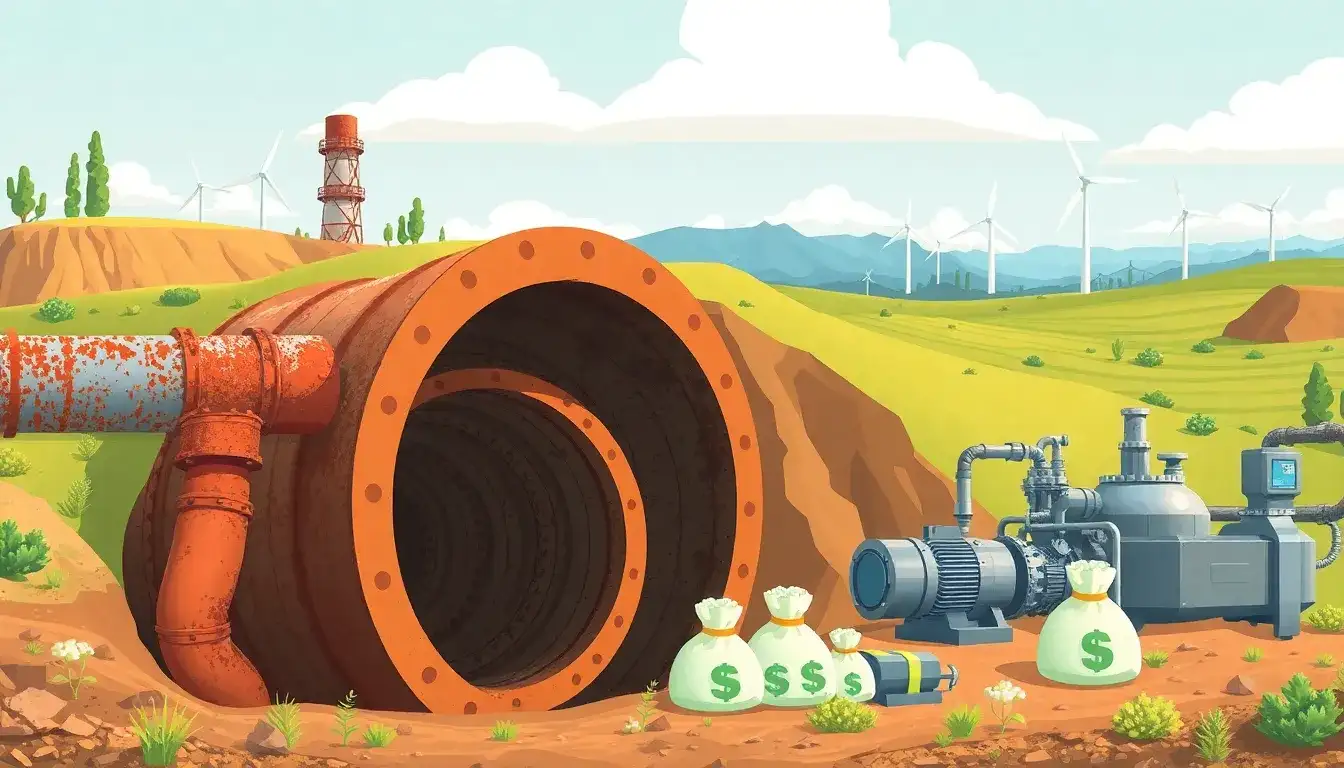
Repurposed pipelines can significantly reduce the capital costs of Compressed Air Energy Storage (CAES) plants by utilizing existing infrastructure. Here’s how this cost reduction occurs:
- Pre-Existing Infrastructure: Pipelines are already constructed and located, eliminating the need for new pipeline construction, which is a costly endeavor. This includes savings on materials, labor, and land acquisition.
- High L/D Ratio and Pre-Permitted Access: Repurposed pipelines often offer a high length-to-diameter ratio (L/D) and may already have necessary permits for use. This reduces legal and regulatory costs, as well as the cost associated with accessing and developing new sites.
- Reduced Site Development Costs: Since the pipelines are pre-existing, they do not require additional site preparation or development, which can be a significant expense in new construction projects.
- Lower Overall Project Costs: By leveraging existing infrastructure, the overall project cost for CAES plants decreases. This makes the technology more economically viable for energy storage applications.
Overall, repurposing pipelines allows CAES developers to bypass the significant upfront costs associated with building new infrastructure, thus lowering the total capital cost of the plant.
Original article by NenPower, If reposted, please credit the source: https://nenpower.com/blog/how-do-repurposed-pipelines-reduce-the-capital-costs-of-caes-plants/

