

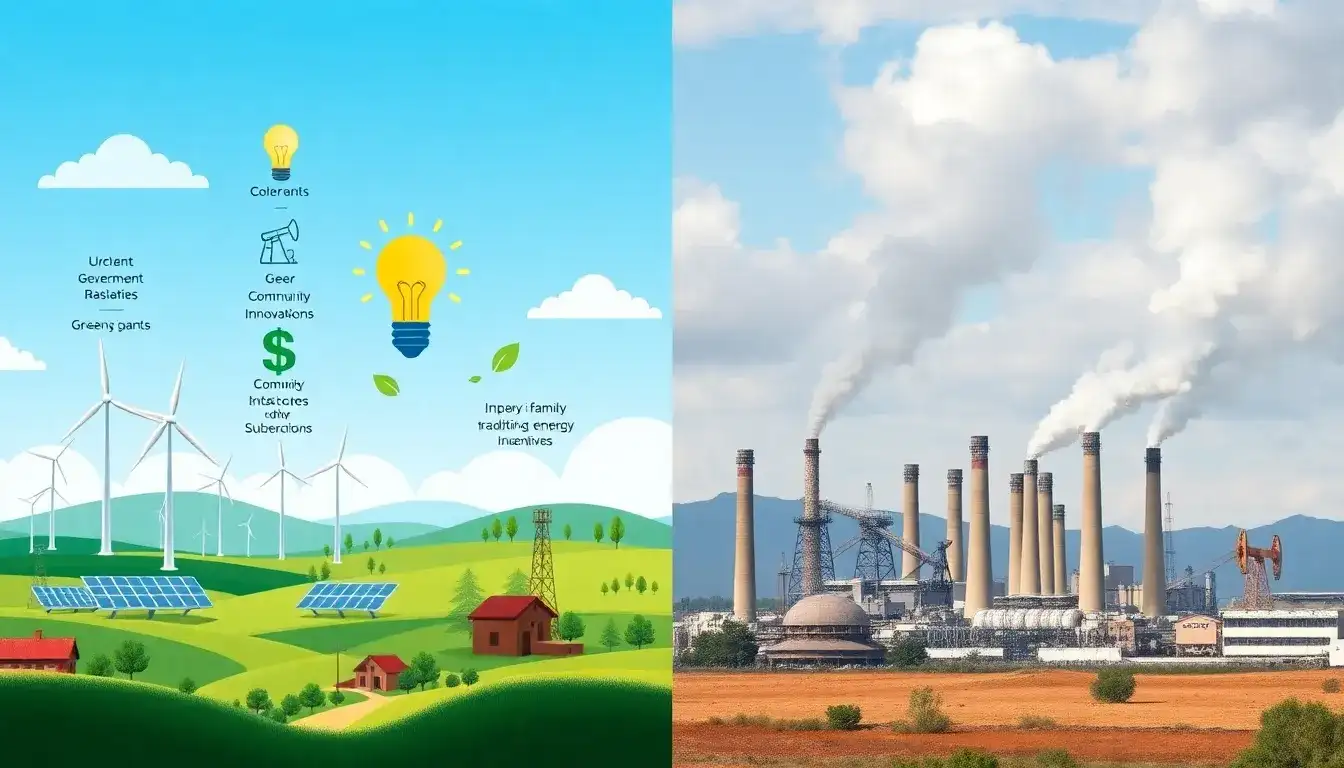
Renewable energy incentives and those in traditional energy sectors differ substantially in structure, focus, and scale due to their distinct roles in energy policy, environmental goals, and market development.
Renewable Energy Incentives
Types of Incentives:
- Renewable energy incentives primarily come as financial and regulatory measures. Financial incentives include subsidies, tax credits, grants, and accelerated depreciation tailored to renewable technologies like wind, solar, biomass, geothermal, and hydropower.
- Key U.S. federal financial incentives for renewables include:
- The Renewable Electricity Production Tax Credit (PTC), which rewards operational efficiency by providing ongoing benefits based on electricity production. For example, after 2021, wind and solar projects can earn around 0.6 cents per kilowatt-hour, with increased rates if prevailing wage and apprenticeship rules are met.
- The Investment Tax Credit (ITC), which provides a credit based on the initial investment cost of the renewable energy project.
- Other incentives include residential energy credits, grants, and loans from federal agencies and many state-level programs documented comprehensively by DSIRE.
- Incentive policies are designed both to pull demand for renewables and push supply-side business environment improvements, supporting technology deployment and manufacturing growth.
International Examples:
- Countries offer diverse incentives, like Germany and India, which may include benefits such as reduced energy bills when living near renewable installations, reflecting innovative and localized incentive approaches to accelerate renewable transitions.
Traditional Energy Sector Incentives
- Traditional energy sectors, such as coal, oil, and natural gas, have historically received substantial subsidies and tax benefits globally to support production, exploration, and infrastructure development. These incentives often include direct subsidies, tax deductions, favorable royalty rates, and infrastructure support.
- However, in many countries, financial and regulatory incentives for traditional fossil fuels are now being phased down or scrutinized in light of climate goals and increased focus on sustainability.
Comparison Summary
| Aspect | Renewable Energy Incentives | Traditional Energy Incentives |
|---|---|---|
| Focus | Promote clean energy production, reduce emissions | Support fossil fuel exploration, production, and supply |
| Types | Tax credits (PTC, ITC), grants, subsidies, regulatory mandates | Subsidies, tax deductions, royalty reliefs |
| Incentive Basis | Often linked to performance (e.g., energy produced) and investment cost | Often linked to volume of production or capital investment |
| Policy Goals | Decarbonization, technology deployment, energy transition | Energy security, economic development (historically) |
| Trends | Increasing and expanding globally | Generally declining due to climate policy shifts |
| Examples | US federal PTC and ITC, state/local incentives, international household incentives | Historically large fossil fuel subsidies worldwide |
Renewable energy incentives tend to be more targeted and performance-based, rewarding both initial investment and continuous energy production, reflecting a strategic push toward sustainable energy systems. In contrast, traditional energy sector incentives have been broader, often volume or capacity-based, supporting established industries but are increasingly being curtailed due to environmental concerns.
In conclusion, renewable energy incentives are more aligned with promoting clean energy development and operational efficiency with a mixture of financial and regulatory tools, while traditional energy incentives historically favored fossil fuel production but face reduction in many regions as energy policies evolve. This contrast reflects the global shift toward sustainability and climate action.
Original article by NenPower, If reposted, please credit the source: https://nenpower.com/blog/how-do-renewable-energy-incentives-compare-to-those-in-traditional-energy-sectors/

