

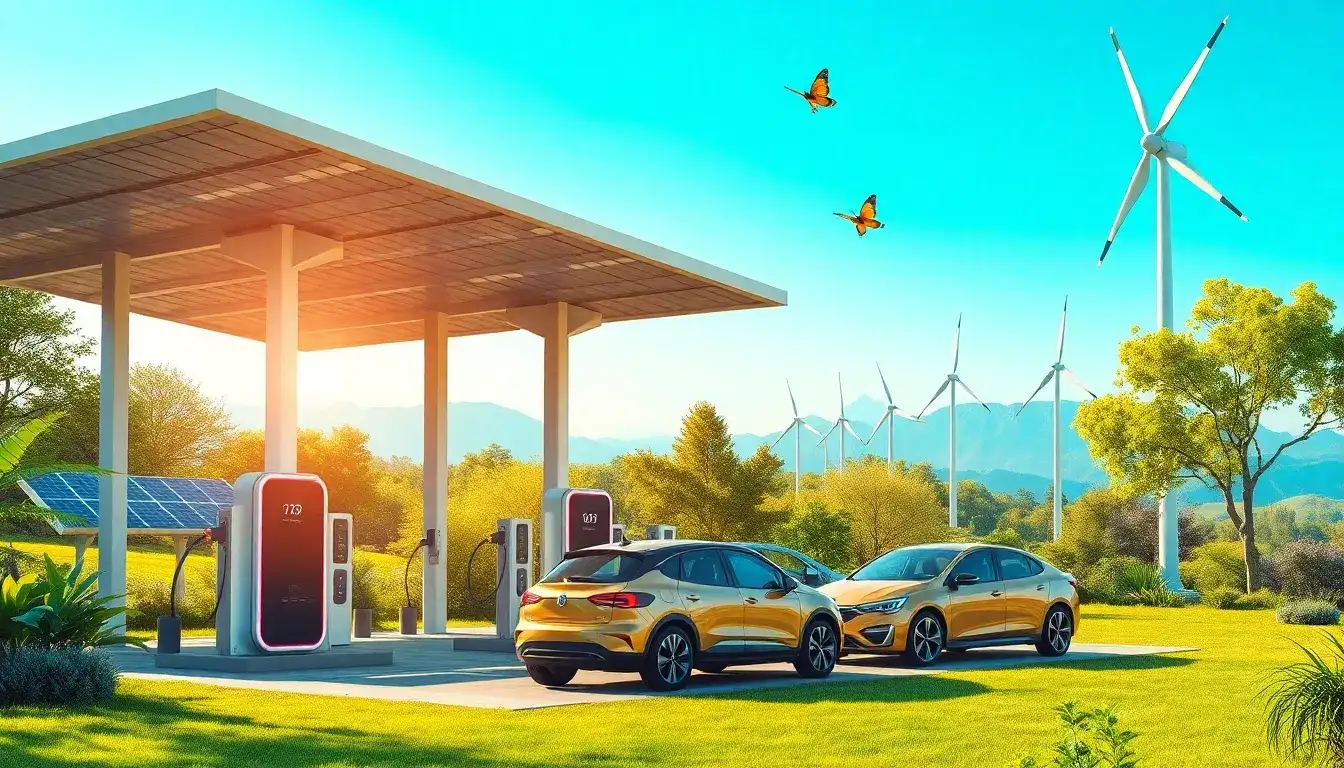
Renewable energy-based EV charging stations contribute to energy independence in several critical ways:
1. Reducing Dependence on Fossil Fuels and the Grid
These charging stations generate electricity from renewable sources such as solar, wind, or hydroelectric power directly on-site, which decreases reliance on fossil fuel-based power plants and the traditional electrical grid. By producing their own clean energy, they mitigate vulnerabilities associated with fossil fuel supply disruptions and volatile energy prices.
2. Enhancing Energy Resilience through On-site Generation and Storage
Many renewable EV charging setups incorporate battery storage systems that store excess renewable energy generated during periods of low usage or high production. This stored energy can be used during peak demand or when renewable generation is unavailable, reducing the need to draw power from the grid and improving energy reliability and resilience for EV charging infrastructure.
3. Smart Charging Technologies Optimize Renewable Usage
The integration of smart charging management systems allows optimal use of locally generated renewable energy, load balancing, and demand response. This reduces grid dependency further by prioritizing renewable energy use and minimizing peak electricity loads, which supports a more independent and stable energy supply for EV charging.
4. Supporting Decentralized and Rural Charging Access
Renewable-powered stations can be deployed in rural or remote locations without reliable grid access, enabling EV adoption outside urban centers without expanding the grid infrastructure. This decentralization promotes energy independence at a community level by leveraging local renewable resources.
5. Economic Implications Favor Long-term Local Energy Security
While initial investments can be significant, the use of renewable resources lowers operational costs over time by avoiding fuel purchases and grid electricity tariffs, contributing to local energy cost savings and greater energy autonomy.
Summary:
Renewable energy-based EV charging stations contribute to energy independence by generating clean electricity on-site, reducing reliance on fossil fuels and the wider grid, incorporating energy storage for consistent supply, and utilizing smart charging to maximize renewable usage. They also enable decentralized charging networks, including in off-grid areas, fostering local resilience and reducing infrastructure strain. These factors collectively promote a more self-sufficient, sustainable, and resilient transportation energy system.
Original article by NenPower, If reposted, please credit the source: https://nenpower.com/blog/how-do-renewable-energy-based-ev-charging-stations-contribute-to-energy-independence/

