

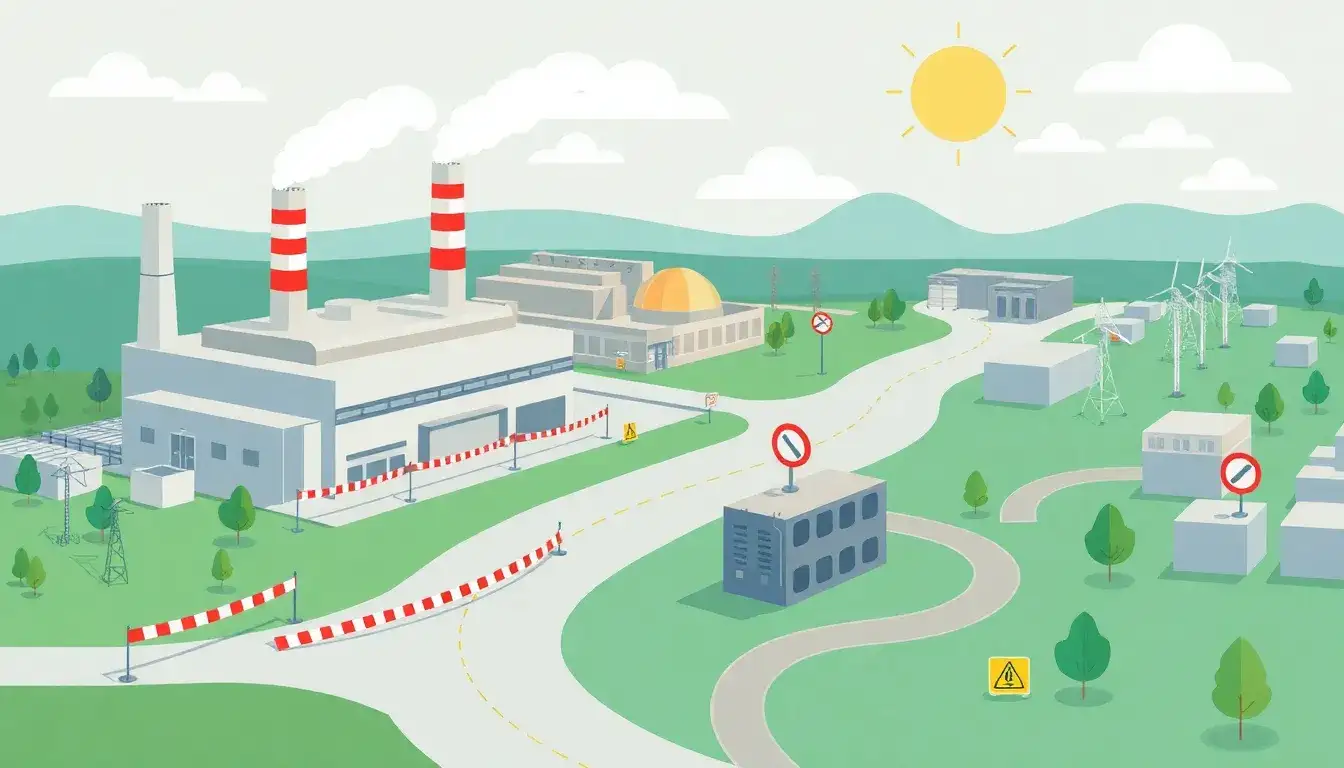
Regulatory hurdles significantly impact battery energy storage system (BESS) deployment in industrial applications through permitting delays, safety requirements, and market design limitations:
1. Permitting Complexity
Local governments often impose case-specific restrictions, such as large setbacks (e.g., Kern County) or mandates for full environmental impact reports (EIRs) even for small projects. Some jurisdictions require BESS facilities to be fully enclosed (e.g., Moorpark) or comply with unstandardized zoning amendments (e.g., Los Angeles County). These requirements extend timelines and increase costs, deterring industrial-scale projects.
2. Safety and Fire Code Compliance
BESS must meet NFPA 855, UL 9540A, and evolving fire safety standards, with the California Fire Code update (effective 2026) expected to address lithium-ion risks. While federal changes streamline reviews for DOE-involved projects, local codes often lag, leading to inconsistent enforcement. Industrial operators must allocate resources for third-party certifications (e.g., UL Solutions) and fire suppression systems designed to prevent explosions.
3. Market and Regulatory Frameworks
- Grid Integration: Lack of standardized definitions for BESS in existing regulations complicates market participation, particularly for ancillary services and capacity markets.
- Financial Barriers: High upfront costs are exacerbated by the absence of tailored incentives (e.g., tax credits) for industrial applications in some regions.
- Environmental Reviews: Recent DOE revisions simplify NEPA reviews for storage systems near existing infrastructure, but local permitting often remains a bottleneck.
4. Future Legislative and Code Updates
Proposed California legislation (e.g., Warren Alquist Act amendments) could override local restrictions and mandate streamlined permitting akin to EV charging stations. Meanwhile, NFPA 855 revisions (2026 draft) emphasize explosion containment over suppression, requiring design adjustments.
Key Takeaway: Regulatory hurdles delay BESS deployment through fragmented standards, permitting inefficiencies, and evolving safety mandates, though federal streamlining and code updates may alleviate these challenges over time.
Original article by NenPower, If reposted, please credit the source: https://nenpower.com/blog/how-do-regulatory-hurdles-influence-the-deployment-of-bess-in-industrial-applications/

