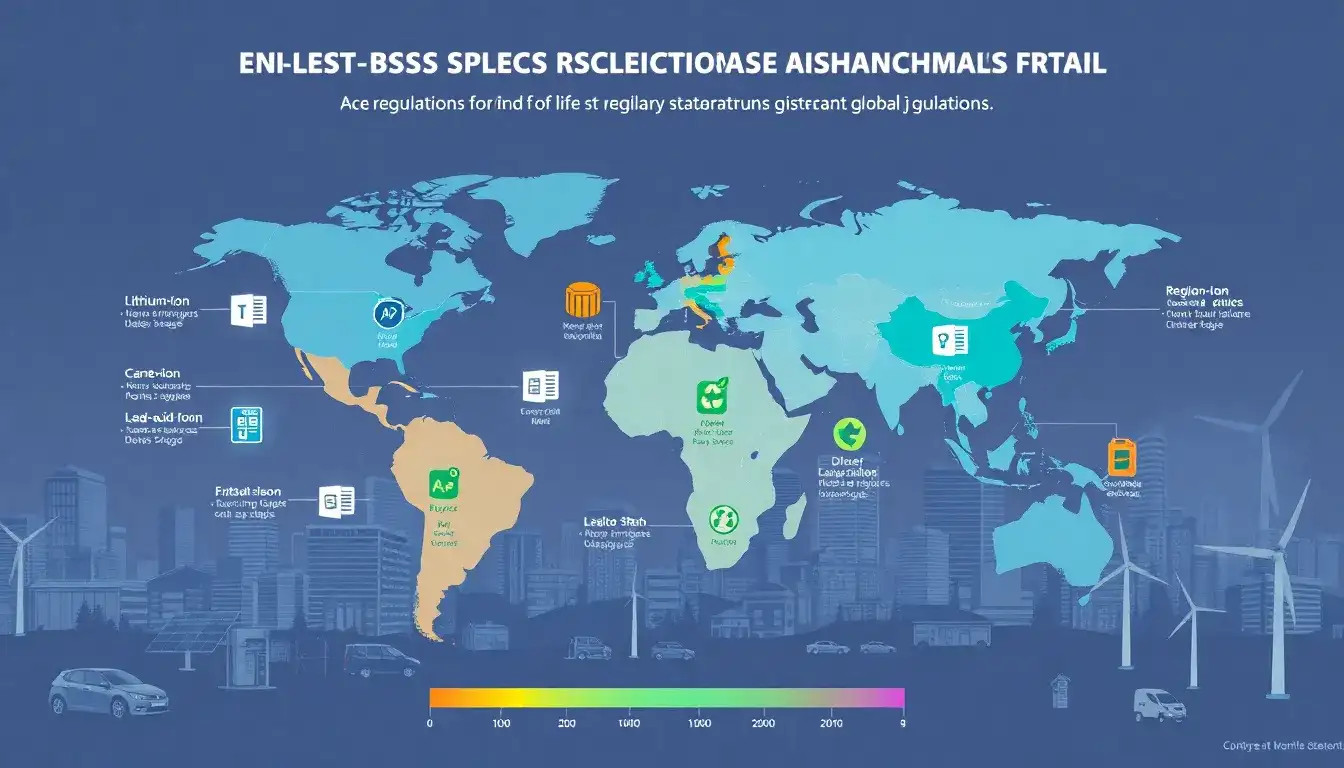
Regulations for battery energy storage systems (BESS) end-of-life management vary significantly across different jurisdictions, reflecting local environmental, safety, and waste management policies.
Regulatory Variations by Jurisdiction
1. United States
- Federal Regulations: The U.S. Environmental Protection Agency (EPA) regulates hazardous waste, including batteries, under the Resource Conservation and Recovery Act (RCRA). Lithium-ion batteries are considered hazardous waste and are managed under Universal Waste regulations, which ease the burden by allowing on-site accumulation without a permit under certain conditions.
- State Variations: Individual states have their own regulations that can differ from federal guidelines. For instance, Vermont has specific rules for managing hazardous waste, including batteries and solar panels, requiring adherence to state-specific hazardous waste management regulations.
2. Local and State Authorities
- Authority Having Jurisdiction (AHJ): Requirements for BESS decommissioning can vary based on local and state authorities, influencing how end-of-life management is executed. These authorities often require a formal plan for site decommissioning and disposal during the permitting process.
3. International Regulations
While specific international regulations are not detailed, countries typically have their own environmental and waste management laws governing the end-of-life treatment of batteries.
Key Factors Influencing Regulatory Differences
- Type and Composition of Batteries: The chemical composition of batteries (e.g., lithium-ion, lead-acid) affects how they are classified as hazardous waste, impacting handling and disposal regulations.
- Waste Management Infrastructure: Availability of recycling facilities and waste management systems influences jurisdictional approaches to end-of-life management.
- Local Environmental Policies: Jurisdictions with stricter environmental policies may have more stringent regulations for the disposal of hazardous materials.
- Industrial vs. Consumer Batteries: Regulations often distinguish between industrial-scale energy storage systems and consumer electronics, with different standards for each category.
Best Practices for Compliance
- Comprehensive Planning: Ensure early integration of end-of-life considerations into project planning, including site decommissioning and material recycling or disposal strategies.
- Regulatory Compliance: Stay updated with local, state, and federal regulations, adapting strategies as necessary.
- Safety and Training: Implement safety protocols and training for handling hazardous materials during decommissioning.
- Industry Collaboration: Leverage industry guidelines and collaborate with experts to optimize recycling and reuse opportunities.
By understanding these regulatory variations, BESS operators can better navigate compliance challenges and ensure environmentally sustainable end-of-life management practices across different jurisdictions.
Original article by NenPower, If reposted, please credit the source: https://nenpower.com/blog/how-do-regulations-vary-by-jurisdiction-for-bess-end-of-life-management/