

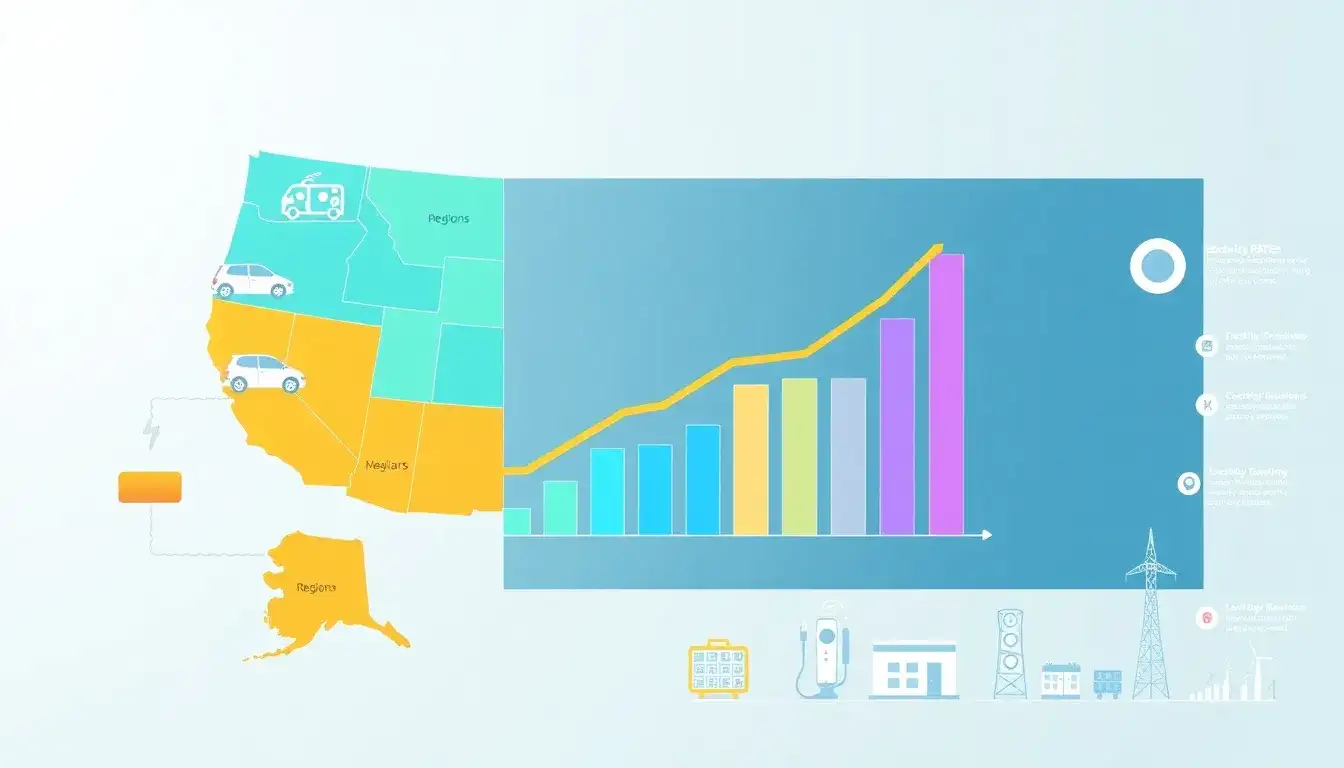
Regional electricity rates influence the maintenance costs of electric vehicles (EVs) primarily through their impact on the overall cost of vehicle operation rather than the direct mechanical maintenance. Here is how this relationship works:
Influence of Regional Electricity Rates on EV Costs
- Charging Costs as a Major Factor in EV Operating Costs
The cost to charge an EV depends heavily on local electricity prices. Home charging rates typically range between $0.10 to $0.30 per kWh, depending on the region. Public and commercial charging stations often have significantly higher rates, sometimes more than double home charging costs, with wide variation by state (for example, Hawaii public charging at 55.8 cents/kWh versus average residential rates much lower). Since energy cost is a major component of EV operational expenses, higher regional electricity prices increase the recurring costs of owning and operating an EV. - EV Maintenance Costs vs. Fuel/Energy Costs
Electric vehicles inherently have lower maintenance costs than gasoline cars because they have fewer moving parts and do not require oil changes or complex engine maintenance. Therefore, the “maintenance costs” in the traditional sense are generally lower and less influenced by electricity rates. - Electricity Rates Indirectly Affect EV Total Cost of Ownership
While routine mechanical maintenance is cheaper for EVs, the cost of electricity is a significant and recurring expense that varies regionally and affects the total cost of ownership. In areas with higher electricity rates, the cost to keep an EV charged increases, effectively raising the overall maintenance and operational budget for owners. Conversely, regions with lower electricity costs reduce EV energy expenses and can make overall EV ownership more economical. - Grid Impact and Cost Stabilization
Interestingly, increased EV adoption can boost local utility revenues, which may be reinvested to maintain and upgrade infrastructure, potentially stabilizing or even lowering electricity rates in the long term. This means that while regional electricity rates impact EV operating costs now, EVs might contribute to more stable or reduced electricity prices, indirectly benefiting maintenance and operation costs over time.
Summary
| Aspect | Influence of Regional Electricity Rates |
|---|---|
| EV Mechanical Maintenance | Minimal influence; EVs cost less to maintain independently of electricity price. |
| Charging Cost (Energy Expense) | Significantly influenced; higher electricity rates increase charging costs and overall operating expenses. |
| Total Cost of Ownership | Influenced strongly by regional electricity prices due to energy cost component. |
| Indirect Effects on Infrastructure | EV charging revenue can enhance grid infrastructure and help stabilize electricity rates, potentially reducing long-term costs. |
In conclusion, regional electricity rates do not directly increase EV mechanical maintenance costs but heavily influence the energy cost portion of EV operation, which can be considered part of the broader maintenance and ownership expenses. Regions with higher electricity prices will see higher operational costs for EVs, while lower costs improve EV affordability and maintenance budgeting. Additionally, EV adoption can play a role in improving grid stability and electricity cost management, indirectly benefiting maintenance economics in the long run.
Original article by NenPower, If reposted, please credit the source: https://nenpower.com/blog/how-do-regional-electricity-rates-influence-the-maintenance-costs-of-evs/

