

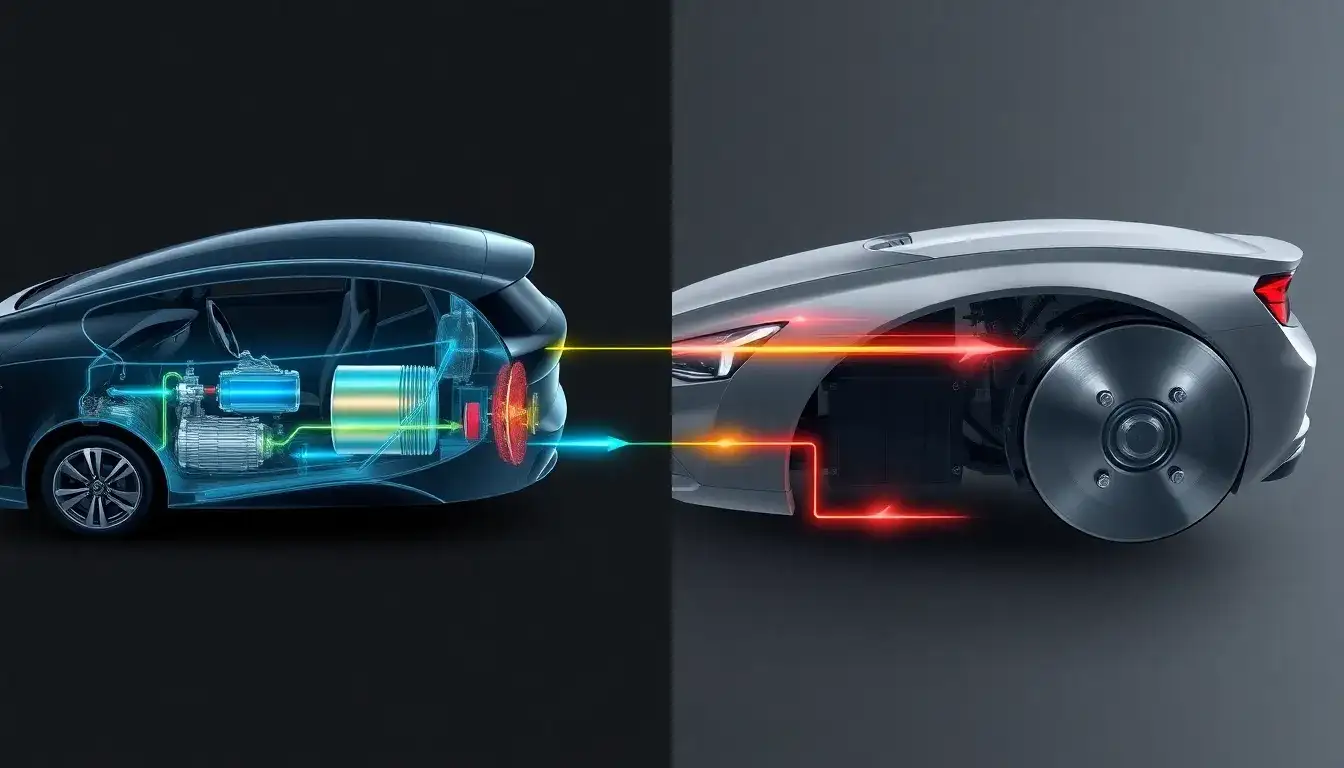
Comparison of Regenerative Braking Systems in PHEVs and Traditional Braking Systems
Overview of Both Systems
- Traditional Braking Systems: These rely solely on friction to slow down vehicles. When the brake pedal is pressed, brake pads come into contact with the brake discs or drums, converting kinetic energy into heat energy, which is dissipated. This method is effective but does not recover any energy.
- Regenerative Braking Systems in PHEVs: Plug-in Hybrid Electric Vehicles (PHEVs) use regenerative braking, which captures the kinetic energy that would otherwise be lost during braking and converts it into electrical energy. This energy is then stored in the vehicle’s battery for future use.
Key Differences and Advantages
1. Energy Recovery and Efficiency
- Regenerative Braking: Offers the significant advantage of recovering kinetic energy and converting it into electrical energy, which enhances the vehicle’s efficiency and range by reducing fuel consumption.
- Traditional Braking: Does not recover any energy, instead dissipating it as heat.
2. Brake Wear and Maintenance
- Regenerative Braking: Reduces wear and tear on the friction braking components (e.g., brake pads, discs) since the regenerative system handles a significant portion of the braking effort.
- Traditional Braking: Experiences more frequent wear on brake components due to constant friction use.
3. Environmental Impact
- Regenerative Braking: Contributes to reduced emissions by maximizing the use of electrical energy, thereby lowering the reliance on combustion engines.
- Traditional Braking: Does not provide any environmental benefits in terms of energy recovery.
4. Cost Implications
- Regenerative Braking: While the initial cost of vehicles equipped with regenerative braking systems may be higher, long-term savings from reduced brake maintenance and improved fuel efficiency can offset this.
- Traditional Braking: Typically found in less expensive vehicles initially but may incur higher maintenance costs over time.
Conclusion
Regenerative braking systems in PHEVs significantly enhance the efficiency and sustainability of vehicles compared to traditional braking systems. By capturing kinetic energy and reducing brake wear, regenerative braking offers both environmental and economic benefits that make it a preferable option for those seeking efficient and eco-friendly transport solutions.
Original article by NenPower, If reposted, please credit the source: https://nenpower.com/blog/how-do-regenerative-braking-systems-in-phevs-compare-to-traditional-braking-systems/

