

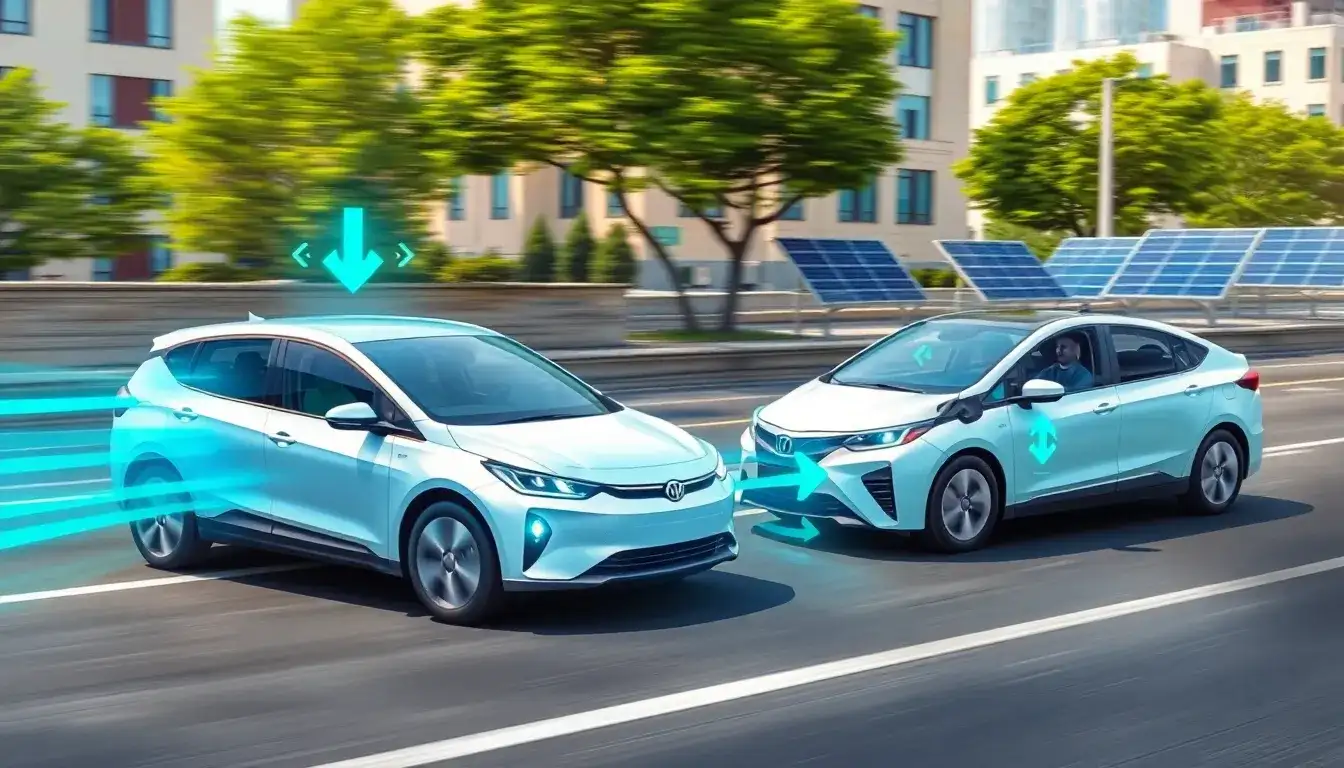
Regenerative Braking Systems in HEVs and PHEVs
Regenerative braking systems in both Hybrid Electric Vehicles (HEVs) and Plug-in Hybrid Electric Vehicles (PHEVs) play a crucial role in enhancing fuel efficiency. Here’s how they contribute:
Overview of Regenerative Braking
Regenerative braking is a technology that captures the kinetic energy during braking and deceleration, converting it into electrical energy. This energy is then stored in the vehicle’s battery for later use, which helps improve the overall efficiency of the vehicle.
Contribution to Fuel Efficiency in HEVs
In HEVs, regenerative braking is a primary method of recharging the battery, as HEVs cannot be plugged into external power sources. By capturing and reusing energy that would otherwise be lost as heat, HEVs reduce their reliance on the internal combustion engine, resulting in better fuel economy and lower emissions.
Contribution to Fuel Efficiency in PHEVs
In PHEVs, regenerative braking also captures and stores energy, but it is not the primary method of charging the battery. PHEVs can be charged via external power sources, offering more flexibility. However, regenerative braking still contributes to energy efficiency by supplementing the battery charge when the vehicle is driven on gas or when it’s not plugged into an external charger. This helps extend the electric-only range and reduce fuel consumption overall.
Benefits of Regenerative Braking
- Energy Recovery: Reduces energy waste by converting kinetic energy into electrical energy.
- Extended Range: Delivers more miles per gallon in HEVs, and more electric miles in PHEVs.
- Prolonged Brake Life: Reduces wear on conventional brakes, lowering maintenance costs.
In summary, regenerative braking in both HEVs and PHEVs improves fuel efficiency by reducing the need for the internal combustion engine to generate power and by capturing energy that would otherwise be wasted. This results in better fuel economy and lower emissions compared to traditional gasoline vehicles.
Original article by NenPower, If reposted, please credit the source: https://nenpower.com/blog/how-do-regenerative-braking-systems-in-hevs-and-phevs-contribute-to-their-fuel-efficiency/

