

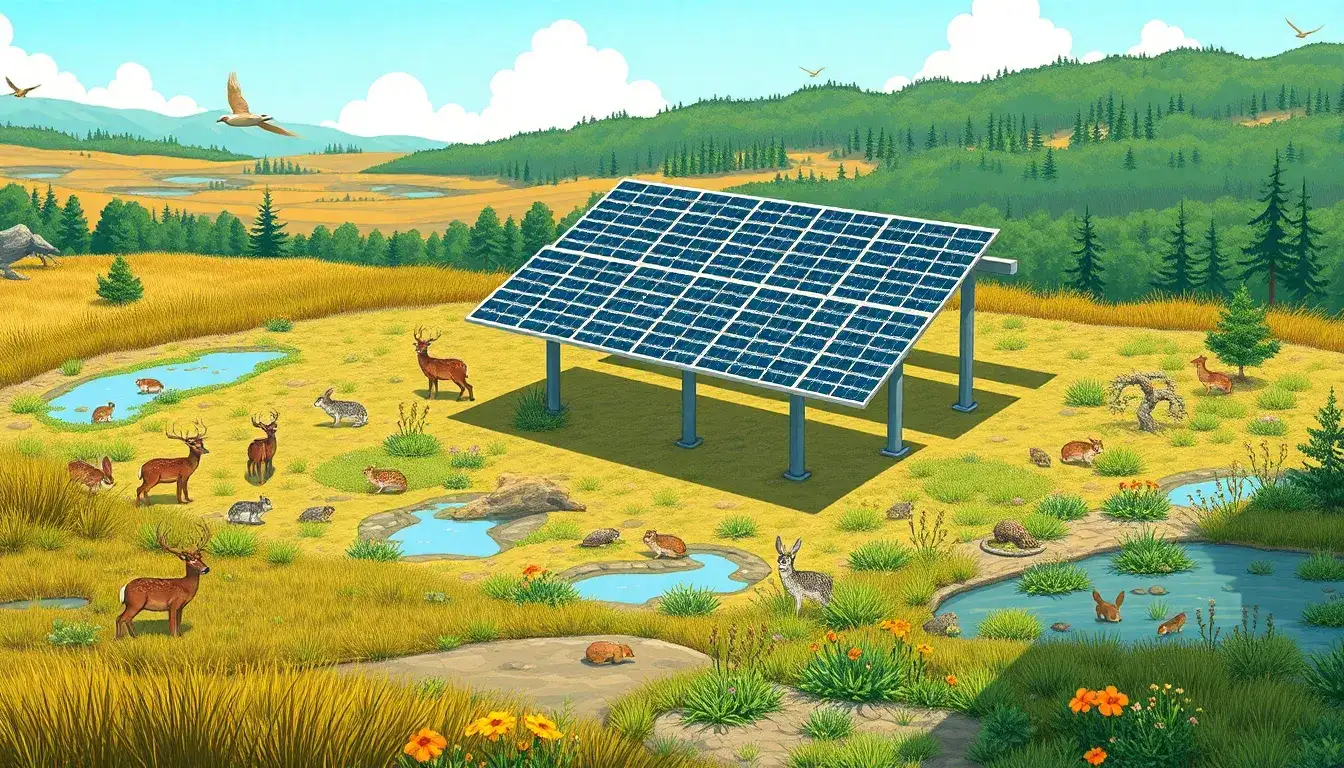
Raised solar panels can impact local wildlife habitats in both positive and negative ways, depending on the design and implementation of the solar installation.
Positive Impacts
- Creation of Shaded Areas: Raised solar panels can create shaded areas under the panels, which can provide habitat and shelter for small animals, such as reptiles and insects. This can enhance biodiversity by offering microhabitats that might not otherwise be available in open, sun-exposed areas.
- Reduced Ground Disturbance: By raising the panels higher than usual (e.g., 42 inches above ground), vegetation can flourish beneath them, maintaining some natural habitat and reducing the need for extensive ground clearing.
- Enhanced Habitat Connectivity: Proper design can include openings in perimeter fencing to allow wildlife movement, maintaining connectivity within habitats.
Negative Impacts
- Habitat Modification and Fragmentation: Even though raised panels minimize some habitat disturbance, the presence of large installations can still alter landscapes and disrupt wildlife migration patterns and behaviors.
- Optical Effects: Highly reflective surfaces can create optical illusions or glare that might attract birds or disorient them, leading to potential collisions.
- Barriers to Movement: Large-scale installations can create physical barriers that impede the movement of animals, affecting their access to essential resources like food and water.
Overall, while raised solar panels offer some benefits by minimizing direct habitat destruction, careful planning and additional measures (such as bird diverters and wildlife-friendly design) are necessary to mitigate negative impacts on local wildlife habitats.
Original article by NenPower, If reposted, please credit the source: https://nenpower.com/blog/how-do-raised-solar-panels-impact-local-wildlife-habitats/

