

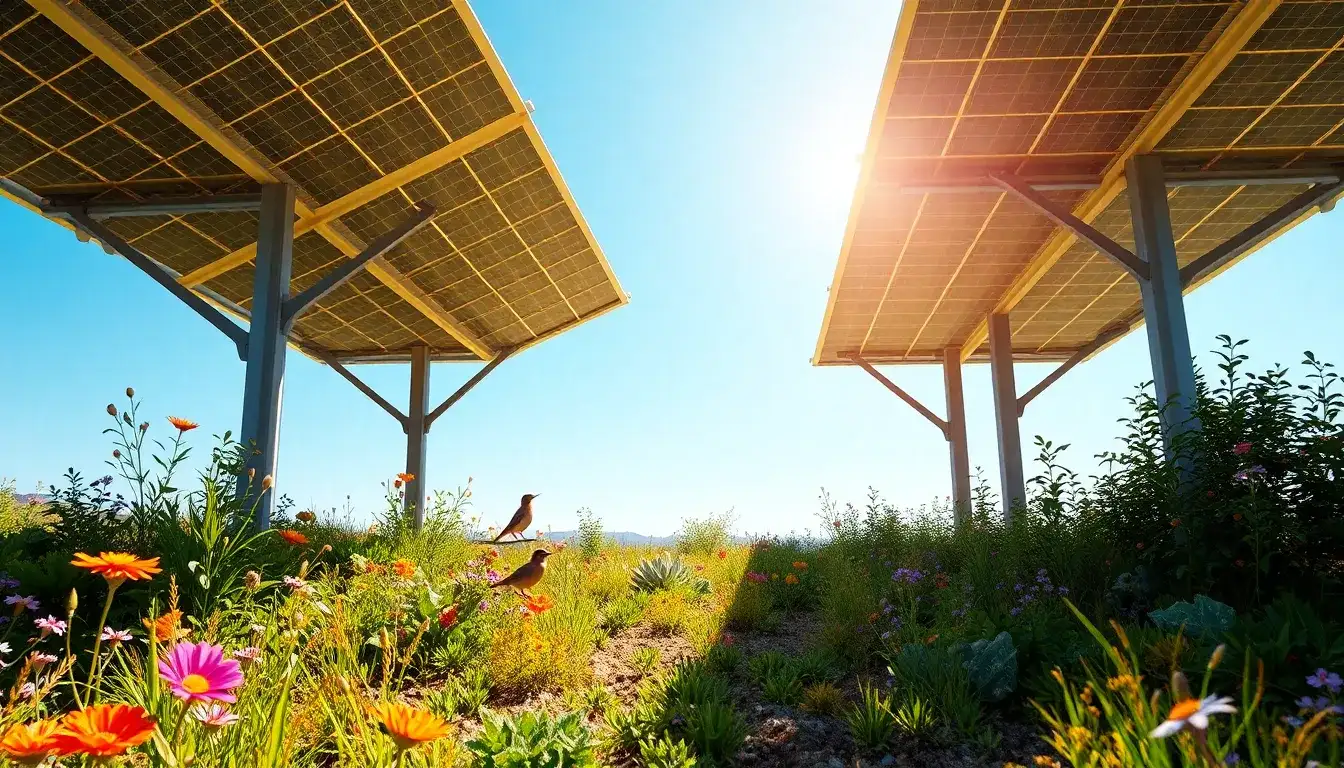
Raised solar panels benefit native vegetation in multiple key ways that positively impact the local ecosystem and biodiversity:
- Enable Growth of Native Plants and Grasses: Raised solar panels create space underneath the arrays where native grasses and plants can thrive rather than being shaded out or completely removed. This allows the restoration and preservation of native habitats for local wildlife.
- Support Pollinator Populations: The native vegetation growing beneath and between raised panels provides essential habitat and food sources for pollinators such as bees and other beneficial insects, which have been shown to increase in abundance on solar farms designed with pollinator-friendly vegetation.
- Improve Soil and Water Management: The deep roots of native plants retain more water during storms and droughts, reducing erosion and sediment runoff. Soil health improves because native vegetation stabilizes the soil and helps absorb and retain rainwater better than conventional turf grass or gravel ground cover commonly used in solar installations.
- Reduce Maintenance Costs: Native vegetation often requires less mowing and upkeep compared to conventional ground covers, potentially offsetting some of the costs associated with raising solar panels for vegetation benefits.
In summary, raising solar panels allows the establishment and maintenance of native plant communities beneath the arrays. This supports biodiversity, enhances pollinator habitats, improves soil retention and stormwater management, and can lower maintenance needs, all contributing to a more sustainable and environmentally beneficial solar farm design.
Original article by NenPower, If reposted, please credit the source: https://nenpower.com/blog/how-do-raised-solar-panels-benefit-native-vegetation/

