

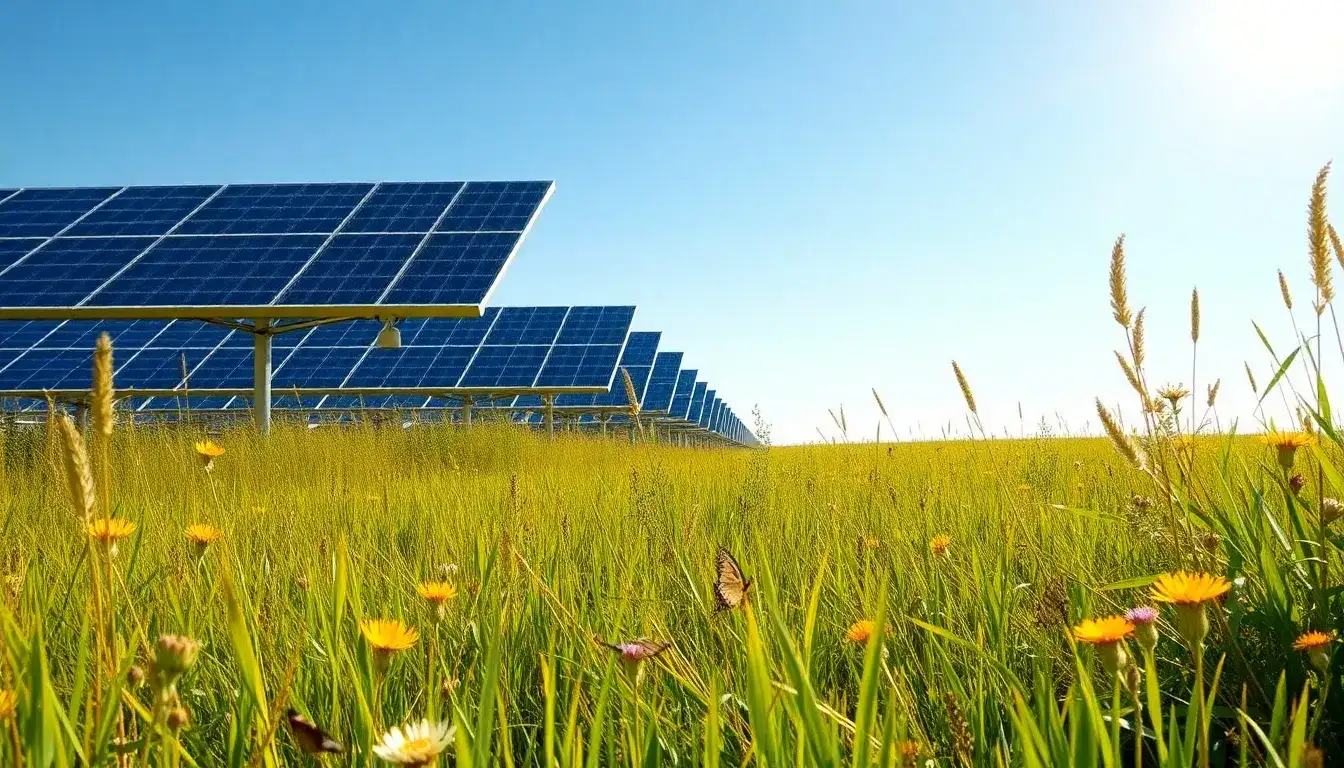
Raised solar panels enhance native vegetation through multiple synergistic mechanisms:
Improved light access
Elevated panels (as noted in photovoltaic height adjustments) allow more dynamic light penetration patterns, creating a mix of sun and shade that supports diverse native species adapted to varied conditions.
Soil and moisture retention
Preserved topsoil and deep-rooted native plants under panels improve water retention during droughts and heavy rains, while reducing erosion. This creates a more stable environment for grass and plant growth.
Pollinator synergy
Native flowering plants beneath panels attract pollinators like bees and butterflies, which further supports plant reproduction and biodiversity. Research shows these pollinators also benefit adjacent croplands.
Economic and ecological incentives
Vegetation management costs decrease as native plants outcompete weeds, while the visual appeal of diverse plantings aids community acceptance of solar projects. Pilot programs demonstrate successful coexistence of solar infrastructure with productive plant growth.
Microclimate moderation
Partial shading from panels can delay blooming periods and extend growing seasons for some species, providing late-season forage for pollinators when other resources are scarce. This promotes sustained growth cycles for native grasses and perennials.
Original article by NenPower, If reposted, please credit the source: https://nenpower.com/blog/how-do-raised-solar-panels-benefit-native-grasses-and-plants/

