

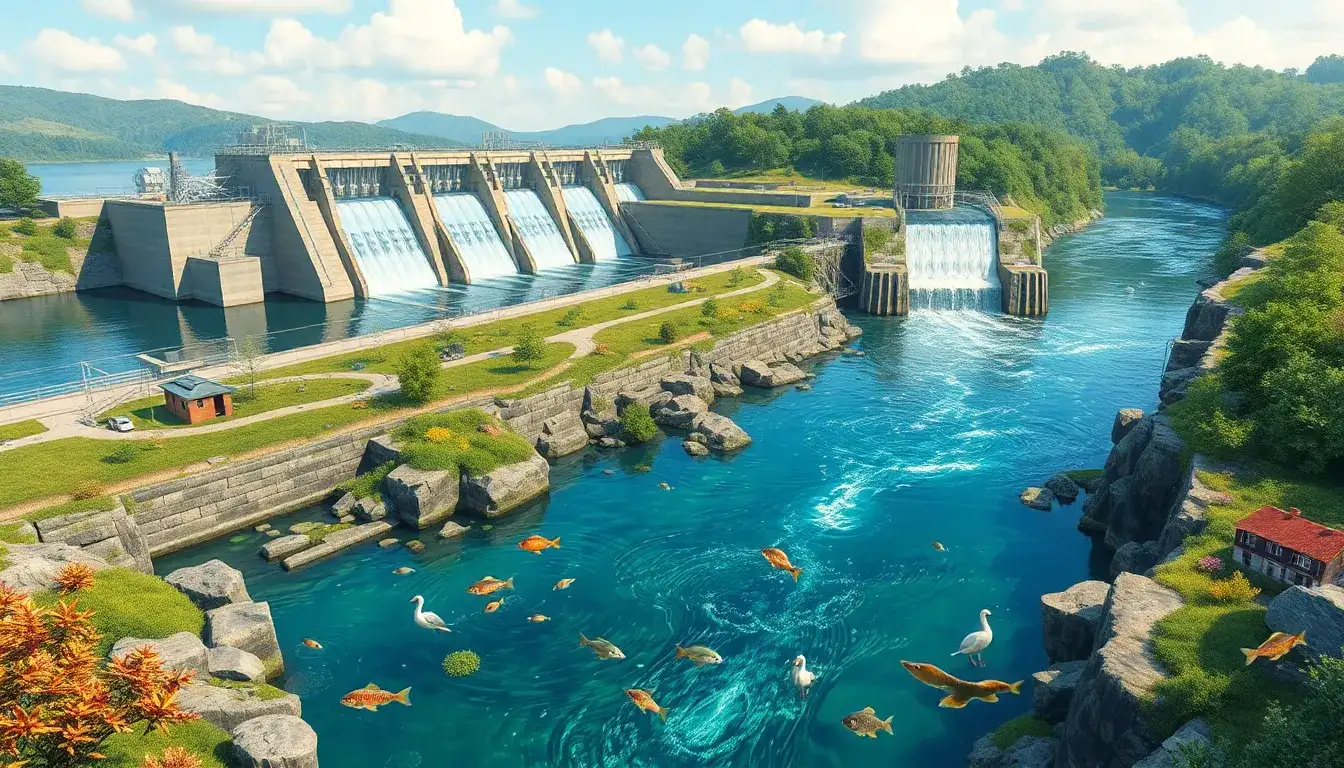
Pumped storage hydropower facilities can have significant impacts on river flow and aquatic ecosystems. Here are the key aspects of these effects:
Impact on River Flow
- Alterations in Natural Flow: The construction of dams and reservoirs for pumped storage hydropower alters natural water flow patterns. This can result in disrupted seasonal variations in river flow, which can affect downstream water users and ecosystems.
- Open-Loop Systems: In open-loop systems, water is taken directly from a river or a natural reservoir. This can place additional demands on these water sources, potentially lowering water levels or altering flow rates during operation.
Impact on Aquatic Ecosystems
- Ecosystem Disruption: The changed flow patterns and altered water levels can disrupt aquatic habitats. Fish migration, spawning, and other ecological processes might be affected by these changes, potentially harming aquatic wildlife.
- Reservoir Creation: The creation of reservoirs can lead to the displacement of habitats for species living along riverbanks or in floodplains. Additionally, reservoirs can experience stratification, leading to decreases in oxygen levels, which can harm aquatic life.
- Invasive Species: Reservoirs can also introduce or harbor invasive species, which can outcompete native species and further alter ecosystem dynamics.
Overall, while pumped storage hydropower can be a beneficial energy storage mechanism, it requires careful planning to mitigate its environmental impacts on river flow and aquatic ecosystems.
Original article by NenPower, If reposted, please credit the source: https://nenpower.com/blog/how-do-pumped-storage-hydropower-facilities-impact-river-flow-and-aquatic-ecosystems/

