

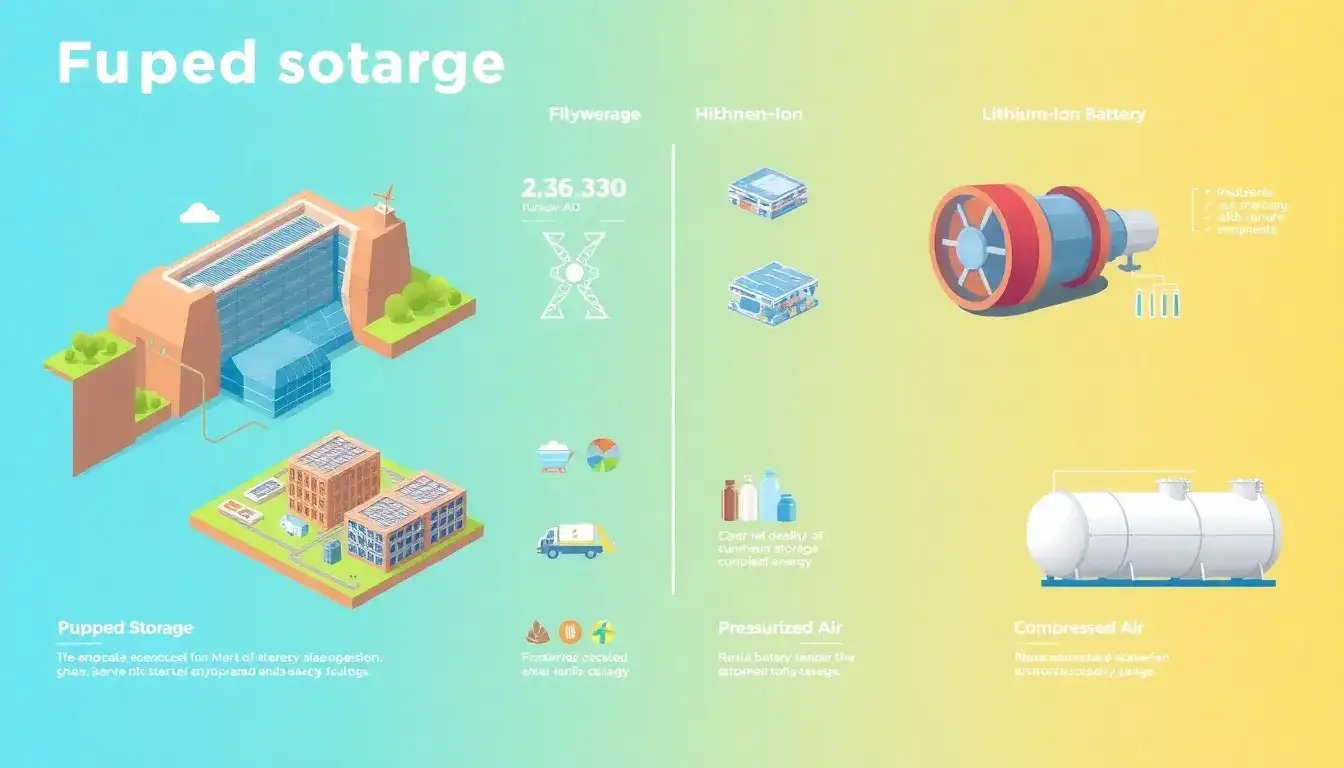
Pumped Hydroelectric Energy Storage (PHES) Compared to Other Energy Storage Solutions
Efficiency and Duration
- PHES has a round-trip energy efficiency of around 70% to 87%, typically cited as more than 80%, which is comparable or slightly lower than lithium-ion batteries but high overall for large-scale storage.
- PHES facilities typically provide long-duration storage, commonly about 10 hours of electricity supply, compared to about 6 hours for lithium-ion batteries, making them suitable for sustained grid support.
Capacity and Scale
- PHES represents the largest share of grid-scale energy storage globally, accounting for over 94% of installed energy storage capacity worldwide due to its ability to store large amounts of energy for long periods.
- Average PHES plants modeled in U.S. studies have capacities around 835 MW with annual storage delivery of over 2,000 GWh, illustrating their massive scale compared to battery systems.
Cost and Economic Factors
- Studies comparing PHES and lithium-ion battery systems focus on economic costs and expenditures, with PHES typically having higher upfront capital costs due to the infrastructure, but lower operational costs and longer lifetime.
- PHES can improve the daily capacity factor of generation systems by shifting energy from low demand to peak demand times efficiently.
Environmental and Geographic Considerations
- PHES results in relatively low greenhouse gas emissions, about a quarter of those from compressed-air energy storage (CAES), and generally has a better emissions profile than many battery technologies when operated with renewable electricity.
- However, PHES requires specific geographic conditions—such as hilly or mountainous terrain and water availability—which limits siting options and can raise ecological and social concerns due to impacts on landscapes and ecosystems.
Comparative Summary
| Feature | Pumped Hydroelectric Storage | Lithium-Ion Batteries | Compressed-Air Energy Storage (CAES) | Other Batteries (Lead-Acid, VRFB) |
|---|---|---|---|---|
| Round-trip Efficiency | 70%–87%, typically over 80% | Around 85% | Lower than PHES | Variable, generally lower than Li-ion |
| Duration | ~10 hours | ~6 hours | Long-duration | Shorter duration |
| Installed Capacity | Largest globally (94%+ of storage) | Smaller scale | Moderate scale | Smaller scale |
| Capital & Operational Cost | High capital, low operational cost | Lower capital, higher degradation cost | Moderate | Lower upfront, but shorter life |
| Environmental Impact | Low emissions, but site-specific impacts | Moderate emissions in production | Moderate emissions | Variable, flow batteries have low toxicity |
| Geographic Constraints | Needs specific terrain and water | Flexible siting | Moderate geographic constraints | Flexible siting |
In summary, pumped hydroelectric energy storage stands out for its massive capacity, long duration, and established large-scale grid role with good energy efficiency and low emissions during operation. Its main limitations are geographic constraints and higher capital cost versus more flexible but smaller-scale battery storage solutions. Batteries, especially lithium-ion, provide flexible, scalable, and quick-response storage but usually for shorter durations and smaller total capacity. CAES and other battery types serve niche roles with different trade-offs in terms of emissions, duration, and cost.
Original article by NenPower, If reposted, please credit the source: https://nenpower.com/blog/how-do-pumped-hydroelectric-energy-storage-facilities-compare-to-other-energy-storage-solutions/

