

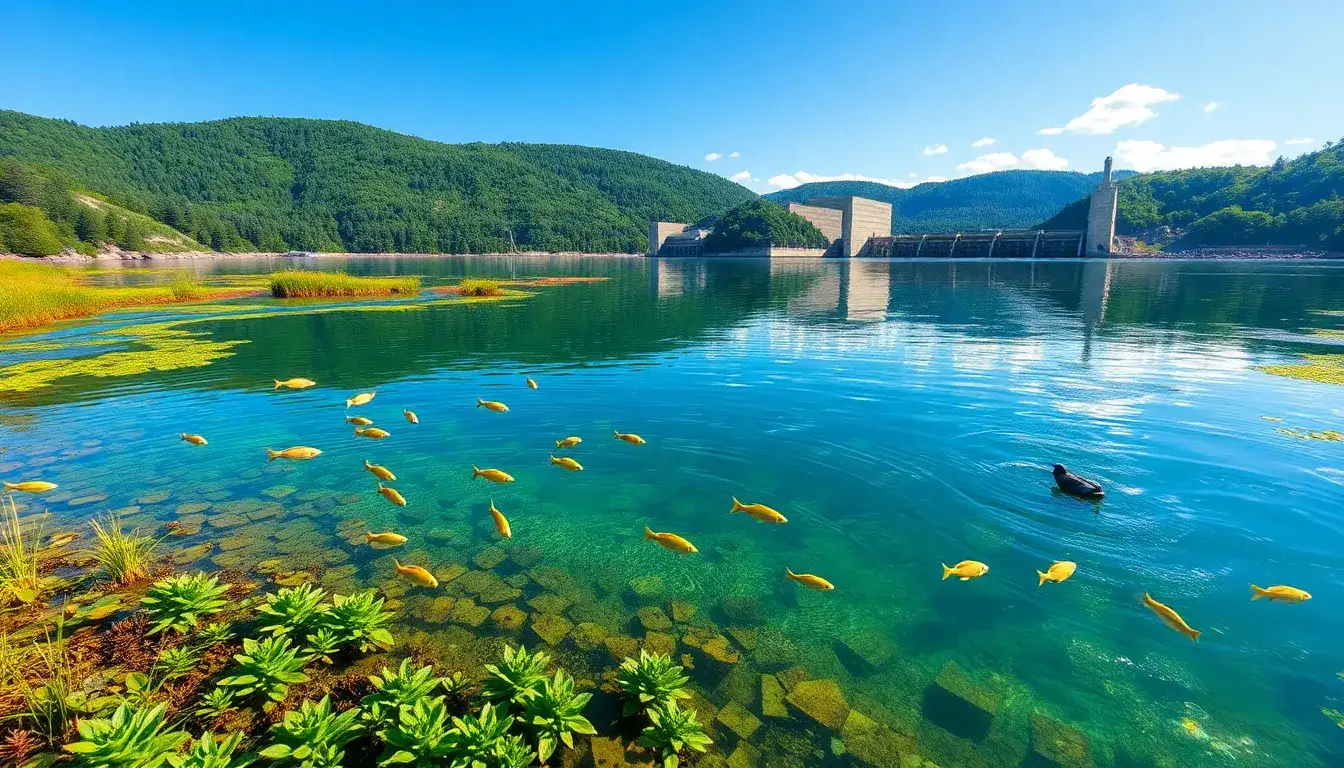
Pumped Storage Hydropower (PSH)
Pumped Storage Hydropower (PSH) facilities, which can be categorized as either open-loop or closed-loop systems, have varying impacts on aquatic ecosystems.
Open-Loop PSH Systems
- Higher Impact During Construction: Open-loop PSH facilities typically have a significant impact on aquatic ecosystems during their construction phase. This is because they require the damming and inundation of naturally flowing water bodies for the creation of their lower reservoirs. As a result, the initial effects on fish and other aquatic life can be substantial.
- Examples of Lower Impacts: However, if an open-loop project adds an upper reservoir to an existing lower reservoir constructed for other purposes, the impact on aquatic ecosystems might be similar to or less than that of closed-loop projects.
Closed-Loop PSH Systems
- Lower Construction Impacts: Closed-loop PSH systems generally have lower environmental impacts compared to open-loop systems. During construction, if surface water is used for filling the reservoir, impingement and entrainment effects may occur but are usually of shorter duration compared to open-loop systems. If groundwater is used, the impacts to aquatic ecosystems are often minimal.
- Fewer Aquatic Impacts: Closed-loop systems tend to have fewer impacts on fisheries and aquatic ecology compared to their effects on terrestrial habitats. This is partly because closed-loop systems do not directly alter existing water flows in natural water bodies.
Despite these advantages, no operational closed-loop PSH facilities have been constructed, which means that while they offer potential environmental benefits, real-world examples are still lacking.
Original article by NenPower, If reposted, please credit the source: https://nenpower.com/blog/how-do-psh-facilities-impact-aquatic-ecosystems-specifically/

