

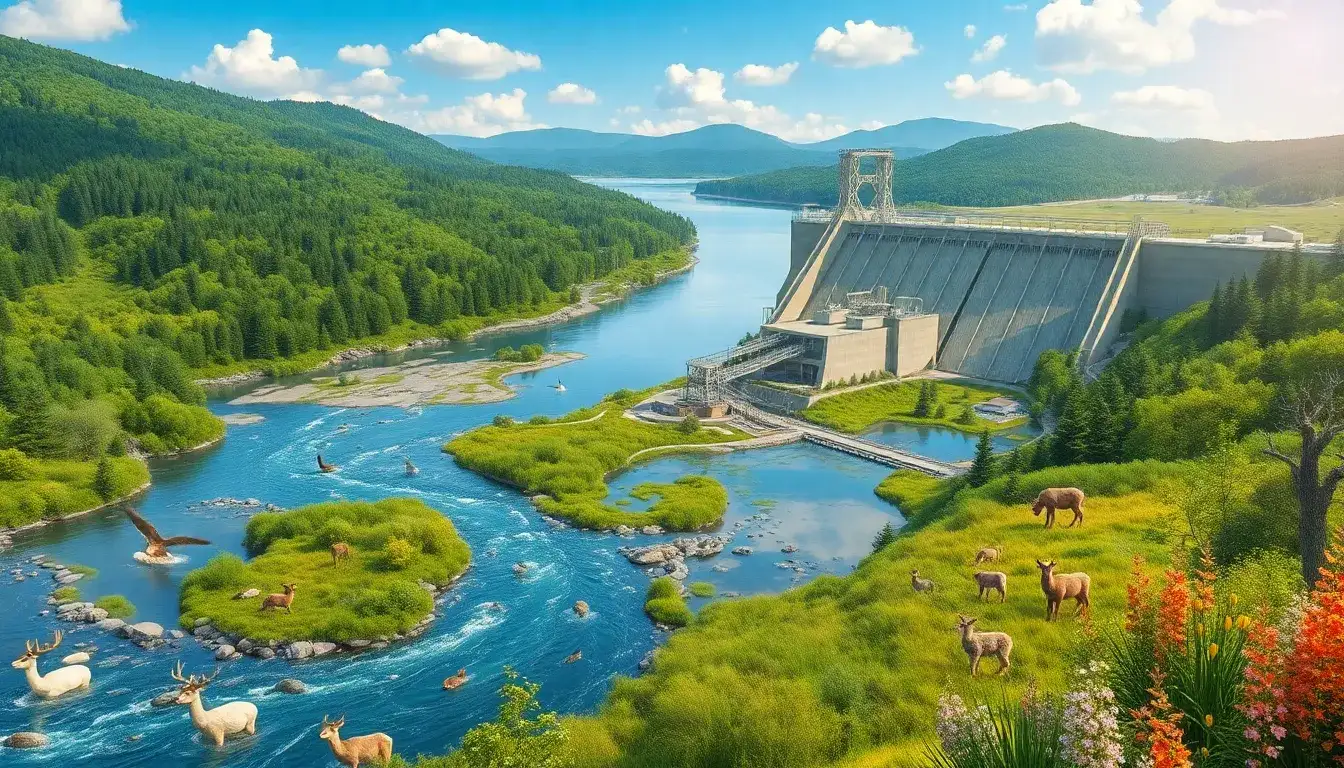
Pumped Storage Hydropower (PSH) facilities impact local wildlife and ecosystems through multiple pathways, with effects varying between open-loop and closed-loop systems. Here’s a breakdown of key impacts:
Habitat Loss and Fragmentation
PSH projects often require clearing large land areas for reservoirs and infrastructure, directly destroying terrestrial habitats such as shrub steppe and upland ecosystems. Species like the Ferruginous Hawk, which relies on open upland habitats and freshwater access for breeding, face displacement and reduced home ranges. Construction and inundation also fragment landscapes, isolating wildlife populations and reducing genetic diversity.
Aquatic Ecosystem Disruption
- Open-loop systems (connected to natural waterways) pose risks like altered water flow, sediment transport, and blocked fish migration routes, which can reduce access to spawning grounds.
- Closed-loop systems (using artificial reservoirs) minimize impacts on natural aquatic habitats but still risk depleting groundwater during reservoir filling and operations.
Construction and Operational Stress
- Noise, vibration, and light pollution during construction disrupt wildlife behavior and migration patterns.
- Invasive species spread through water transfers between connected reservoirs, further destabilizing ecosystems.
- Groundwater depletion in closed-loop systems may affect local hydrology and dependent species.
Mitigation Considerations
Closed-loop PSH generally offers more opportunities to reduce ecological harm compared to open-loop systems. However, effective strategies require advanced tools like priority habitat mapping, field surveys, and long-term monitoring to address cumulative impacts across a project’s lifecycle.
Original article by NenPower, If reposted, please credit the source: https://nenpower.com/blog/how-do-psh-facilities-affect-local-wildlife-and-ecosystems/

