

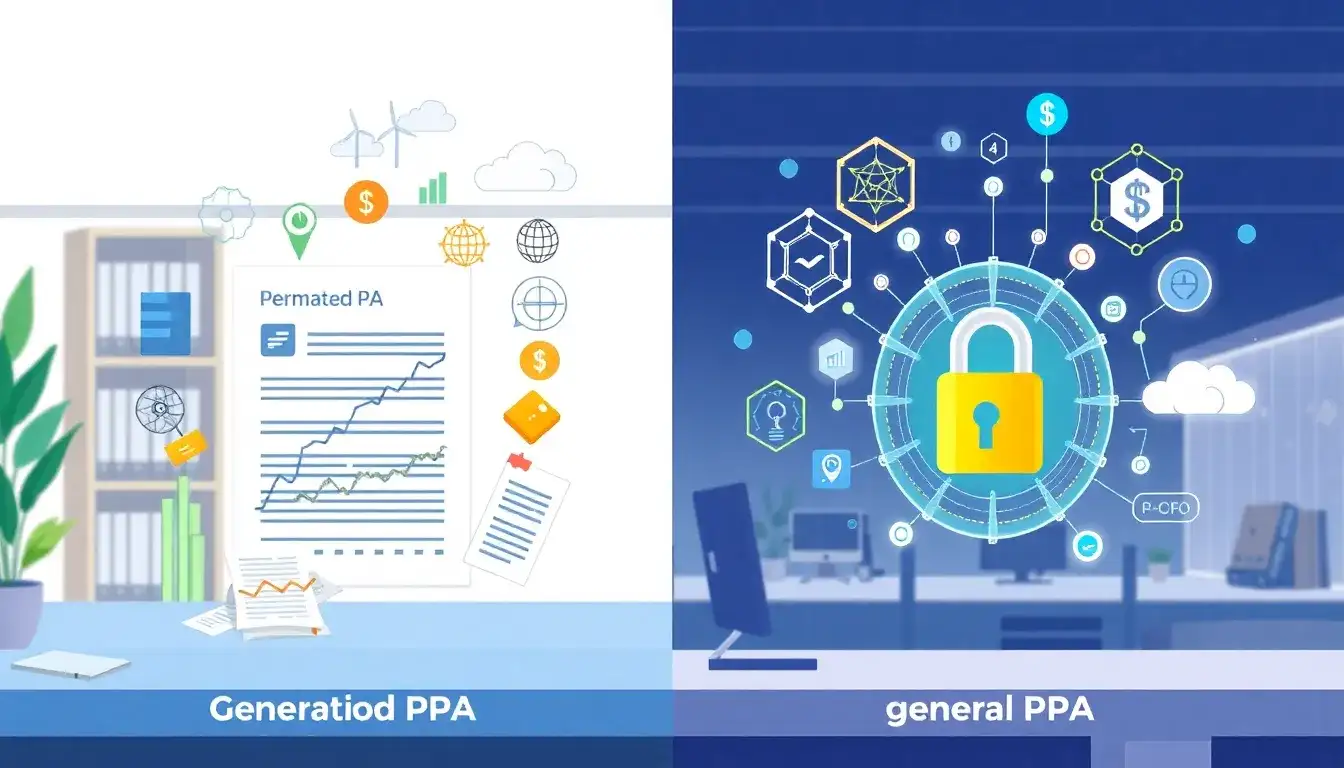
Proxy generation PPAs and traditional PPAs manage risk differently
Proxy generation PPAs and traditional PPAs manage risk differently, particularly regarding operational risks and how settlement quantities are determined.
Key Differences
- Operational Risk Management:
- Traditional PPAs: The operational risk largely falls on the buyer, as settlements are based on actual power output. This exposes buyers to potential underperformance and variability in renewable energy production.
- Proxy Generation PPAs: Operational risk is shifted to the seller. Settlements are based on expected generation under assumed operational efficiencies, protecting buyers from variations in actual output.
- Settlement Basis:
- Traditional PPAs: Settled on actual energy delivered to the grid, which means buyers face risks such as actual output variations and associated price impacts.
- Proxy Generation PPAs: Settled on the calculated or “proxy” generation, which simplifies transactions by assuming a fixed efficiency rate. This reduces uncertainty about energy availability for buyers.
- Risk Allocation:
- Traditional PPAs: Buyers often bear basis risk (the difference between hub and nodal prices) and operational risks.
- Proxy Generation PPAs: Developers take on more risk, including operational risks and potentially basis risks, as they are responsible for performance against the proxy generation benchmarks.
- Complexity and Flexibility:
- Traditional PPAs: Typically involve more complex contractual terms related to operational performance.
- Proxy Generation PPAs: Offer simpler contracts by focusing on proxy generation, which can reduce negotiation time and complexity for buyers.
Advantages and Disadvantages
Advantages of Proxy Generation PPAs
- Simplified Risk Management: Reduces operational risk exposure for buyers.
- Increased Certainty: Provides a more predictable settlement amount.
- Flexibility for Hedging: Allows buyers to pursue additional risk management strategies with less complexity.
Disadvantages of Proxy Generation PPAs
- Complexity for Sellers: Sellers must manage operational risks, which may increase costs.
- Less Familiarity: Newer structure means fewer parties are familiar with it, potentially increasing negotiation times and costs.
In summary, proxy generation PPAs are designed to simplify and reallocate operational risks to sellers, providing buyers with more consistent and predictable outcomes, while traditional PPAs often place more operational and basis risk on the buyer.
Original article by NenPower, If reposted, please credit the source: https://nenpower.com/blog/how-do-proxy-generation-ppas-compare-to-traditional-ppas-in-terms-of-risk-management/

