

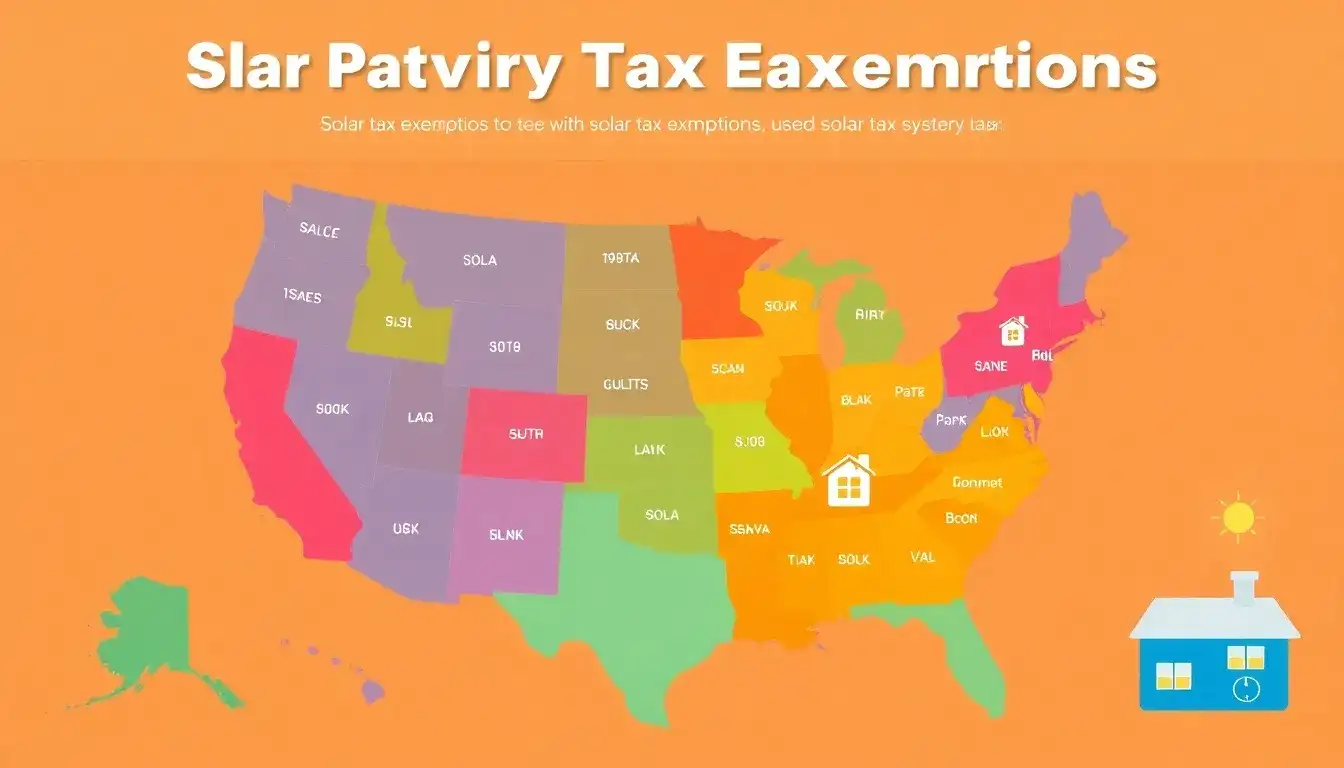
Property tax exemptions for solar systems vary across states but generally work by excluding the added value of a solar energy system from the property’s assessed value, thereby preventing an increase in property taxes due to the solar installation.
How Property Tax Exemptions for Solar Systems Work
- When a solar energy system (such as solar panels) is installed on a property, it often increases the property’s market value. Without exemptions, this could lead to higher property taxes.
- Property tax exemptions allow homeowners and businesses to exclude this increase in value caused by the solar system from the taxable value of their property.
- This exemption makes installing solar more economically feasible by eliminating the tax penalty typically associated with property improvements.
Examples from Different States
- New York:
New York provides a 15-year real property tax exemption on renewable energy systems, including solar electric systems, under Real Property Tax Law §487. This means property owners do not pay additional property tax on the added value from solar. Additionally, New York City offers a Clean Energy Systems Exemption that relieves property owners from increases in property taxes directly resulting from installation of eligible solar systems. - New Jersey:
New Jersey exempts solar systems from local property taxes if the system is used to meet on-site electricity, heating, cooling, or general energy needs, ensuring no tax increase due to solar installation. - Nevada:
Nevada offers a property tax abatement of up to 55% for up to 20 years on real and personal property used to generate solar energy. This is primarily targeted at businesses and generation facilities with a capacity of at least 10 megawatts and helps reduce property tax burdens on large solar projects.
Variations and Local Control
- Not all states have uniform rules; property tax exemptions can differ by locality since property taxes are generally assessed and collected at the local government level.
- Some states grant local taxing authorities the option to offer such exemptions, meaning availability and specifics may vary within the state.
Related Incentives
- Many states that offer property tax exemptions also provide sales tax exemptions on solar equipment, reducing upfront costs. For example, New York exempts the sale and installation of residential solar energy systems from sales and use tax, and Arizona and Colorado offer sales tax exemptions on solar devices and their installation.
In summary, property tax exemptions for solar systems work primarily by excluding the value added by solar installations from property tax assessments, supporting adoption by lowering ongoing tax costs. These exemptions are available in 36 states with varying terms, often supplemented by sales tax exemptions to reduce installation expenses.
Original article by NenPower, If reposted, please credit the source: https://nenpower.com/blog/how-do-property-tax-exemptions-for-solar-systems-work-in-different-states/

