

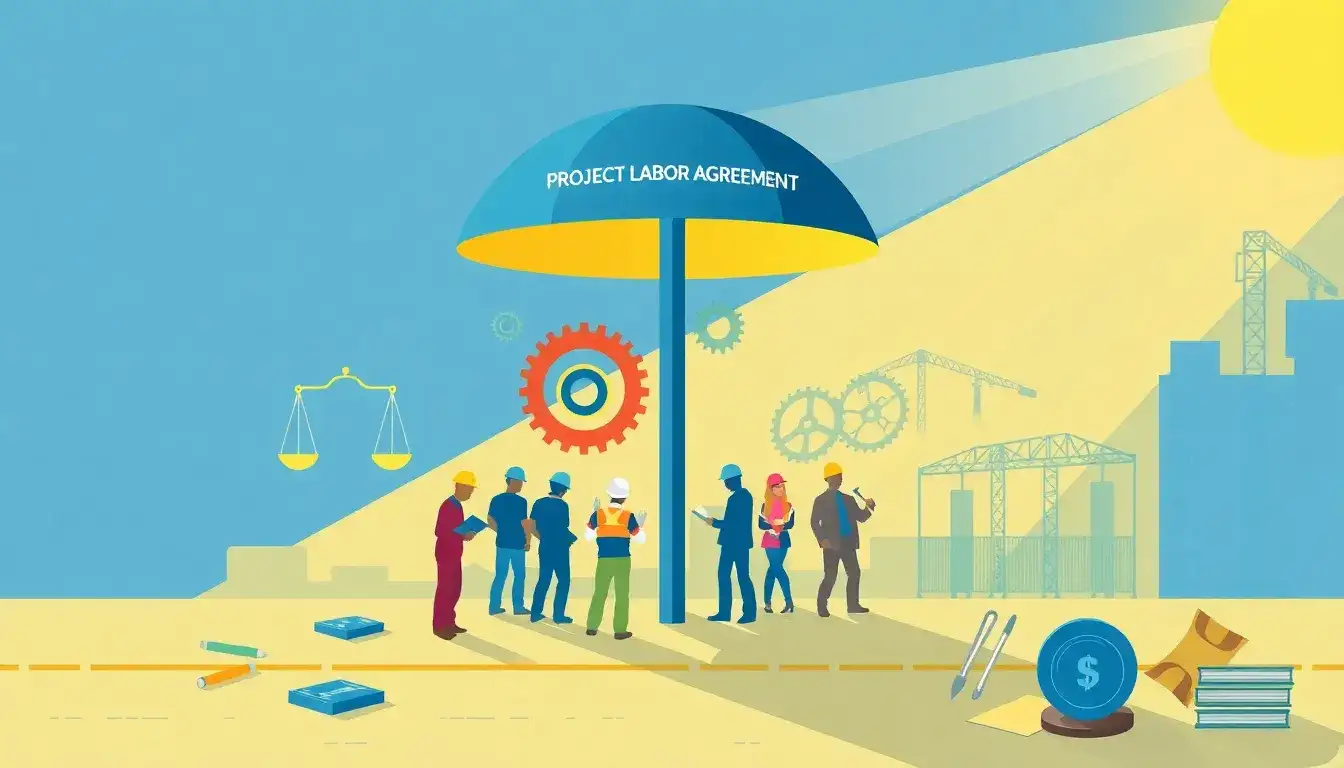
Project Labor Agreements and Compliance with Prevailing Wage and Apprenticeship Requirements
Overview of Project Labor Agreements (PLAs):
A Project Labor Agreement is a pre-hire collective bargaining agreement between a contractor or project managing entity and one or more labor unions. It establishes terms and conditions of employment for a specific construction project, including wage rates, benefits, and working conditions. PLAs are used on both public and private projects and can help ensure compliance with prevailing wage laws and apprenticeship requirements by setting standardized terms for all workers involved.
Prevailing Wage Compliance
- Standardized Wage Rates: PLAs often incorporate prevailing wage rates, which are wages determined by local market conditions. This ensures that all workers on the project, regardless of union affiliation, are paid similarly to what is prevailing in the area.
- Timely Correction of Non-Compliance: If there is a failure to pay prevailing wages, employers might avoid penalties if they correct the issue under a qualifying PLA.
Apprenticeship Requirements
- Skilled Workforce: PLAs frequently require that contractors use union hiring halls to ensure a skilled workforce. This may include apprentices who are part of union training programs, providing them with opportunities for on-the-job experience and education.
- Training and Recruitment: By collaborating with unions, PLAs simplify training and recruitment processes, which can include apprenticeships. This aligns with goals to provide a high-quality workforce that meets project demands.
Benefits and Challenges
Benefits:
- Predictable Costs and Schedules: PLAs help ensure projects stay on schedule and budget by avoiding labor disputes and delaying issues.
- Compliance with Regulations: They facilitate compliance with labor regulations, including prevailing wage and apprenticeship standards.
Challenges:
- Cost Implications: Some argue that PLAs can lead to higher construction costs due to union wage requirements and work rules.
- Limited Access for Non-Union Contractors: Non-union contractors may be excluded from projects if they cannot comply with PLA terms.
Overall, PLAs can enhance compliance with prevailing wage and apprenticeship requirements by setting clear standards and ensuring a skilled workforce, although they may present challenges related to cost and access for non-union contractors.
Original article by NenPower, If reposted, please credit the source: https://nenpower.com/blog/how-do-project-labor-agreements-affect-compliance-with-prevailing-wage-and-apprenticeship-requirements/

