

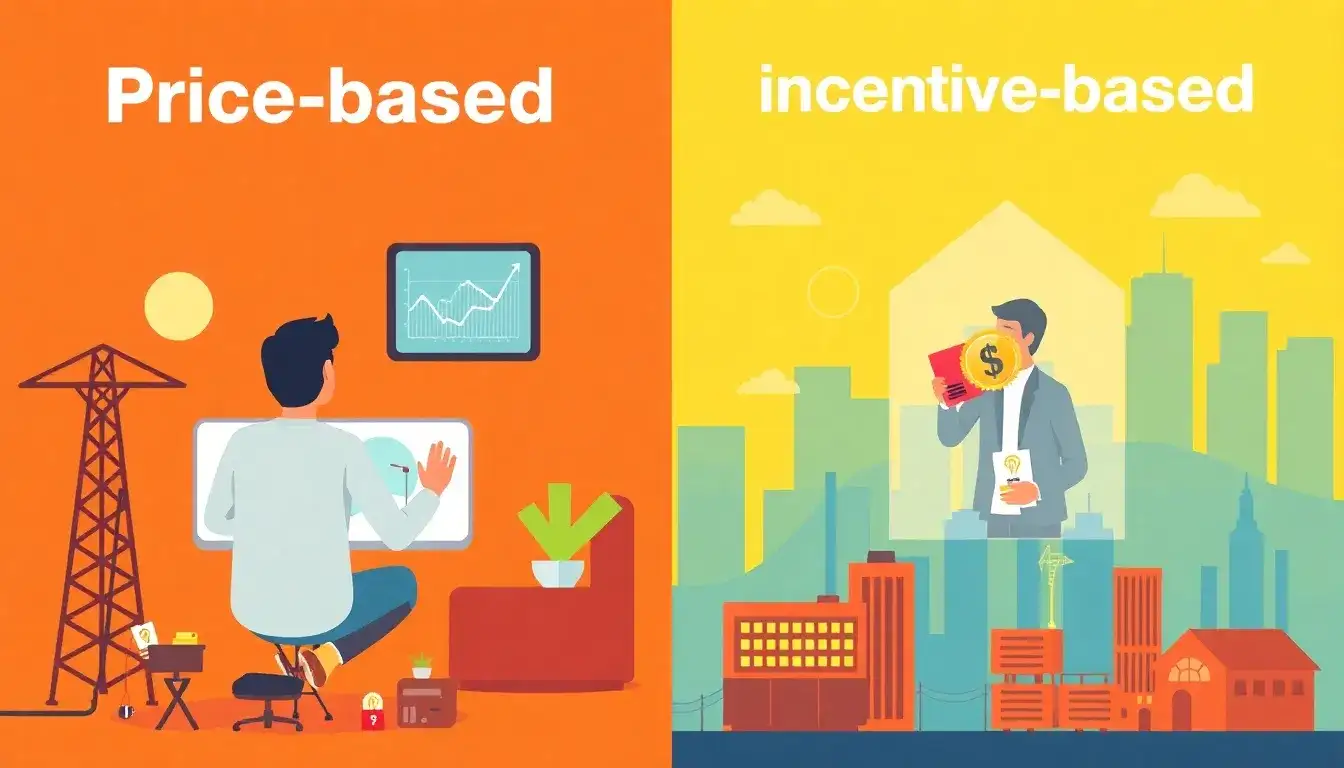
Price-based and incentive-based demand response programs are two different approaches used to manage electricity consumption during peak demand periods. Here’s how they differ:
Price-Based Demand Response
Definition: Price-based demand response (DR) involves varying the price of electricity based on time or system conditions to influence consumer behavior. Common strategies include time-of-use (TOU) rates, real-time pricing (RTP), variable peak pricing (VPP), critical peak pricing (CPP), and critical peak rebates (CPR).
Mechanism: These programs typically rely on setting higher prices during peak hours to discourage consumption and lower prices during off-peak hours to encourage usage. This encourages consumers to shift their energy consumption away from peak periods, thereby balancing supply and demand.
Incentive-Based Demand Response
Definition: Incentive-based demand response involves offering direct incentives to customers for adjusting their electricity use in response to requests from utilities or demand response aggregators. These incentives can be monetary rewards or discounts on electricity bills.
Mechanism: Incentives are often provided during periods of high demand to motivate customers to reduce their energy consumption. This can be achieved through linear or nonlinear economic models that calculate the optimal incentive price to maximize consumer welfare and utility profits. Some models incorporate real-time incentives combined with real-time pricing to enhance load shifting and retailer participation.
Key Differences
- Approach: Price-based DR relies on varying electricity prices to influence consumption, while incentive-based DR uses direct financial incentives.
- Behavioral Impact: Price-based DR encourages behavioral change through price signals, whereas incentive-based DR relies on direct rewards to motivate consumers.
- Complexity and Flexibility: Price-based DR involves time-varying rates that are simpler to implement but may require more advanced metering infrastructure. Incentive-based DR can be more complex, as it involves determining optimal incentives and may require real-time data analytics to maximize effectiveness.
Both types of demand response are crucial for managing peak load and ensuring grid stability, but they differ in how they engage consumers and how much complexity they introduce into the grid management process.
Original article by NenPower, If reposted, please credit the source: https://nenpower.com/blog/how-do-price-based-and-incentive-based-demand-response-programs-differ/

