

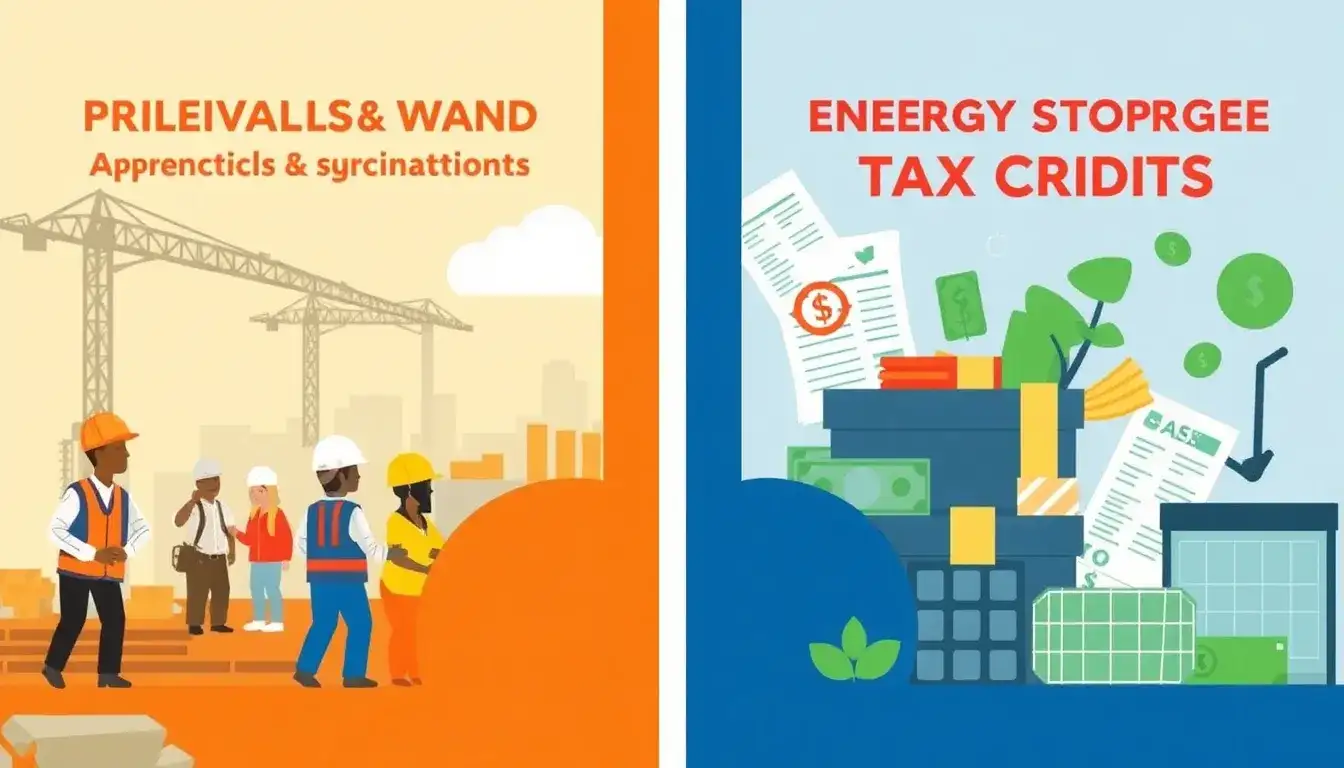
The interplay between prevailing wage and apprenticeship requirements significantly affects the landscape of energy storage tax credits, especially under the provisions set forth by the Inflation Reduction Act (IRA). Here’s an overview of how these requirements influence the tax incentives available for energy storage projects.
Impact of Prevailing Wage Requirements
Increased Credit Multiplication
The IRA stipulates that projects meeting prevailing wage requirements can multiply their base tax incentive amounts by five. This substantial increase applies to various energy-related tax credits, including those for energy storage projects. To benefit from this enhancement, developers must ensure they pay laborers and mechanics at rates that meet or exceed the applicable prevailing wage determined by the U.S. Department of Labor for their specific geographic area.
Specific Tax Incentives Affected
The provisions under the IRA that encompass the requirement of paying prevailing wages include several tax credits, such as:
- Investment Tax Credit (ITC) for energy storage systems
- Production Tax Credit (PTC)
- Credits for carbon sequestration and clean hydrogen production.
Meeting these wage criteria is essential for developers aiming to maximize the financial benefits of these tax incentives.
Apprenticeship Requirements
Labor Hours and Participation
The IRA also imposes apprenticeship requirements where a specified percentage of total labor hours on a project must be performed by apprentices enrolled in registered apprenticeship programs. The required percentage increases over time: 10% for projects beginning construction before 2023, 12.5% in 2023, and 15% for projects starting in 2024 or later. This ensures that a portion of the workforce is properly trained, thus promoting a skilled labor pipeline in the clean energy sector.
Tax Credits Eligibility
For energy storage projects, compliance with these apprenticeship requirements is vital for obtaining the full benefits of the IRA’s tax credits. Projects that fail to meet these criteria risk losing the multiplicative effect on their credits, directly impacting their financial viability.
Exceptions to Requirements
There are specific exceptions where projects can still qualify for increased tax credits without fully adhering to prevailing wage and apprenticeship requirements:
- One Megawatt Exception: Projects with a capacity of less than one megawatt can receive increased credits without having to meet these labor requirements.
- Beginning of Construction Exception: Facilities that began construction before January 29, 2023, are also exempt from these labor requirements while still eligible for increased credit amounts.
Conclusion
The prevailing wage and apprenticeship requirements under the IRA serve as crucial levers that can amplify the financial benefits of energy storage tax credits. By adhering to these requirements, energy storage projects can significantly increase their tax incentives. However, the complexity surrounding these regulations necessitates careful planning and compliance by developers to fully leverage the available benefits. Understanding and navigating these rules is key to maximizing the potential of clean energy initiatives in the U.S.
Original article by NenPower, If reposted, please credit the source: https://nenpower.com/blog/how-do-prevailing-wage-and-apprenticeship-requirements-impact-energy-storage-tax-credits/

