

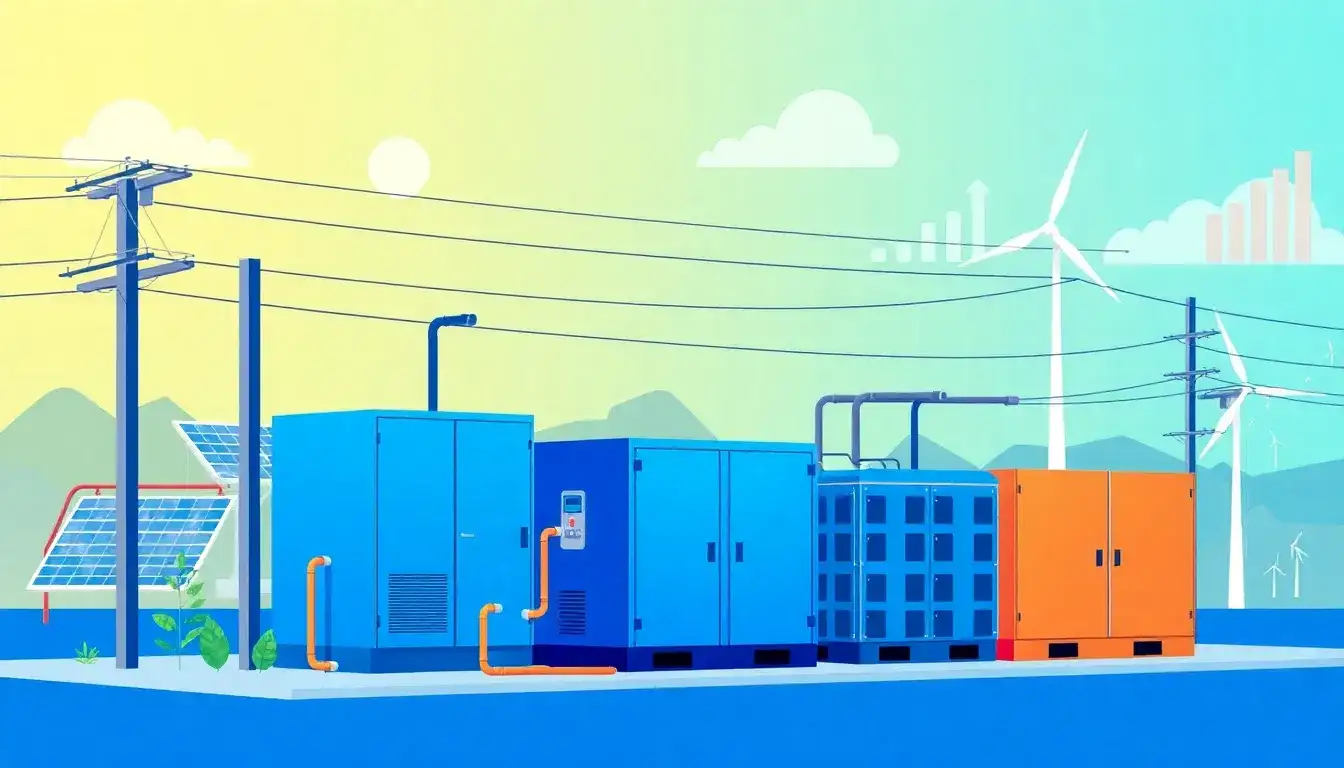
Power conversion systems (PCS) play a crucial role in utility-scale battery storage systems by enabling the conversion of direct current (DC) stored energy into alternating current (AC) suitable for grid integration or other electrical loads. Understanding how PCS impacts the overall cost of utility-scale battery storage involves examining the cost structure and how these systems are integrated into the overall battery energy storage system (BESS).
Cost Components of Power Conversion Systems
- Cost of PCS: The cost of a power conversion system can vary significantly, typically accounting for about 10% to 20% of the total system cost. For a 2MW system, assuming a PCS cost ratio of 15%, if the total system cost excluding PCS is about $890,000, the cost of the PCS would be approximately $133,500. This cost is influenced by factors such as efficiency, power rating, and component quality.
- Influence on Overall System Cost: PCS costs are part of the balance of system (BOS) costs, which include all components necessary for the operation of the battery storage system except the battery cells themselves. BOS costs are a significant portion of the total capital expenses for a BESS, and PCS is a major component within this category.
- Efficiency and Performance: High-efficiency PCS systems can reduce energy losses during conversion, potentially saving on overall operational costs by maximizing the amount of usable power stored and released. However, this efficiency can also impact the upfront cost, as more efficient systems may be more expensive.
- Integration Complexity: The integration complexity of PCS with other system components, such as battery management systems (BMS) and the grid itself, can impact overall system costs. Simplified integration designs may lower installation and maintenance costs.
Impact on Utility-Scale Battery Storage Systems
- Scalability: As utility-scale battery systems grow in capacity and complexity, the PCS must scale to match increased power demands, which can affect both the cost and the efficiency of the system.
- Technological Advancements: Advances in PCS technology, such as increased efficiency or modular designs, can help reduce costs and enhance system performance.
- Cost Reduction Potential: As with battery packs, future cost reductions in PCS technology can contribute to making utility-scale battery storage more economically viable.
In summary, power conversion systems are a critical component in the cost structure of utility-scale battery storage systems, influencing both the upfront capital cost and the long-term operational efficiency of the system. As technology advances and economies of scale improve, PCS costs are expected to decrease, contributing to the overall cost-effectiveness of utility-scale battery storage systems.
Original article by NenPower, If reposted, please credit the source: https://nenpower.com/blog/how-do-power-conversion-systems-impact-the-overall-cost-of-utility-scale-battery-storage/

