

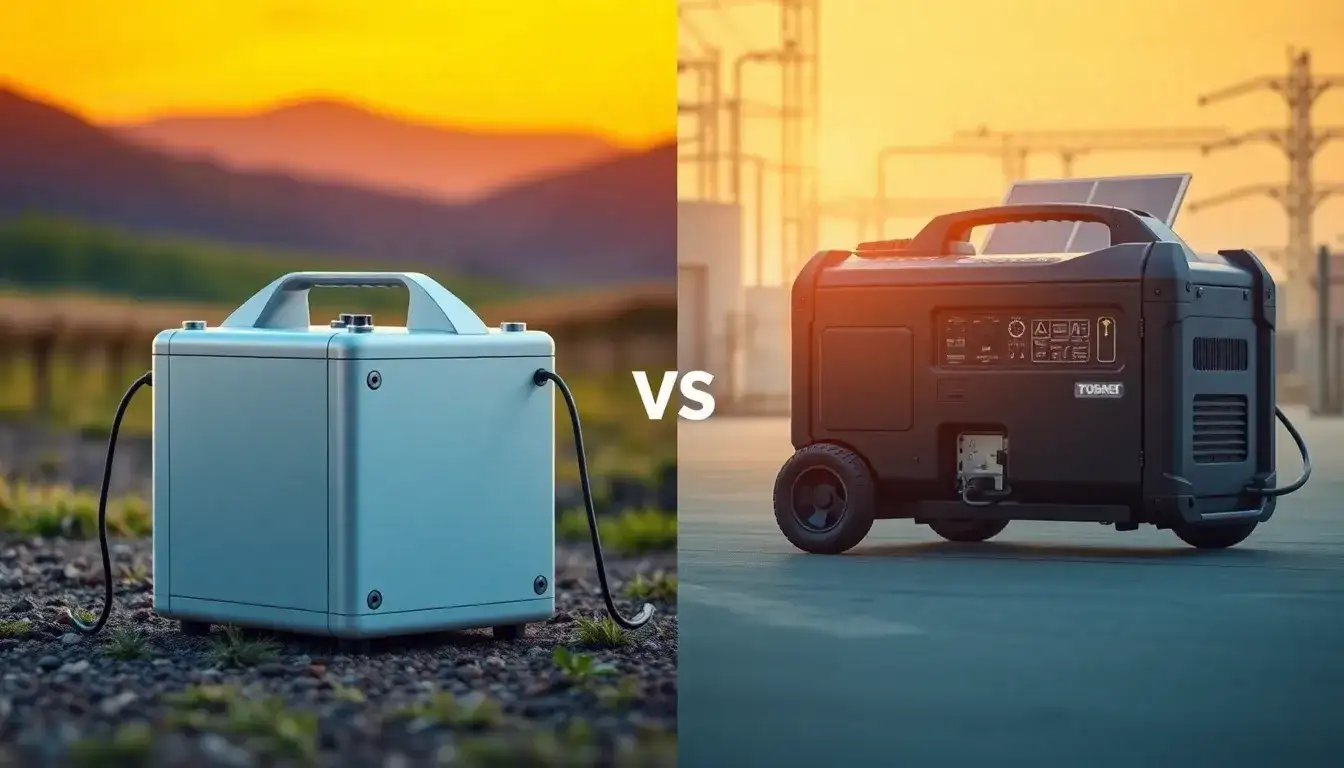
Portable energy storage batteries and traditional backup generators differ significantly in terms of cost, maintenance, functionality, and energy independence. Here’s a comparison highlighting their key differences:
Upfront Cost and Lifetime Savings
- Batteries: Typically have higher upfront costs compared to generators but can offer long-term savings through reduced energy bills, especially when integrated with solar panels.
- Generators: Generally cheaper initially but may incur higher costs over time due to fuel consumption and maintenance.
Maintenance and Operation
- Batteries: Require minimal maintenance and can operate automatically, particularly when connected to solar systems.
- Generators: Need regular maintenance (e.g., monthly cycling) to ensure performance and reliability. They can be noisy and produce emissions.
Energy Independence and Sustainability
- Batteries: Especially when paired with solar panels, can provide indefinite power by charging and discharging according to solar output, promoting energy independence.
- Generators: Limited by fuel availability; natural gas generators can be exceptions if connected to an underground supply line. However, they are less sustainable due to fuel dependence and emissions.
Usage and Benefits
- Batteries: Can optimize energy usage every day (e.g., load shifting), providing benefits beyond emergency backup power.
- Generators: Primarily used for backup during power outages, offering limited long-term utility compared to battery systems.
In summary, batteries offer more flexibility and sustainability, especially with solar integration, while generators are better suited for scenarios requiring quick restoration of power without access to solar energy.
Original article by NenPower, If reposted, please credit the source: https://nenpower.com/blog/how-do-portable-energy-storage-batteries-compare-to-traditional-backup-generators/

